FRANÇAIS STUDIO · DİJİTAL FRANSIZCAFRANÇAIS STUDIO · LEARN FRENCH ONLINE
Fransızcayı Gerçek Hayatta ÖğrenLearn French in Real Life
Gerçek diyaloglarla Fransızca öğren. Dinle, yavaşlat ve günlük ifadeleri keşfet.Learn French with real conversations. Listen, slow down, and explore everyday expressions.
GörevTask 1 — Cümleyi dönüştürTransform the sentence🔒 Önce Görev 1’i tamamla🔒 Complete Task 1 first
Sabah okulda arkadaşınla karşılaşıyorsun. Ona “Merhaba, nasılsın?” diye farklı bir yapıyla sor.You meet a friend at school. Ask “Hello, how are you?” using a different structure.
📖 Yeni Kelimeleri Keşfet (+)📖 Explore New Words (+)
Kalıp ve kelimeleri incele; ardından cümleyi kendin oluştur.Study the patterns and words, then build the sentence yourself.
BonjourMerhaba / iyi günlerHello / good day
commentnasılhow
vasaller (gitmek) fiilinin tu ile çekimiform of aller (to go) with tu
tusen (özne)you (subject)
Bonjour, comment vas-tu ?
Merhaba, nasılsın?Hello, how are you?
💡 Neden Böyle?💡 Why This Way?
Comment vas-tu? bir bütün olarak “Nasılsın?” demektir. Vas-tu soru yapısında fiil ve özne yer değiştirir.Comment vas-tu? means “How are you?” The verb and subject are inverted in vas-tu.
🗣️ Önce cümleyi kendin yüksek sesle söyle, sonra seslendirmeyi dinle.🗣️ First say the sentence aloud yourself, then listen to the recording.
GörevTask 2 — Yeni konuşmaNew conversation🔒 Önce Görev 1’i tamamla🔒 Complete Task 1 first
Arkadaşın “Coucou ! Tu vas bien ?” diyor. Bugün fena değilsin. Cevap ver ve ona da sor.Your friend asks “Coucou ! Tu vas bien ?” You feel okay. Answer and ask them back.
📖 Yeni Kelimeleri Keşfet (+)📖 Explore New Words (+)
Kalıp ve kelimeleri incele; ardından cümleyi kendin oluştur.Study the patterns and words, then build the sentence yourself.
Coucouçok samimi selamvery informal hi
Tu vas bien ?İyi misin?Are you well?
pasolumsuzluk bildiren sözcük; pas mal kalıbındanegative word; here in pas mal
malkötü / kötü şekildebad / badly
et“Ve” anlamına gelir. Ancak “et toi ?” kalıbını Türkçeye doğal olarak “Ya sen?” diye çeviririz.Means “and”; the expression “et toi ?” naturally means “and you?” or “what about you?”
toisen (vurgulu zamir)you (stressed pronoun)
Pas mal, et toi ?
Fena değil, ya sen?Not bad, and you?
💡 Neden Böyle?💡 Why This Way?
Pas mal günlük dilde “fena değil” demektir. Et toi? aynı soruyu karşı tarafa yöneltir; toi vurgulu zamirdir.Pas mal means “not bad”. Et toi? asks the other person in return; toi is a stressed pronoun.
🗣️ Önce cümleyi kendin yüksek sesle söyle, sonra seslendirmeyi dinle.🗣️ First say the sentence aloud yourself, then listen to the recording.
03 · ZİHNİNDEN ÜRET03 · CREATE FROM MEMORY
⌁ PLANLANIYORPLANNED
✦
RÉFLEXE — Zihninden Üret — Create from Memory
Kelimeleri görmeden hatırla; değişen düşüncelerini Fransızca kendin anlat.Recall words without seeing them; express changing ideas in French.
🔒
PHRASE 02 / 03
DERS 02LESSON 02
Ça va bien, et toi ?
TRİyiyim, ya sen?
ENI’m good, and you?
Yaklaşık okunuş: Sa va byen, e tua?Approximate pronunciation: Sa va byen, e tua?
GörevTask 1 — Cümleyi dönüştürTransform the sentence🔒 Önce Görev 1’i tamamla🔒 Complete Task 1 first
Arkadaşın nasıl olduğunu soruyor. Bugün çok iyi hissediyorsun; ona cevap ver ve onun da nasıl olduğunu sor.A friend asks how you are. You feel very good; answer and ask them back.
📖 Yeni Kelimeleri Keşfet (+)📖 Explore New Words (+)
Kalıp ve kelimeleri incele; ardından cümleyi kendin oluştur.Study the patterns and words, then build the sentence yourself.
Ça va bienİyiyim / iyi gidiyorI am well / it is going well
trèsçok; bien kelimesini güçlendirirvery; intensifies bien
bieniyiwell
et toi ?ya sen?and you?
Ça va très bien, et toi ?
Çok iyiyim, ya sen?I'm doing very well, and you?
💡 Neden Böyle?💡 Why This Way?
Très kelimesi bien önüne gelerek “çok iyi” anlamı oluşturur. Et toi? ile soruyu geri yöneltiriz.Très before bien means “very well”. Et toi? returns the question.
🗣️ Önce cümleyi kendin yüksek sesle söyle, sonra seslendirmeyi dinle.🗣️ First say the sentence aloud yourself, then listen to the recording.
GörevTask 2 — Yeni konuşmaNew conversation🔒 Önce Görev 1’i tamamla🔒 Complete Task 1 first
Öğretmenin “Bonjour ! Vous allez bien ?” diye soruyor. İyi olduğunu söyle, teşekkür et ve kibarca ona da sor.Your teacher asks “Bonjour ! Vous allez bien ?” Say you are well, thank them and politely ask back.
💬 Konuşmayı Anla (+)💬 Understand the Dialogue (+)
Öğretmenin sorusu: Bonjour ! Vous allez bien ? Önce sorudaki kelimeleri incele.Your teacher's question: Bonjour ! Vous allez bien ? First, explore the words in the question.
Bonjour !Merhaba! / İyi günler! Kibar bir selamlaşma.Hello! / Good day! A polite greeting.
VousSiz. Bir kişiye kibarca hitap ederken veya birden fazla kişiye seslenirken kullanılır.You. Used to address one person politely or to address more than one person.
allezAller (gitmek) fiilinin vous ile kullanılan çekimi.The form of aller (to go) used with vous.
bienİyi / iyi şekilde.Well.
Vous allez bien ? günlük kullanımda “İyi misiniz?” demektir. Öğretmen kibarca vous allez diyor; sen cevap verirken özne değiştiği için je vais kullanıyorsun.Vous allez bien ? means “Are you doing well?” The teacher uses the polite vous allez; when you reply, the subject changes, so you say je vais.
📖 Yeni Kelimeleri Keşfet (+)📖 Explore New Words (+)
Kalıp ve kelimeleri incele; ardından cümleyi kendin oluştur.Study the patterns and words, then build the sentence yourself.
Je vais bienİyiyimI am well
jebenI
vaisaller (gitmek) fiilinin je ile çekimiform of aller (to go) with je
bieniyiwell
merciteşekkürlerthank you
et vous ?ya siz? (kibar hitap)and you? (polite)
Je vais bien, merci. Et vous ?
İyiyim, teşekkürler. Ya siz?I'm fine, thank you. And you?
💡 Neden Böyle?💡 Why This Way?
Je vais bien doğal olarak “İyiyim” demektir. Kart 1’de tu vas, burada je vais: fiil özneye göre değişir. Vous kibar hitaptır.Je vais bien means “I am well”. Compare tu vas with je vais: the verb changes with the subject. Vous is polite.
🗣️ Önce cümleyi kendin yüksek sesle söyle, sonra seslendirmeyi dinle.🗣️ First say the sentence aloud yourself, then listen to the recording.
03 · ZİHNİNDEN ÜRET03 · CREATE FROM MEMORY
⌁ PLANLANIYORPLANNED
✦
RÉFLEXE — Zihninden Üret — Create from Memory
Kelimeleri görmeden hatırla; değişen düşüncelerini Fransızca kendin anlat.Recall words without seeing them; express changing ideas in French.
🔒
PHRASE 03 / 03
DERS 03LESSON 03
Moi aussi, ça va bien.
TRBen de iyiyim.
ENI’m good too.
Yaklaşık okunuş: Mua osi, sa va byen.Approximate pronunciation: Mua osi, sa va byen.
GörevTask 1 — Cümleyi dönüştürTransform the sentence🔒 Önce Görev 1’i tamamla🔒 Complete Task 1 first
Erkek konuşmacısın. Arkadaşın “Je suis content.” diyor. Sen de mutlusun; ona katılarak tam bir cümle kur.You are a male speaker. Your friend says “Je suis content.” You are happy too; agree in a full sentence.
📖 Yeni Kelimeleri Keşfet (+)📖 Explore New Words (+)
Kalıp ve kelimeleri incele; ardından cümleyi kendin oluştur.Study the patterns and words, then build the sentence yourself.
Moi aussiben deme too
moiben (vurgulu zamir)me (stressed pronoun)
ausside/da, ayrıcatoo / also
jeben (özne)I (subject)
suisêtre (olmak) fiilinin je ile çekimiform of être (to be) with je
contentmutlu (eril); kadın konuşmacı: contentehappy (masculine); feminine: contente
Moi aussi, je suis content.
Ben de mutluyum.I'm happy too.
💡 Neden Böyle?💡 Why This Way?
Moi aussi olumlu bir ifadeye katılmayı sağlar. Je suis content erkek konuşmacı içindir; kadın konuşmacı je suis contente der.Moi aussi agrees with a positive statement. A female speaker says je suis contente.
🗣️ Önce cümleyi kendin yüksek sesle söyle, sonra seslendirmeyi dinle.🗣️ First say the sentence aloud yourself, then listen to the recording.
GörevTask 2 — Yeni konuşmaNew conversation🔒 Önce Görev 1’i tamamla🔒 Complete Task 1 first
Kütüphanede arkadaşın “J’aime apprendre le français.” diyor. Sen de aynı şeyi seviyorsun; aussi kelimesini cümle içinde kullanarak cevap ver.At the library, your friend says “J’aime apprendre le français.” You feel the same; reply using aussi within a sentence.
📖 Yeni Kelimeleri Keşfet (+)📖 Explore New Words (+)
Kalıp ve kelimeleri incele; ardından cümleyi kendin oluştur.Study the patterns and words, then build the sentence yourself.
J’aimeseviyorum; je + aime birleşirI like/love; je + aime contract
aimeaimer (sevmek) fiilinin je ile çekimiform of aimer (to like) with je
ausside/da, ayrıcaalso / too
apprendreöğrenmekto learn
le françaisFransızca (dil)French (language)
J'aime aussi apprendre le français.
Ben de Fransızca öğrenmeyi seviyorum.I also like learning French.
💡 Neden Böyle?💡 Why This Way?
Je, sesli harfle başlayan aime önünde j’ olur. Aussi burada aimer fiilinden sonra gelerek “ben de” anlamını verir.Je becomes j’ before aime. Aussi after aime expresses “also”.
🗣️ Önce cümleyi kendin yüksek sesle söyle, sonra seslendirmeyi dinle.🗣️ First say the sentence aloud yourself, then listen to the recording.
03 · ZİHNİNDEN ÜRET03 · CREATE FROM MEMORY
⌁ PLANLANIYORPLANNED
✦
RÉFLEXE — Zihninden Üret — Create from Memory
Kelimeleri görmeden hatırla; değişen düşüncelerini Fransızca kendin anlat.Recall words without seeing them; express changing ideas in French.
GörevTask 1 — Cümleyi dönüştürTransform the sentence🔒 Önce Görev 1’i tamamla🔒 Complete Task 1 first
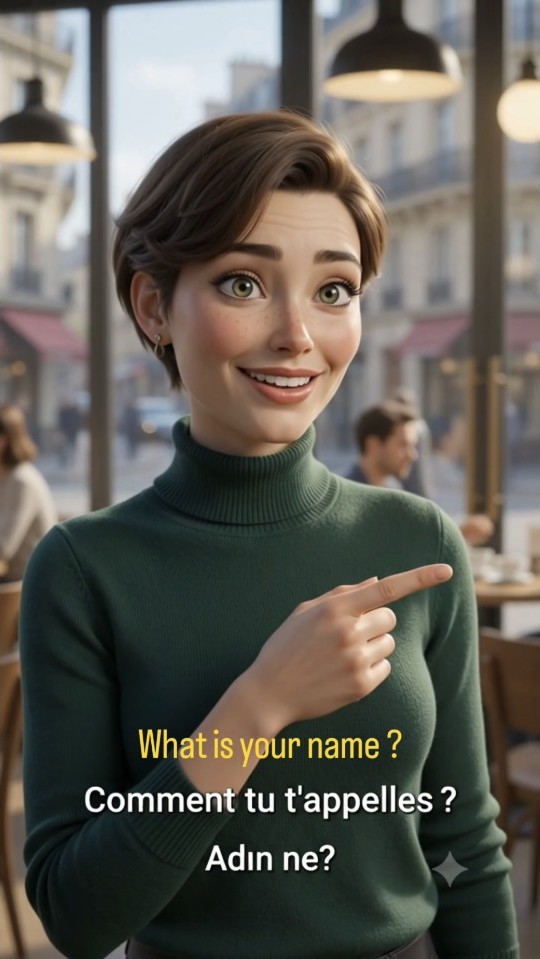
Fransızca kursunda yeni bir öğrenciyle tanışıyorsun. Comment kelimesini sona koyarak samimi biçimde adını sor.You meet a new student in French class. Ask their name informally with comment at the end.
📖 Yeni Kelimeleri Keşfet (+)📖 Explore New Words (+)
Kalıp ve kelimeleri incele; ardından cümleyi kendin oluştur.Study the patterns and words, then build the sentence yourself.
tusen (özne)you (subject)
t’te zamirinin sesli harften önce kısalmış hâlishort form of te before a vowel
appelless’appeler (adı olmak) fiilinin tu ile çekimiform of s’appeler (to be called) with tu
commentnasıl; bu kalıpta ad sormak içinhow; here used to ask a name
Tu t'appelles comment ?
Adın ne?What's your name?
💡 Neden Böyle?💡 Why This Way?
Comment tu t’appelles? ve Tu t’appelles comment? konuşma dilinde doğaldır. T’ dönüşlü zamirdir; appelles fiilin çekimidir.Both word orders are natural in speech. T’ is a reflexive pronoun; appelles is the verb form.
🗣️ Önce cümleyi kendin yüksek sesle söyle, sonra seslendirmeyi dinle.🗣️ First say the sentence aloud yourself, then listen to the recording.
GörevTask 2 — Yeni konuşmaNew conversation🔒 Önce Görev 1’i tamamla🔒 Complete Task 1 first
Bir iş etkinliğinde henüz kendini tanıtmamış, senden yaşça büyük bir katılımcıyla karşılaşıyorsun. Kibarca adını sor.At a professional event, you meet an older attendee who has not introduced themselves. Politely ask their name.
📖 Yeni Kelimeleri Keşfet (+)📖 Explore New Words (+)
Kalıp ve kelimeleri incele; ardından cümleyi kendin oluştur.Study the patterns and words, then build the sentence yourself.
commentnasıl; burada isim sorarhow; here asks a name
appelezs’appeler fiilinin vous ile çekimiform of s’appeler with vous
vous (son)siz (özne); soru için fiilden sonrayou (subject), after verb in a question
Comment vous appelez-vous ?
Adınız ne?What's your name?
💡 Neden Böyle?💡 Why This Way?
İlk vous dönüşlü zamirdir; sondaki -vous özne zamiridir. Kısa çizgi, fiil-özne devrik soru yapısında kullanılır.The first vous is reflexive; the final -vous is the subject. The hyphen marks subject-verb inversion.
🗣️ Önce cümleyi kendin yüksek sesle söyle, sonra seslendirmeyi dinle.🗣️ First say the sentence aloud yourself, then listen to the recording.
03 · ZİHNİNDEN ÜRET03 · CREATE FROM MEMORY
⌁ PLANLANIYORPLANNED
✦
RÉFLEXE — Zihninden Üret — Create from Memory
Kelimeleri görmeden hatırla; değişen düşüncelerini Fransızca kendin anlat.Recall words without seeing them; express changing ideas in French.
🔒
PHRASE 02 / 03 · LESSON 02
DERS 05LESSON 05
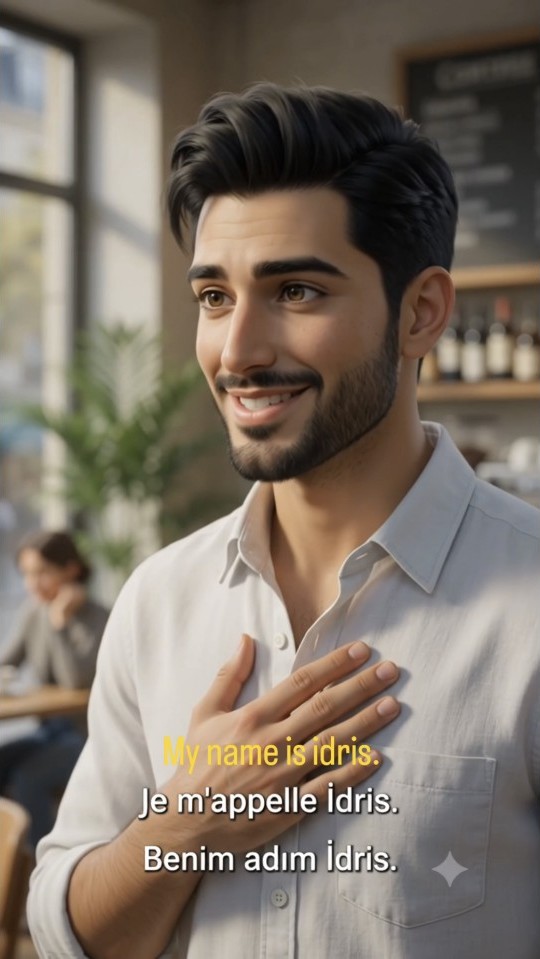
Je m'appelle İdris.
TRBenim adım İdris.
ENMy name is İdris.
Yaklaşık okunuş: Jö mapel İdris.Approximate pronunciation: Jö mapel İdris.
GörevTask 1 — Cümleyi dönüştürTransform the sentence🔒 Önce Görev 1’i tamamla🔒 Complete Task 1 first
Fransızca kursunun ilk günü. Bu alıştırmada adın Lucas. Je m’appelle yerine “Ben Lucas’ım” diyerek kendini tanıt.First day of French class. Your name is Lucas for this exercise. Introduce yourself with “I am Lucas” rather than je m’appelle.
📖 Yeni Kelimeleri Keşfet (+)📖 Explore New Words (+)
Kalıp ve kelimeleri incele; ardından cümleyi kendin oluştur.Study the patterns and words, then build the sentence yourself.
jebenI
suisêtre (olmak) fiilinin je ile çekimiform of être (to be) with je
Lucaserkek adımale given name
Je suis ...Ben ...-im kalıbıI am ... pattern
Je suis Lucas.
Ben Lucas’ım.I'm Lucas.
💡 Neden Böyle?💡 Why This Way?
Je suis + isim, kendini tanıtmanın bir yoludur. Je m’appelle ise s’appeler fiilini kullanır; ikisi farklı yapılardır.Je suis + name introduces yourself using être; je m’appelle uses s’appeler.
🗣️ Önce cümleyi kendin yüksek sesle söyle, sonra seslendirmeyi dinle.🗣️ First say the sentence aloud yourself, then listen to the recording.
GörevTask 2 — Yeni konuşmaNew conversation🔒 Önce Görev 1’i tamamla🔒 Complete Task 1 first
Bir Fransızca konuşma etkinliğinde biri “Et toi, c’est quoi ton prénom ?” diye soruyor. Bu alıştırmada adın Emma. Prénom kelimesini kullanarak cevap ver.At a French conversation event, someone asks “Et toi, c’est quoi ton prénom ?” Your name is Emma for this exercise. Reply using prénom.
📖 Yeni Kelimeleri Keşfet (+)📖 Explore New Words (+)
Kalıp ve kelimeleri incele; ardından cümleyi kendin oluştur.Study the patterns and words, then build the sentence yourself.
Et toi ?ya sen?and you?
c’est quoine? (samimi konuşma)what is it? (informal)
monbenim; eril isimlemy; with a masculine noun
tonsenin; eril isimleyour; with a masculine noun
prénomön ad; eril isimfirst name; masculine noun
c’estce + est; bu ... / ...dırce + est; it is / this is
Mon prénom, c'est Emma.
Benim adım Emma.My first name is Emma.
💡 Neden Böyle?💡 Why This Way?
Mon prénom, c’est ... ifadesi adını belirtir. Prénom eril olduğu için mon/ton kullanılır; konuşanın cinsiyeti bunu değiştirmez.Mon prénom, c’est ... states your given name. Prénom is masculine, so mon/ton are used regardless of the speaker’s gender.
🗣️ Önce cümleyi kendin yüksek sesle söyle, sonra seslendirmeyi dinle.🗣️ First say the sentence aloud yourself, then listen to the recording.
03 · ZİHNİNDEN ÜRET03 · CREATE FROM MEMORY
⌁ PLANLANIYORPLANNED
✦
RÉFLEXE — Zihninden Üret — Create from Memory
Kelimeleri görmeden hatırla; değişen düşüncelerini Fransızca kendin anlat.Recall words without seeing them; express changing ideas in French.
🔒
PHRASE 03 / 03 · LESSON 02
DERS 06LESSON 06
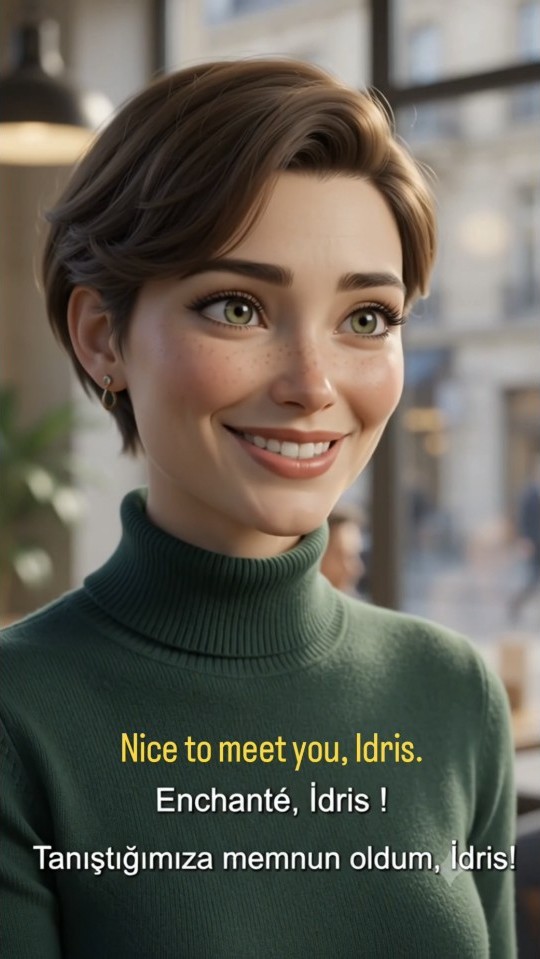
Enchantée, İdris !
TRTanıştığımıza memnun oldum, İdris!
ENNice to meet you, İdris!
Yaklaşık okunuş: Anşante, İdris!Approximate pronunciation: Anşante, İdris!
🎧 Önce dinle, sonra keşfet.🎧 Listen first, explore later.
Önce cümleyi dinle ve sesli olarak tekrar et. İstersen iki gün boyunca pratik yap. Hazır olduğunda kelimelerin anlamlarını keşfet.
First, listen to the sentence and repeat it aloud. If you like, practise for two days. When you're ready, explore the meanings of the words.
Kelime anlamlarını keşfetExplore word meanings01 · TANI01 · DISCOVER
Öğrenilecek ifadeKey expression
Enchanté / Enchantée
Tanıştığımıza memnun oldum. Nice to meet you.
Kelime kelimeWord by word
Enchantée Tanıştığımıza memnun oldum; konuşan kadınsa bu yazım kullanılır. Erkek konuşmacı “Enchanté” yazar. Nice to meet you; feminine written form. A male speaker writes “Enchanté”.
İdris Hitap edilen kişinin adı. The name of the person being addressed.
Günlük hayatta nerede kullanılır?
Birisiyle ilk kez tanıştıktan sonra söylenir. Bu kayıtta kadın konuşmacı “Enchantée” diyor. Telaffuzda “Enchanté” ile fark yoktur.
When is it used in everyday life?
Say this after meeting someone for the first time. The female speaker uses “Enchantée”; it is pronounced the same as “Enchanté”.
GörevTask 1 — Cümleyi dönüştürTransform the sentence🔒 Önce Görev 1’i tamamla🔒 Complete Task 1 first
Fransızca kursunun ilk günü. Léa adında yeni bir arkadaşınla tanışıyorsun. Bu alıştırmada erkek konuşmacısın. Ona “Seninle tanıştığıma memnun oldum, Léa!” de; enchanté yerine ravi kullan.It is the first day of French class. You meet Léa. Speak as a male character, and say you are delighted to meet her, using ravi rather than enchanté.
📖 Yeni Kelimeleri Keşfet (+)📖 Explore New Words (+)
Yapbozda kullanacağın parçaları incele.Explore the pieces you will use in the puzzle.
RaviMemnun, mutlu; erkek konuşmacı biçimi.Delighted, pleased; form used by a male speaker.
deBurada ravi sözcüğünü sonraki fiile bağlar.Links ravi to the following verb.
te“Seni” zamiri; rencontrer ile birlikte “seninle tanışmak” anlamını kurar.Object pronoun “you”; with rencontrer it means to meet you.
rencontrer,Karşılaşmak, biriyle tanışmak. Virgül yalnızca bir duraklamayı gösterir.To meet someone. The comma marks a pause.
Léa !Tanıştığın kişinin adı.The person’s name.
İpucu: Önce memnuniyet bildiren kelimeyi, sonra tanışma ifadesini, en sona da ismi yerleştir.Hint: Start with the word expressing delight, then the meeting expression, and finish with the name.
Ravi de te rencontrer, Léa !
Seninle tanıştığıma memnun oldum, Léa!I am delighted to meet you, Léa!
💡 Neden Böyle?💡 Why This Way?
Ravi de te rencontrer samimi bir tanışma ifadesidir. Te zamiri rencontrer fiilinin nesnesidir; Türkçeye “seninle tanışmak” diye çevrilir. Erkek konuşmacı ravi, kadın konuşmacı ravie yazar. İkisinin telaffuzu aynıdır.Ravi de te rencontrer is an informal way to say you are glad to meet someone. Te is an object pronoun used with rencontrer. A male speaker writes ravi, a female speaker writes ravie; they are pronounced the same.
🗣️ Önce cümleyi kendin yüksek sesle söyle, sonra seslendirmeyi dinle.🗣️ Say the sentence out loud yourself, then listen to the recording.
GörevTask 2 — Gerçek hayatta kullanUse it in real life🔒 Önce Görev 1’i tamamla🔒 Complete Task 1 first
Bir iş etkinliğinde, henüz tanışmadığın Dupont Hanım kendini tanıtıyor. Bu alıştırmada erkek konuşmacısın. Ona kibarca “Sizinle tanıştığıma memnun oldum, Dupont Hanım.” diye karşılık ver.At a professional event, Ms Dupont introduces herself. Speak as a male character and politely say that you are delighted to make her acquaintance.
📖 Yeni Kelimeleri Keşfet (+)📖 Explore New Words (+)
Yapbozda kullanacağın parçaları incele.Explore the pieces you will use in the puzzle.
RaviMemnun; erkek konuşmacının kullandığı biçim.Delighted; male-speaker form.
deRavi ile sonraki fiil arasındaki bağ.Connects ravi to the verb.
faireYapmak; burada tanışma kalıbının parçası.To do or make; part of a set phrase here.
votreSizin; kibar hitapta kullanılan iyelik sözcüğü.Your; polite or formal possessive.
connaissance,Tanışıklık; faire votre connaissance bir bütün olarak “sizinle tanışmak” demektir.Acquaintance; faire votre connaissance means to make your acquaintance.
Madame Dupont.Dupont Hanım; kibar hitap.Ms Dupont; polite form of address.
İpucu: faire + votre + connaissance sözcükleri birlikte “sizinle tanışmak” kalıbını oluşturur.Hint: faire + votre + connaissance form the expression “to make your acquaintance”.
Ravi de faire votre connaissance, Madame Dupont.
Sizinle tanıştığıma memnun oldum, Dupont Hanım.Delighted to make your acquaintance, Ms Dupont.
💡 Neden Böyle?💡 Why This Way?
Faire votre connaissance kelime kelime değil, bir kalıp olarak “sizinle tanışmak” diye anlaşılır. Votre kibar hitaba uygundur. Bir kadın konuşmacı ravi yerine ravie yazardı; ses değişmez.Faire votre connaissance is a set expression meaning “to meet you”. Votre marks polite address. A female speaker writes ravie rather than ravi, without a change in pronunciation.
🗣️ Önce cümleyi kendin yüksek sesle söyle, sonra seslendirmeyi dinle.🗣️ Say the sentence out loud yourself, then listen to the recording.
03 · ZİHNİNDEN ÜRET03 · CREATE FROM MEMORY
⌁ PLANLANIYORPLANNED
✦
RÉFLEXE — Zihninden Üret — Create from Memory
Kelimeleri görmeden hatırla; değişen düşüncelerini Fransızca kendin anlat.Recall words without seeing them; express changing ideas in French.
🔒
PHRASE 01 / 02
DERS 07LESSON 07YENİNEW
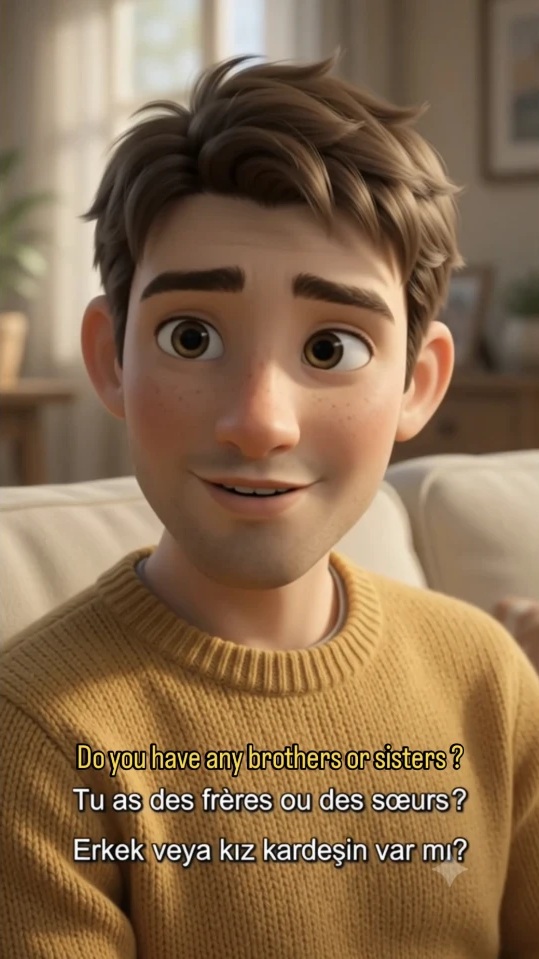
Tu as des frères ou des sœurs ?
TRErkek veya kız kardeşin var mı?
ENDo you have any brothers or sisters?
Yaklaşık okunuş: Tü a de frer u de sör?Approximate pronunciation: Tü a de frer u de sör?
GörevTask 1 — Cümleyi dönüştürTransform the sentence🔒 Önce Görev 1’i tamamla🔒 Complete Task 1 first
Üniversitede yeni bir arkadaşınla aileleriniz hakkında konuşuyorsunuz. Kalabalık bir aileden geldiğini söylüyor.At university you discuss families with a new friend who says they come from a large family.
ArkadaşınYour friend:Je viens d'une famille nombreuse. — Kalabalık bir aileden geliyorum.I come from a large family.
Öğretmeni dinleListen to the speaker
Ses kayıtları henüz eklenmedi.Recordings have not been added yet.
💬 Konuşmayı Anla (+)💬 Understand the Dialogue (+)
JeBen; kökeni anlatılan özne.I; subject whose background is described.
viensGeliyorum; venir fiilinin je ile şimdiki zaman çekimi. Burada köken bildirir.Come; present form of venir with je, here expressing origin.
d'De edatının une önünde kısalmış biçimi; kökeni belirtir.Contracted de before une; introduces origin.
uneBir; famille dişil tekil olduğu için une.A; feminine singular indefinite article.
familleAile; dişil isim.Family; feminine noun.
nombreuseKalabalık; nombreux sıfatının dişil tekil biçimi. Famille ile uyumludur, konuşanın cinsiyetine göre değil.Large; feminine singular form of nombreux, agreeing with famille, not the speaker.
“Toplam kaç kardeşin var?” diye sor.Ask: “How many siblings do you have in total?”
📖 Yeni Kelimeleri Keşfet (+)📖 Explore New Words (+)
en toutToplamda; kalıp olarak öğren.In total; fixed expression.
frèresErkek kardeşler; frère eril isminin çoğulu.Brothers; plural of masculine frère.
asVar, sahipsin; avoir (sahip olmak) fiilinin tu ile şimdiki zaman çekimi. Kimin kardeşi var? Senin. Şu anki aile durumunu sorduğumuz için présent; kardeş sayısı fiili değiştirmez.Have; present form of avoir with tu. Who has siblings? You. Present tense asks about current family circumstances; the number of siblings does not determine the verb.
etVe; erkek ve kız kardeşleri birlikte sayar.And; combines brothers and sisters.
combien deKaç/ne kadar; combien miktarı sorar, de isme bağlar. Ayrıca des kullanılmaz.How many/much; combien asks quantity, de links to the noun; no additional des.
TuSen; sahip olan kişi, dilbilgisel özne. Kardeşler fiilin nesnesidir.You; the possessor and grammatical subject. The siblings are the object.
sœursKız kardeşler; sœur dişil isminin çoğulu.Sisters; plural of feminine sœur.
Tu as combien de frères et sœurs en tout ?
Toplam kaç kardeşin var?How many siblings do you have in total?
💡 Neden Böyle?💡 Why This Way?
Tu as un frère / Tu as trois frères: sayı değişse de özne tu olduğu için as değişmez (j'ai, tu as, il/elle a). Combien de sayıyı sorgular, en tout toplamı vurgular. Frères et sœurs birlikte kardeşler anlamına gelir; ou ise seçenek bildirir.Tu as un frère / Tu as trois frères: the number changes but as remains because tu is the subject (j'ai, tu as, il/elle a). Combien de asks the number, en tout emphasizes the total. Frères et sœurs means siblings; ou expresses an alternative.
🗣️ Önce cümleyi kendin yüksek sesle söyle, sonra seslendirmeyi dinle.🗣️ Say the sentence aloud yourself first, then listen to the recording.
Cevabı dinleListen to the answer
Ses kayıtları henüz eklenmedi.Recordings have not been added yet.
GörevTask 2 — Gerçek hayatta kullanUse it in real life🔒 Önce Görev 1’i tamamla🔒 Complete Task 1 first
Öğle molasında yeni bir iş arkadaşınla sohbet ediyorsun. Kardeşlerini nadiren gördüğünü söylüyor. Mesafenin neden olup olmadığını merak ediyorsun.At lunch you talk with a new colleague who rarely sees their siblings. You wonder whether distance is the reason.
İş arkadaşınColleague:Je vois rarement mes frères et sœurs. — Kardeşlerimi nadiren görüyorum.I rarely see my siblings.
Öğretmeni dinleListen to the speaker
Ses kayıtları henüz eklenmedi.Recordings have not been added yet.
💬 Konuşmayı Anla (+)💬 Understand the Dialogue (+)
JeBen; gören kişi, özne.I; the subject seeing.
voisGörüyorum; voir (görmek) fiilinin je ile şimdiki zaman çekimi.See; present form of voir with je.
rarementNadiren; sıklık zarfı.Rarely; adverb of frequency.
mesBenim; sahip olunan isimler çoğul olduğundan mes, mon/ma değil.My; mes is used because the possessed nouns are plural.
“Kardeşleriniz evinizden uzakta mı yaşıyor?” diye kibarca sor.Politely ask: “Do your siblings live far from where you live?”
📖 Yeni Kelimeleri Keşfet (+)📖 Explore New Words (+)
chez vousEviniz/sizin bulunduğunuz yer; chez + vurgulu zamir vous. Burada vous özne değil.Your home/place; chez + stressed pronoun vous, not a subject here.
habitentYaşıyorlar; habiter fiilinin vos frères et sœurs öznesiyle üçüncü çoğul şimdiki zaman çekimi. Eylemi yapan kardeşler, muhatap değil.Live; third-person plural present of habiter with vos frères et sœurs. The siblings, not the addressee, perform the action.
loin de-den uzakta; loin uzaklığı, de referans noktasını belirtir.Far from; loin expresses distance, de introduces the reference point.
est-ce queSoru kalıbı. Est, être'nin üçüncü tekil çekimidir; kalıp bütün olarak kullanılır. Sonrasındaki özne ve fiil normal sırada kalır.Question marker. Est is third-person singular of être; learn the fixed expression. Subject and verb retain normal order afterwards.
vosSizin; sahip olunan isim çoğul olduğu için vos. Hitap edilen kişi tek kişi de olabilir.Your; vos agrees with plural possessed nouns, even when addressing one person politely.
etVe; kardeşleri birlikte ifade eder.And; joins the siblings.
Est-ce que vos frères et sœurs habitent loin de chez vous ?
Kardeşleriniz evinizden uzakta mı yaşıyor?Do your siblings live far from where you live?
💡 Neden Böyle?💡 Why This Way?
Kim yaşıyor? Vos frères et sœurs. Bu nedenle habitez değil habitent. Votre frère habite / Vos frères habitent. Loin de chez vous evinizden uzakta demektir. Est-ce que ile özne-fiil sırası değişmeden soru oluşturulur.Who lives there? Vos frères et sœurs. Hence habitent, not habitez. Votre frère habite / Vos frères habitent. Loin de chez vous means far from your home. Est-ce que forms a question without changing subject–verb order.
🗣️ Önce cümleyi kendin yüksek sesle söyle, sonra seslendirmeyi dinle.🗣️ Say the sentence aloud yourself first, then listen to the recording.
Cevabı dinleListen to the answer
Ses kayıtları henüz eklenmedi.Recordings have not been added yet.
03 · ZİHNİNDEN ÜRET03 · CREATE FROM MEMORY
⌁ PLANLANIYORPLANNED
✦
RÉFLEXE — Zihninden Üret — Create from Memory
Kelimeleri görmeden hatırla; değişen düşüncelerini Fransızca kendin anlat.Recall words without seeing them; express changing ideas in French.
🔒
PHRASE 02 / 02
DERS 08LESSON 08YENİNEW
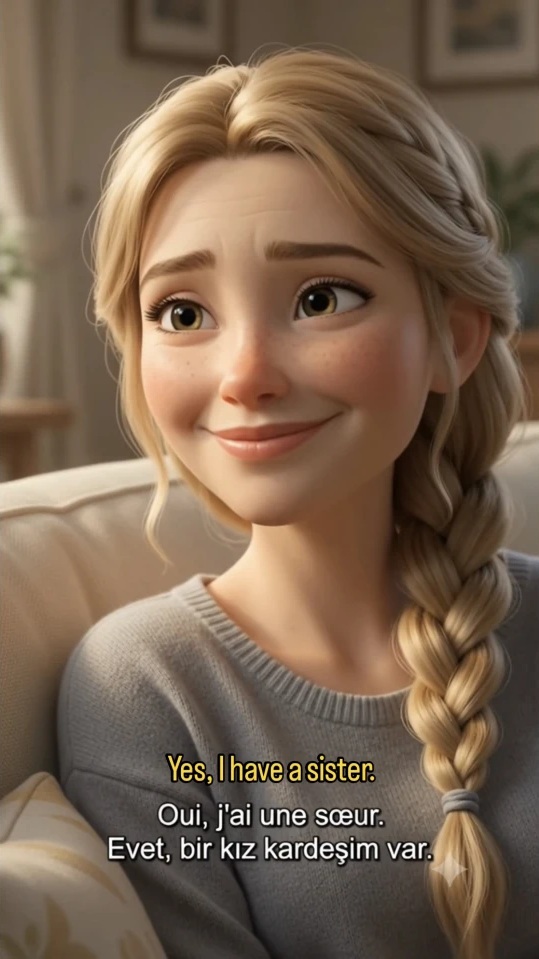
Oui, j’ai une sœur.
TREvet, bir kız kardeşim var.
ENYes, I have a sister.
Yaklaşık okunuş: Ui, je ün sör.Approximate pronunciation: Ui, je ün sör.
GörevTask 1 — Cümleyi dönüştürTransform the sentence🔒 Önce Görev 1’i tamamla🔒 Complete Task 1 first
Arkadaşlarınla çocukluk anıları hakkında konuşuyorsun. Biri tek çocuk olduğunu sanıyor. Bir ablan var ama erkek kardeşin yok.You discuss childhood memories with friends. One thinks you are an only child, but you have an older sister and no brother.
ArkadaşınYour friend:Tu es enfant unique ? — Tek çocuk musun?Are you an only child?
Öğretmeni dinleListen to the speaker
Ses kayıtları henüz eklenmedi.Recordings have not been added yet.
💬 Konuşmayı Anla (+)💬 Understand the Dialogue (+)
TuSen; aile durumu sorulan özne.You; subject whose family situation is queried.
esÊtre (olmak) fiilinin tu ile şimdiki zaman çekimi; mevcut aile durumunu sorar.Present of être (to be) with tu; asks about current family status.
enfant uniqueTek çocuk; enfant = çocuk (her iki cinsiyet), unique = tek. Être enfant unique kullanımında artikel gerekmez.Only child; enfant = child (either gender), unique = only. No article is required in être enfant unique.
“Hayır, bir ablam var ama erkek kardeşim yok.” diye cevap ver.Reply: “No, I have an older sister, but I don't have a brother.”
📖 Yeni Kelimeleri Keşfet (+)📖 Explore New Words (+)
aînéeYaşça büyük; aîné sıfatının dişil biçimi, sœur ile uyumlu; konuşanın cinsiyeti önemli değil.Older; feminine form of aîné agreeing with sœur, not the speaker.
maisAma; karşıt bilgileri bağlar.But; connects contrasting information.
j'aiBenim var; j' = je, ai = avoir fiilinin je ile şimdiki zaman çekimi. Sahip olan konuşandır.I have; j' = je, ai present of avoir with je; speaker is possessor.
deOlumsuzlukta un yerine gelir: erkek kardeş sayısı sıfır. -den/-dan değildir.Replaces un in this negation expressing zero brothers; not from.
sœurKız kardeş; dişil, tek başına yaşı belirtmez.Sister; feminine noun, does not specify age alone.
NonHayır; varsayımı düzeltir.No; corrects the assumption.
ne ... pasOlumsuzluk kalıbı; ai sesli harfle başladığı için ne → n'.Negation; ne contracts to n' before ai.
uneBir; sœur dişil tekil olduğu için une.A; feminine singular indefinite article.
jeBen; iki bölümde de aynı özne.I; same subject in both clauses.
n'aiN' + ai; ai avoir fiilinin je ile şimdiki zaman çekimi, n' ve pas olumsuzluk oluşturur.N' + ai; ai is present of avoir with je, n' and pas form the negation.
Non, j'ai une sœur aînée, mais je n'ai pas de frère.
Hayır, bir ablam var ama erkek kardeşim yok.No, I have an older sister, but I don't have a brother.
💡 Neden Böyle?💡 Why This Way?
Une sœur aînée = abla; une sœur cadette = küçük kız kardeş. Sıfat kardeşi niteler. J'ai un frère olumlu, Je n'ai pas de frère olumsuz: bu yoklukta belirsiz artikel un, de olur. Mais iki bilgiyi bir araya getirir.Une sœur aînée = older sister; une sœur cadette = younger sister. The adjective agrees with sister. J'ai un frère is positive; Je n'ai pas de frère is negative: un becomes de in this expression of absence. Mais connects the two ideas.
🗣️ Önce cümleyi kendin yüksek sesle söyle, sonra seslendirmeyi dinle.🗣️ Say the sentence aloud yourself first, then listen to the recording.
Cevabı dinleListen to the answer
Ses kayıtları henüz eklenmedi.Recordings have not been added yet.
GörevTask 2 — Gerçek hayatta kullanUse it in real life🔒 Önce Görev 1’i tamamla🔒 Complete Task 1 first
Kafede bir arkadaşınla ablandan bahsediyorsun. Birbirinizi sık göremeseniz de iyi anlaşıyorsunuz.At a café you talk to a friend about your older sister. You get along well despite not seeing each other often.
ArkadaşınYour friend:Tu es proche de ta sœur ? — Kız kardeşinle yakın mısın?Are you close to your sister?
Öğretmeni dinleListen to the speaker
Ses kayıtları henüz eklenmedi.Recordings have not been added yet.
💬 Konuşmayı Anla (+)💬 Understand the Dialogue (+)
TuSen; ilişki sorulan özne.You; subject whose relationship is queried.
esÊtre (olmak) fiilinin tu ile şimdiki zaman çekimi; mevcut ilişki.Present form of être with tu; current relationship.
procheYakın; burada duygusal yakınlık, eril/dişil yazımı aynı.Close; emotionally, same masculine and feminine form.
deProche sıfatını yakın olunan kişiye bağlar.Links proche to the person one is close to.
taSenin; sœur dişil tekil olduğundan ta, muhatabın cinsiyeti önemsiz.Your; feminine singular, agreeing with sœur, not addressee's gender.
sœurKız kardeş; dişil isim.Sister; feminine noun.
“Evet, birbirimizi sık görmesek de çok iyi anlaşıyoruz.” diye cevap ver.Reply: “Yes, we get along very well, even though we don't see each other often.”
📖 Yeni Kelimeleri Keşfet (+)📖 Explore New Words (+)
souventSık sık; sıklık zarfı.Often; adverb of frequency.
s'entendAnlaşır/iyi geçinir; s'entendre fiilinin on ile üçüncü tekil şimdiki zaman çekimi. Burada biz anlamında: anlaşıyoruz.Gets along; third-person singular present of s'entendre with on, here meaning we get along.
même si-se bile, -mesine rağmen; engel olmayan durumu bağlar.Even if/even though; links a contrasting circumstance.
onBu cümlede biz (ben ve kardeşim). Anlamı çoğul olsa da il/elle gibi üçüncü tekil çekim alır. İki on aynı kişileri temsil eder.Here means we (the speaker and sister). Despite plural meaning it takes third-person singular like il/elle. Both occurrences refer to the same people.
trèsÇok; bien derecesini artırır.Very; intensifies bien.
voitGörür; voir (görmek) fiilinin on ile üçüncü tekil şimdiki zaman çekimi. Burada görüyoruz diye çevrilir.Sees; third-person singular present of voir with on, translated as we see here.
se / s'Karşılıklı eylem zamiri: se voir birbirini görmek, s'entendre anlaşmak. Entend sesli harfle başladığı için s'.Reciprocal pronoun: se voir = see each other, s'entendre = get along. Contracts before entend.
OuiEvet; olumlu cevap.Yes; positive reply.
ne ... pasOlumsuzluk; çekimli voit ve önündeki se'yi çevreler: ne se voit pas.Negation surrounds the conjugated voit and its preceding pronoun: ne se voit pas.
bienİyi; anlaşmanın nasıl olduğunu belirtir.Well; describes how they get along.
Oui, on s'entend très bien, même si on ne se voit pas souvent.
Evet, birbirimizi sık görmesek de çok iyi anlaşıyoruz.Yes, we get along very well, even though we don't see each other often.
💡 Neden Böyle?💡 Why This Way?
Nous parlons ve On parle ikisi de konuşuyoruz demektir; on üçüncü tekil çekilir. Se burada kendini değil birbirini gösterir: On se voit souvent / On ne se voit pas souvent. Même si, seyrek görüşmenin iyi anlaşmaya engel olmadığını anlatır.Nous parlons and On parle both mean we speak; on takes third-person singular. Se is reciprocal here: On se voit souvent / On ne se voit pas souvent. Même si shows that infrequent meetings do not prevent a good relationship.
🗣️ Önce cümleyi kendin yüksek sesle söyle, sonra seslendirmeyi dinle.🗣️ Say the sentence aloud yourself first, then listen to the recording.
Cevabı dinleListen to the answer
Ses kayıtları henüz eklenmedi.Recordings have not been added yet.
03 · ZİHNİNDEN ÜRET03 · CREATE FROM MEMORY
⌁ PLANLANIYORPLANNED
✦
RÉFLEXE — Zihninden Üret — Create from Memory
Kelimeleri görmeden hatırla; değişen düşüncelerini Fransızca kendin anlat.Recall words without seeing them; express changing ideas in French.
🔒
PHRASE 01 / 02
DERS 09LESSON 09YENİNEW
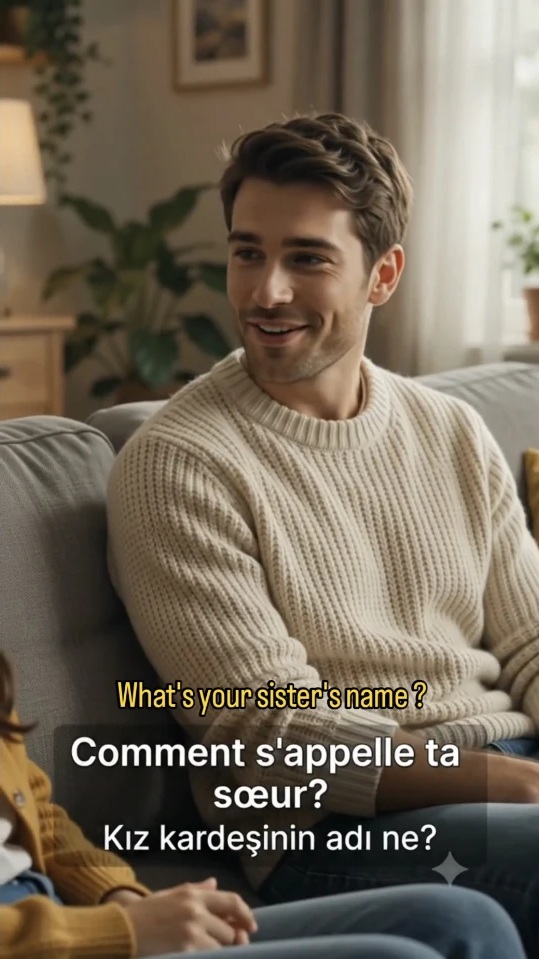
Comment s’appelle ta sœur ?
TRKız kardeşinin adı ne?
ENWhat’s your sister’s name?
Yaklaşık okunuş: Koman sapel ta sör?Approximate pronunciation: Koman sapel ta sör?
🎧 Önce dinle, sonra keşfet.🎧 Listen first, explore later.
Önce cümleyi dinle ve sesli olarak tekrar et. İstersen iki gün boyunca pratik yap. Hazır olduğunda kelimelerin anlamlarını keşfet.
First, listen to the sentence and repeat it aloud. If you like, practise for two days. When you're ready, explore the meanings of the words.
Kelime anlamlarını keşfetExplore word meanings01 · TANI01 · DISCOVER
Öğrenilecek ifadeKey expression
Comment s’appelle ta sœur ?
Kız kardeşinin adı ne?What’s your sister’s name?
Kelime kelimeWord by word
CommentNasıl; burada ad sorma kalıbının parçasıdır.How; part of the expression used to ask someone’s name here.
s’appelleAdı …; s’appeler fiilinin üçüncü tekil kişi çekimi.Is called; third-person singular form of s’appeler.
taSenin; dişil tekil isimden önce kullanılır. Sœur dişil olduğu için ta denir.Your; used before a feminine singular noun here. Sœur is feminine, so ta is used.
sœurKız kardeş; dişil isim.Sister; feminine noun.
Günlük hayatta nerede kullanılır?
Birinin kız kardeşinin adını sorarken kullanılır. Ta, sœur dişil olduğu için kullanılır; konuşanın cinsiyetine bağlı değildir.
When is it used in everyday life?
Use this to ask someone’s sister’s name. Ta is used because sœur is grammatically feminine, regardless of the speaker’s gender.
GörevTask 1 — Cümleyi dönüştürTransform the sentence🔒 Önce Görev 1’i tamamla🔒 Complete Task 1 first
Arkadaşınla çocukluk fotoğraflarına bakıyorsunuz. Fotoğraftaki iki kızın kendisinden küçük kardeşleri olduğunu söylüyor.You look at childhood photos with a friend who says the two girls are their younger sisters.
ArkadaşınYour friend:J'ai deux petites sœurs. — Benden küçük iki kız kardeşim var.I have two younger sisters.
Öğretmeni dinleListen to the speaker
Ses kayıtları henüz eklenmedi.Recordings have not been added yet.
💬 Konuşmayı Anla (+)💬 Understand the Dialogue (+)
J'aiBenim var; j' = je, ai avoir fiilinin je ile şimdiki zaman çekimi. Sahip olan konuşandır.I have; j' = je, ai is present of avoir with je. The speaker is the possessor.
deuxİki; sayı belirtildiği için ayrıca belirsiz artikel kullanılmaz.Two; no additional indefinite article is needed.
petitesKüçük; petit sıfatının dişil çoğulu, sœurs ile uyumlu. Burada yaşça küçük.Younger; feminine plural of petit agrees with sœurs; age, not size, here.
sœursKız kardeşler; sœur dişil isminin çoğulu.Sisters; plural of feminine sœur.
“Kız kardeşlerinin adları ne ve kaç yaşındalar?” diye sor.Ask: “What are your sisters' names and how old are they?”
📖 Yeni Kelimeleri Keşfet (+)📖 Explore New Words (+)
âgeYaş; eril isim.Age; masculine noun.
tesSenin; sahip olunan isim çoğul olduğu için ta değil tes.Your; plural possessed noun requires tes rather than ta.
ontVar/sahipler; avoir fiilinin elles ile şimdiki zaman 3. çoğul çekimi. Yaşları sorulan onlar; Fransızcada yaş avoir ile ifade edilir.Have; third-person plural present of avoir with elles. They are the people whose ages are asked; French expresses age with avoir.
CommentNasıl; s'appeler ile ad sormak için kullanılır.How; with s'appeler asks someone's name.
ellesOnlar; dişil çoğul özne, iki kız kardeşi temsil eder.They; feminine plural subject referring to the two sisters.
quelHangi/ne; âge eril tekil olduğu için quel.Which/what; masculine singular agrees with âge.
s'appellentAdları ...; s'appeler (adı olmak) fiilinin tes sœurs ile üçüncü çoğul şimdiki zaman çekimi. Özne fiilden sonra gelir. S', se zamirinin sesli harf önündeki biçimi.Are called; third-person plural present of s'appeler with tes sœurs, whose subject follows the verb. S' is contracted se before a vowel.
Comment s'appellent tes sœurs et quel âge ont-elles ?
Kız kardeşlerinin adları ne ve kaç yaşındalar?What are your sisters' names and how old are they?
💡 Neden Böyle?💡 Why This Way?
Comment s'appelle ta sœur ? tek kişi içindir. Comment s'appellent tes sœurs ? birden fazla kişiyi sorar; ta → tes, s'appelle → s'appellent. Quel âge ont-elles ? yaş sorar; ont ve elles devrik soru kuralıyla tireyle birleşir.Comment s'appelle ta sœur ? asks one person's name. Comment s'appellent tes sœurs ? asks several names: ta → tes, s'appelle → s'appellent. Quel âge ont-elles ? asks age; inverted ont and elles are joined by a hyphen.
🗣️ Önce cümleyi kendin yüksek sesle söyle, sonra seslendirmeyi dinle.🗣️ Say the sentence aloud yourself first, then listen to the recording.
Cevabı dinleListen to the answer
Ses kayıtları henüz eklenmedi.Recordings have not been added yet.
GörevTask 2 — Gerçek hayatta kullanUse it in real life🔒 Önce Görev 1’i tamamla🔒 Complete Task 1 first
Spor merkezinin kayıt bölümünde çalışıyorsun. Anne kızının adını söylüyor ama yazılışından emin değilsin.You work at a sports centre registration desk. A mother tells you her daughter's name, but you are unsure how to spell it.
AnneMother:Ma fille s'appelle Maëlle. — Kızımın adı Maëlle.My daughter's name is Maëlle.
Öğretmeni dinleListen to the speaker
Ses kayıtları henüz eklenmedi.Recordings have not been added yet.
💬 Konuşmayı Anla (+)💬 Understand the Dialogue (+)
MaBenim; fille dişil tekil olduğu için ma, konuşanın cinsiyetine göre değil.My; ma agrees with feminine singular fille, not the speaker's gender.
filleKız; ma fille = kızım.Girl/daughter; ma fille = my daughter.
s'appelleAdı ...; s'appeler fiilinin ma fille öznesiyle üçüncü tekil şimdiki zaman çekimi.Is called; third-person singular present of s'appeler with ma fille.
MaëlleKadın özel adı, büyük harfle başlar.Female given name, capitalized.
“Bana onun adının nasıl yazıldığını söyleyebilir misiniz?” diye kibarca sor.Politely ask: “Could you tell me how her first name is spelled?”
📖 Yeni Kelimeleri Keşfet (+)📖 Explore New Words (+)
direSöylemek; mastar. Pouvoir çekimli olduğu için dire mastar kalır.To tell; infinitive after conjugated pouvoir.
sonOnun; prénom eril tekil olduğu için son, adı taşıyan kişinin cinsiyetine göre değil. Son/sa seçimi sahip olunan isimle uyumludur.His/her; son agrees with masculine singular prénom, not the owner's gender.
commentNasıl; yazım yöntemini sorar. Burada dolaylı soru başlatır.How; asks spelling, introducing an indirect question.
PourriezYapabilir misiniz; pouvoir (-ebilmek) fiilinin vous ile koşul kipi çekimi, nazik rica.Could; conditional of pouvoir with vous, polite request.
prénomÖn ad; soyadı dışındaki ad, eril isim.First name; masculine noun.
meBana; dolaylı nesne zamiri; bilgiyi alacak kişi, özne değil.To me; indirect object pronoun receiving the information, not subject.
s'écritYazılır; s'écrire fiilinin son prénom öznesiyle üçüncü tekil şimdiki zaman çekimi. S' burada edilgen anlam (nasıl yazıldığı) verir. Özne fiilden sonra gelir.Is spelled; third-person singular present of s'écrire with son prénom as subject, which follows the verb. S' has a passive meaning here.
vousSiz; bilgiyi söylemesi istenen kişi, özne.You; subject asked to provide the information.
Pourriez-vous me dire comment s'écrit son prénom ?
Bana onun adının nasıl yazıldığını söyleyebilir misiniz?Could you tell me how her first name is spelled?
💡 Neden Böyle?💡 Why This Way?
Pourriez-vous me dire ... ? kibarca bilgi isteme kalıbıdır, tireyle yazılır. Comment s'écrit son prénom ifadesinde yazılan şey isimdir; özne son prénom. Son prénom (onun adı) ile sa sœur (onun kız kardeşi) sahip olunan isimlerin cinsiyetine göre değişir. Sesli harf/h muet önündeki dişil isimlerde de son kullanılır.Pourriez-vous me dire ... ? is a polite request for information, with a hyphen. In comment s'écrit son prénom the name is what is spelled, so son prénom is the subject. Son prénom and sa sœur differ according to the possessed noun. Son is also used before feminine nouns beginning with a vowel or silent h.
🗣️ Önce cümleyi kendin yüksek sesle söyle, sonra seslendirmeyi dinle.🗣️ Say the sentence aloud yourself first, then listen to the recording.
Cevabı dinleListen to the answer
Ses kayıtları henüz eklenmedi.Recordings have not been added yet.
03 · ZİHNİNDEN ÜRET03 · CREATE FROM MEMORY
⌁ PLANLANIYORPLANNED
✦
RÉFLEXE — Zihninden Üret — Create from Memory
Kelimeleri görmeden hatırla; değişen düşüncelerini Fransızca kendin anlat.Recall words without seeing them; express changing ideas in French.
🔒
PHRASE 02 / 02
DERS 10LESSON 10YENİNEW
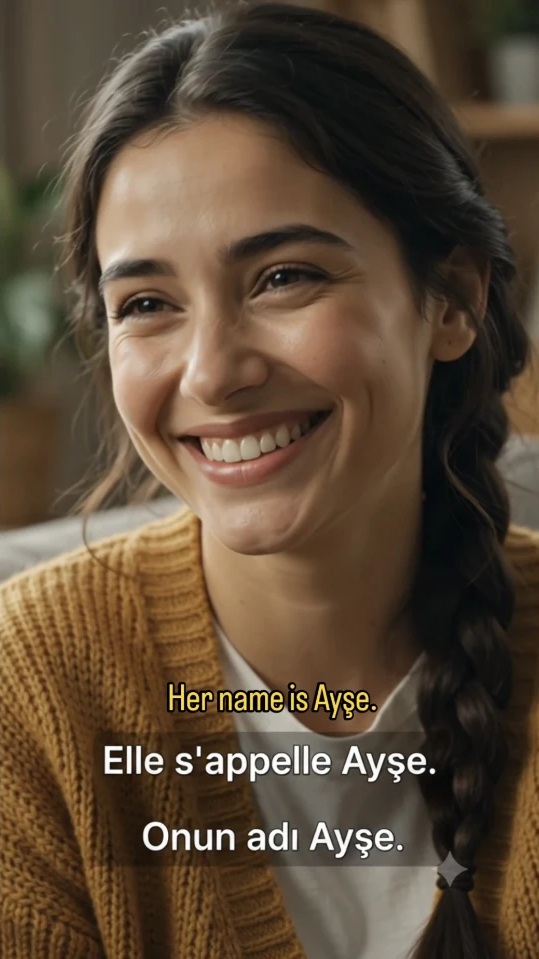
Elle s’appelle Ayşe.
TROnun adı Ayşe.
ENHer name is Ayşe.
Yaklaşık okunuş: El sapel Ayşe.Approximate pronunciation: El sapel Ayşe.
GörevTask 1 — Cümleyi dönüştürTransform the sentence🔒 Önce Görev 1’i tamamla🔒 Complete Task 1 first
Arkadaşınla aile fotoğraflarına bakıyorsunuz. Yanındaki kişinin kız kardeşin olduğunu soruyor. Adı Ayşe ve senden iki yaş büyük.You look at family photos with a friend who asks whether the person next to you is your sister. Her name is Ayşe and she is two years older than you.
ArkadaşınYour friend:C'est ta sœur, sur la photo ? — Fotoğraftaki kız kardeşin mi?Is that your sister in the photo?
Öğretmeni dinleListen to the speaker
Ses kayıtları henüz eklenmedi.Recordings have not been added yet.
💬 Konuşmayı Anla (+)💬 Understand the Dialogue (+)
C'estCe (bu/o) + est; est, être fiilinin ce ile üçüncü tekil şimdiki zaman çekimi. Kişinin kimliğini belirtir.Ce (this/that) + est; third-person singular present of être with ce, identifies the person.
taSenin; sœur dişil tekil olduğu için ta.Your; feminine singular agreeing with sœur.
sœurKız kardeş; dişil isim.Sister; feminine noun.
surÜzerinde; fotoğrafta görünen şeyi belirtir, Türkçede -de/-da.On; used for what appears in a photo, translated as in.
laDişil tekil belirli artikel; bilinen photo'yu belirtir.Feminine singular definite article for the known photo.
photoFotoğraf; dişil isim, photographie kısaltması.Photo; feminine noun, short for photographie.
“Evet, onun adı Ayşe ve o benden iki yaş büyük.” diye cevap ver.Reply: “Yes, her name is Ayşe and she's two years older than me.”
📖 Yeni Kelimeleri Keşfet (+)📖 Explore New Words (+)
moiBen; vurgulu zamir, karşılaştırılan kişi. Que moi = benden, burada je kullanılmaz.Me; stressed pronoun identifying the comparison, not subject je.
ansYıllar/yaş; an çoğulu, deux nedeniyle çoğul.Years; plural of an because of deux.
s'appelleAdı ...; s'appeler fiilinin elle ile üçüncü tekil şimdiki zaman çekimi.Is called; third-person singular present of s'appeler with elle.
de plusDaha fazla; deux ans de plus iki yıllık farkı belirtir. De bu miktar farkı kalıbının parçası, -den/-dan değil.More; deux ans de plus marks a difference of two years. De is part of the quantity-difference construction, not from.
elleO; dişil özne. İki elle de Ayşe'yi temsil eder.She; feminine subject; both occurrences refer to Ayşe.
OuiEvet; olumlu cevap.Yes; positive reply.
aVar; avoir fiilinin elle ile şimdiki zaman üçüncü tekil çekimi. Fransızcada yaş avoir ile anlatılır.Has; third-person singular present of avoir with elle. French expresses age with avoir.
queKarşılaştırma bağlacı; karşılaştırılan kişiyi tanıtır, burada benden anlamı que moi ile oluşur.Comparative conjunction introducing the person compared; que moi = than me.
deuxİki; farkın miktarı.Two; amount of the difference.
etVe; ad ve yaş bilgisini bağlar.And; links name and age.
AyşeÖzel ad; büyük harfle başlar.Proper name; capitalized.
Oui, elle s'appelle Ayşe et elle a deux ans de plus que moi.
Evet, onun adı Ayşe ve o benden iki yaş büyük.Yes, her name is Ayşe and she's two years older than me.
💡 Neden Böyle?💡 Why This Way?
Elle a vingt ans = yirmi yaşında. Elle a deux ans de plus que moi = benden iki yaş büyük; de moins = daha az/küçük. Yaş avoir ile ifade edilir, être ile değil. Que karşılaştırmayı moi ile tamamlar.Elle a vingt ans = she is twenty. Elle a deux ans de plus que moi = she is two years older than me; de moins = less/younger. Age uses avoir, not être. Que introduces the comparison with moi.
🗣️ Önce cümleyi kendin yüksek sesle söyle, sonra seslendirmeyi dinle.🗣️ Say the sentence aloud yourself first, then listen to the recording.
Cevabı dinleListen to the answer
Ses kayıtları henüz eklenmedi.Recordings have not been added yet.
GörevTask 2 — Gerçek hayatta kullanUse it in real life🔒 Önce Görev 1’i tamamla🔒 Complete Task 1 first
Ailenizle küçük bir pansiyon işletiyorsunuz. Müşteri rezervasyonunu değiştirmek istiyor; bu işlerle kız kardeşin Ayşe ilgileniyor.You run a small guesthouse with your family. A customer wants to change a reservation; your sister Ayşe handles reservations.
MüşteriCustomer:Je voudrais modifier ma réservation. À qui dois-je m'adresser ? — Rezervasyonumu değiştirmek isterim. Kime başvurmalıyım?I'd like to change my reservation. Who should I speak to?
Öğretmeni dinleListen to the speaker
Ses kayıtları henüz eklenmedi.Recordings have not been added yet.
💬 Konuşmayı Anla (+)💬 Understand the Dialogue (+)
Je / jeBen; her iki kullanımda müşteri özne.I; the customer is the subject in both clauses.
voudraisİsterim; vouloir fiilinin je ile koşul kipi çekimi, kibar istek.Would like; conditional of vouloir with je, polite request.
modifierDeğiştirmek; mastar, voudrais çekimli olduğu için.To change; infinitive after conjugated voudrais.
maBenim; réservation dişil tekil olduğu için ma.My; agrees with feminine singular réservation.
ÀS'adresser à kalıbında başvurulan kişiyi belirtir.Introduces the person addressed in s'adresser à.
quiKim; soru zamiri. À qui = kime.Who; interrogative pronoun. À qui = to whom.
doisYapmalıyım; devoir (gerekmek) fiilinin je ile şimdiki zaman çekimi. Devrik soruda dois-je tireyle yazılır.Must/should; present of devoir with je. Inverted question dois-je uses a hyphen.
m'adresserBirine başvurmak; s'adresser à fiilinin mastarı. Je öznesiyle se → me, sesli harf önünde m'. Dois çekimlidir, adresser mastar kalır.To address/turn to someone; infinitive of s'adresser à. With je, se becomes me, contracted to m' before a vowel. Dois is conjugated, adresser remains infinitive.
“Rezervasyonlarla ilgilenen kişi kız kardeşim. Onun adı Ayşe.” diye cevap ver.Reply: “My sister is the one who handles reservations. Her name is Ayşe.”
📖 Yeni Kelimeleri Keşfet (+)📖 Explore New Words (+)
quiBurada soru zamiri değil, ilgi zamiri; ma sœur'ü temsil eder ve s'occupe eyleminin öznesi olur.Relative, not interrogative, pronoun; refers to ma sœur and is subject of s'occupe.
réservationsRezervasyonlar; réservation dişil isminin çoğulu.Reservations; plural of feminine réservation.
ElleO; dişil tekil özne, kız kardeşi temsil eder.She; feminine singular subject referring to the sister.
maBenim; sœur dişil tekil olduğu için ma.My; agrees with feminine singular sœur.
s'occupeİlgileniyor; s'occuper de fiilinin qui (ma sœur) öznesiyle üçüncü tekil şimdiki zaman çekimi. S' dönüşlü fiilin parçasıdır.Handles/takes care of; third-person singular present of s'occuper de with qui (ma sœur) as subject. S' is part of the pronominal verb.
C'estCe + est; être fiilinin ce ile üçüncü tekil şimdiki zaman çekimi. C'est ... qui ile eylemi yapanı vurgular.Ce + est; present third-person singular of être with ce. C'est ... qui emphasizes the person performing the action.
desDe + les birleşimi, çoğul belirsiz artikel değil. De, s'occuper fiilinin gerektirdiği edat; les, pansiyonun bilinen rezervasyonlarını belirtir.Contraction of de + les, not an indefinite plural article. De is required by s'occuper; les identifies the guesthouse's known reservations.
sœurKız kardeş; dişil isim.Sister; feminine noun.
s'appelleAdı ...; s'appeler fiilinin elle ile üçüncü tekil şimdiki zaman çekimi.Is called; third-person singular present of s'appeler with elle.
AyşeÖzel ad.Proper name.
C'est ma sœur qui s'occupe des réservations. Elle s'appelle Ayşe.
Rezervasyonlarla ilgilenen kişi kız kardeşim. Onun adı Ayşe.My sister is the one who handles reservations. Her name is Ayşe.
💡 Neden Böyle?💡 Why This Way?
Ma sœur s'occupe des réservations = kız kardeşim rezervasyonlarla ilgileniyor. C'est ma sœur qui ... işi yapanı özellikle vurgular. À qui soru zamiri, c'est ... qui içindeki qui ilgi zamiridir. J'ai des réservations cümlesinde des belirsiz artikel; Je m'occupe des réservations cümlesinde de + les birleşimidir.Ma sœur s'occupe des réservations = my sister handles reservations. C'est ma sœur qui ... emphasizes the person doing it. À qui is interrogative; qui in c'est ... qui is relative. In J'ai des réservations, des is an indefinite article; in Je m'occupe des réservations it is the contraction de + les.
🗣️ Önce cümleyi kendin yüksek sesle söyle, sonra seslendirmeyi dinle.🗣️ Say the sentence aloud yourself first, then listen to the recording.
Cevabı dinleListen to the answer
Ses kayıtları henüz eklenmedi.Recordings have not been added yet.
03 · ZİHNİNDEN ÜRET03 · CREATE FROM MEMORY
⌁ PLANLANIYORPLANNED
✦
RÉFLEXE — Zihninden Üret — Create from Memory
Kelimeleri görmeden hatırla; değişen düşüncelerini Fransızca kendin anlat.Recall words without seeing them; express changing ideas in French.
🔒
VİDEO 02 / VIDEO 02
Yaş Sorma ve SöylemeAsking and Giving Age
PHRASE 01 / 03 · VIDEO 02
DERS 11LESSON 11
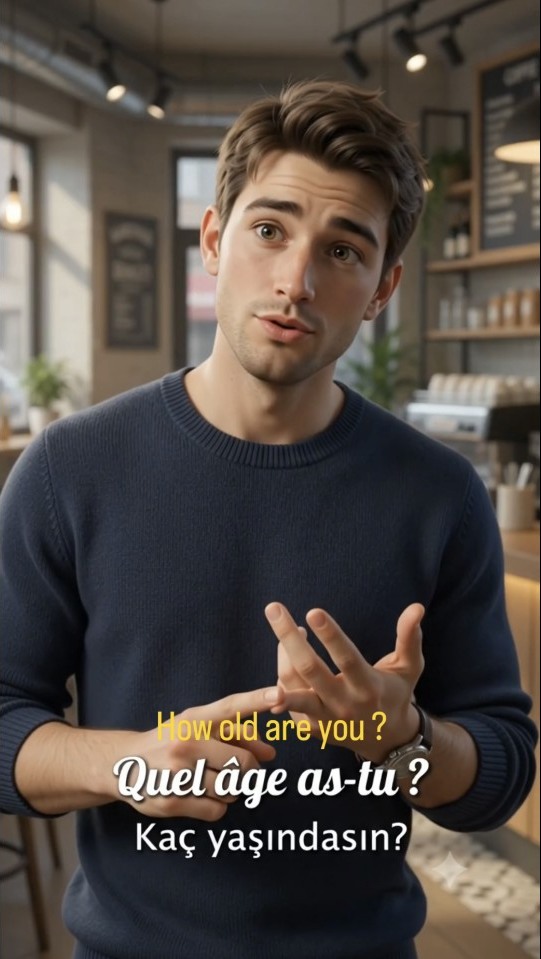
Quel âge as-tu ?
TR Kaç yaşındasın?
EN How old are you?
Yaklaşık okunuş: Kel aj a tü?Approximate pronunciation: Kel aj a tü?
GörevTask 1 — Cümleyi dönüştürTransform the sentence🔒 Önce Görev 1’i tamamla🔒 Complete Task 1 first
Fransızca kursunda yaşıtın yeni bir arkadaşınla konuşuyorsun. Ona samimi şekilde “Kaç yaşındasın?” diye sor. Orijinal karttan farklı olarak tu as sırasını kullan.You are talking to a new friend your age in French class. Ask how old they are, using the conversational tu as order.
📖 Yeni Kelimeleri Keşfet (+)📖 Explore New Words (+)
Yapbozda kullanacağın parçaları incele.Explore the pieces you will use in the puzzle.
asAvoir (sahip olmak) fiilinin tu ile çekimi. Yaş sorarken de kullanılır.A form of avoir (to have) used with tu; also used when asking age.
quelHangi / ne; âge ile “kaç yaş” anlamına gelir.Which/what; with âge it asks “how old”.
âge ?Yaş. Soru işareti cümlenin soru olduğunu gösterir.Age. The question mark signals a question.
As tek başına “yaş” demek değildir. Fransızcada yaş sorarken avoir fiilinden yararlanırız.As does not mean “age”. French uses forms of avoir (to have) to talk about age.
Tu as quel âge ?
Kaç yaşındasın?How old are you?
💡 Neden Böyle?💡 Why This Way?
Quel âge as-tu ? ve Tu as quel âge ? aynı sorunun iki doğru biçimidir. İkincisi günlük konuşmada çok yaygındır. Avoir fiili yaş belirtmek için kullanılır.Quel âge as-tu ? and Tu as quel âge ? are both correct. The second is common in everyday speech. French uses avoir when speaking about age.
🗣️ Önce cümleyi kendin yüksek sesle söyle, sonra seslendirmeyi dinle.🗣️ Say the sentence out loud yourself, then listen to the recording.
GörevTask 2 — Gerçek hayatta kullanUse it in real life🔒 Önce Görev 1’i tamamla🔒 Complete Task 1 first
Bir Fransızca kursunun kayıt görevlisisin. Yaş gruplarını belirlemek için yetişkin bir katılımcıya kibarca “Kaç yaşındasınız?” diye sor.You work at the registration desk of a French course. Politely ask an adult applicant their age to determine the class age group.
📖 Yeni Kelimeleri Keşfet (+)📖 Explore New Words (+)
Yapbozda kullanacağın parçaları incele.Explore the pieces you will use in the puzzle.
QuelHangi / ne; âge ile birlikte “kaç yaş” sorusunu oluşturur.What/which; with âge it asks how old someone is.
âgeYaş.Age.
avez-Avoir (sahip olmak) fiilinin vous (siz) ile çekimi; kısa çizgi soru yapısında özneyi bağlar.Form of avoir used with vous; the hyphen joins the verb to the subject in this question.
Düz cümlede vous avez, bu soru biçiminde ise avez-vous yazarız. Kısa çizgi vardır; arada boşluk yoktur.The statement order is vous avez, while this question uses avez-vous. The hyphen joins the two words without a space.
Quel âge avez-vous ?
Kaç yaşındasınız?How old are you? (polite)
💡 Neden Böyle?💡 Why This Way?
Samimi tu as yerine kibar vous avez kullanılır. Soru oluşturmak için fiil ve öznenin yeri değişir: avez-vous. Parçaları birleştirince araya boşluk koymadan yazılır.The polite form uses vous avez rather than tu as. In this question, the verb and subject are inverted: avez-vous, joined by a hyphen without a space.
🗣️ Önce cümleyi kendin yüksek sesle söyle, sonra seslendirmeyi dinle.🗣️ Say the sentence out loud yourself, then listen to the recording.
03 · ZİHNİNDEN ÜRET03 · CREATE FROM MEMORY
⌁ PLANLANIYORPLANNED
✦
RÉFLEXE — Zihninden Üret — Create from Memory
Kelimeleri görmeden hatırla; değişen düşüncelerini Fransızca kendin anlat.Recall words without seeing them; express changing ideas in French.
🔒
PHRASE 02 / 03 · VIDEO 02
DERS 12LESSON 12
J'ai 25 ans.
TR 25 yaşındayım.
EN I am 25 years old.
Yaklaşık okunuş: Je ven-senk an.Approximate pronunciation: Je ven-senk an.
GörevTask 1 — Cümleyi dönüştürTransform the sentence🔒 Önce Görev 1’i tamamla🔒 Complete Task 1 first
Fransızca kursunun kayıt formunu dolduruyorsun. Bu alıştırmada 30 yaşındasın. Görevliye yaşını Fransızca söyle.You are completing registration for a French course. In this exercise you are 30. Tell the clerk your age in French.
📖 Yeni Kelimeleri Keşfet (+)📖 Explore New Words (+)
Yapbozda kullanacağın parçaları incele.Explore the pieces you will use in the puzzle.
J'aiJe (ben) + ai (avoir fiilinin je ile çekimi). Je, sesli harften önce j’ olur; j'ai birlikte yazılır.Je (I) + ai (form of avoir with je). Je becomes j’ before a vowel.
trenteOtuz (30).Thirty (30).
ans.An (yıl) sözcüğünün çoğulu; yaş belirtirken kullanılır.Plural of an (year); used when saying your age.
Je ai yazılmaz; doğru birleşme j’ai biçimindedir. Yaş söylerken être değil, avoir kullanılır.Write j’ai, not je ai. French uses avoir, not être, to state age.
J'ai trente ans.
30 yaşındayım.I am 30 years old.
💡 Neden Böyle?💡 Why This Way?
Fransızcada yaş belirtirken avoir fiilini kullanırız. J’ai trente ans ifadesinin doğal Türkçesi “30 yaşındayım”dır; sayı otuz olarak değişmiştir.French uses avoir to give an age. J’ai trente ans naturally means “I am 30 years old”; the age has changed.
🗣️ Önce cümleyi kendin yüksek sesle söyle, sonra seslendirmeyi dinle.🗣️ Say the sentence out loud yourself, then listen to the recording.
GörevTask 2 — Gerçek hayatta kullanUse it in real life🔒 Önce Görev 1’i tamamla🔒 Complete Task 1 first
Dil kursunda kayıt görevlisi sana “Quel âge avez-vous ?” (Kaç yaşındasınız?) diye soruyor. Bu alıştırmada 22 yaşındasın. Ona yaşını söyle.A language-course clerk asks Quel âge avez-vous ? (How old are you?). In this exercise you are 22. Answer with your age.
📖 Yeni Kelimeleri Keşfet (+)📖 Explore New Words (+)
Yapbozda kullanacağın parçaları incele.Explore the pieces you will use in the puzzle.
J'aiJe (ben) + ai (avoir fiilinin je ile çekimi); yaş belirtme kalıbında kullanılır.Je (I) plus ai (form of avoir used with je); used to give your age.
vingt-deuxYirmi iki. Vingt = yirmi, deux = iki; kısa çizgiyle yazılır.Twenty-two. Vingt = twenty, deux = two; joined by a hyphen.
ans.Yıl sözcüğünün çoğulu; yaş bildirir.Plural of year; used when giving an age.
Vingt-deux tek yapboz parçasıdır. Türkçedeki “22 yaşındayım” ifadesini Fransızcada j’ai + sayı + ans ile kurarız.Vingt-deux is one puzzle piece. French uses j’ai + number + ans for age.
J'ai vingt-deux ans.
22 yaşındayım.I am 22 years old.
💡 Neden Böyle?💡 Why This Way?
Kayıt görevlisi vous avez biçimiyle yaşını soruyor. Kendinden söz ettiğin için j’ai diyorsun. Avoir çekimi: je → ai, tu → as, vous → avez.The clerk asks using vous avez, but you answer about yourself with j’ai. Forms of avoir: je → ai, tu → as, vous → avez.
🗣️ Önce cümleyi kendin yüksek sesle söyle, sonra seslendirmeyi dinle.🗣️ Say the sentence out loud yourself, then listen to the recording.
03 · ZİHNİNDEN ÜRET03 · CREATE FROM MEMORY
⌁ PLANLANIYORPLANNED
✦
RÉFLEXE — Zihninden Üret — Create from Memory
Kelimeleri görmeden hatırla; değişen düşüncelerini Fransızca kendin anlat.Recall words without seeing them; express changing ideas in French.
🔒
PHRASE 03 / 03 · VIDEO 02
DERS 13LESSON 13
Moi, j'ai 28 ans.
TR Ben ise 28 yaşındayım.
EN As for me, I am 28 years old.
Yaklaşık okunuş: Mua, je ven-tüit an.Approximate pronunciation: Mua, je ven-tüit an.
GörevTask 1 — Cümleyi dönüştürTransform the sentence🔒 Önce Görev 1’i tamamla🔒 Complete Task 1 first
Arkadaşın “J’ai vingt ans.” (20 yaşındayım.) diyor. Bu alıştırmada sen 24 yaşındasın. “Ben ise 24 yaşındayım.” diye cevap ver.Your friend says J’ai vingt ans. (I am 20.) In this exercise you are 24. Reply “As for me, I am 24.”
📖 Yeni Kelimeleri Keşfet (+)📖 Explore New Words (+)
Yapbozda kullanacağın parçaları incele.Explore the pieces you will use in the puzzle.
Moi,Ben / bana gelince; konuşanı özellikle vurgulayan zamir.Me / as for me; a stressed pronoun adding emphasis.
j'aiJe (ben) + ai (avoir fiilinin çekimi). Je sesli harften önce j’ olur.Je (I) + ai (form of avoir); je contracts to j’ before a vowel.
vingt-quatreYirmi dört. Vingt = 20, quatre = 4; kısa çizgiyle yazılır.Twenty-four. Vingt = 20 and quatre = 4; written with a hyphen.
ans.Yaş için kullanılan yıl sözcüğünün çoğulu.Plural of year; used for age.
Moi ile je aynı kişiyi gösterir ama aynı işi yapmaz: moi vurgular, j’ ise fiilin öznesidir.Moi and je refer to the same person but have different jobs: moi adds emphasis; j’ is the subject of the verb.
Moi, j'ai vingt-quatre ans.
Ben ise 24 yaşındayım.As for me, I am 24 years old.
💡 Neden Böyle?💡 Why This Way?
J’ai vingt-quatre ans yalnızca yaşını bildirir. Moi, j’ai vingt-quatre ans ifadesi ise karşıdakinin yaşından sonra “ben ise...” vurgusu yapar. Moi ve j’ birlikte kullanılması doğrudur.J’ai vingt-quatre ans simply states your age. Moi, j’ai vingt-quatre ans adds “as for me...” after someone else has spoken. Using moi and j’ together is correct.
🗣️ Önce cümleyi kendin yüksek sesle söyle, sonra seslendirmeyi dinle.🗣️ Say the sentence out loud yourself, then listen to the recording.
GörevTask 2 — Gerçek hayatta kullanUse it in real life🔒 Önce Görev 1’i tamamla🔒 Complete Task 1 first
Bir etkinlikte bir arkadaşın “Je suis étudiant. Et toi ?” (Ben öğrenciyim. Ya sen?) diyor. Sen çalışıyorsun. “Ben ise çalışıyorum.” diye cevap ver.A friend at an event says Je suis étudiant. Et toi ? (I’m a student. And you?) You work. Answer “As for me, I work.”
💬 Konuşmayı Anla (+)💬 Understand the Dialogue (+)
Je suisBen ...-im; être fiiliyle kurulur.I am; a form of être.
📖 Yeni Kelimeleri Keşfet (+)📖 Explore New Words (+)
Yapbozda kullanacağın parçaları incele.Explore the pieces you will use in the puzzle.
Moi,Ben / bana gelince; iki kişinin durumunu karşılaştırırken vurgu yapar.As for me; emphasizes a contrast between two people.
jeBen; fiilin öznesi.I; the subject of the verb.
travaille.Travailler (çalışmak) fiilinin je ile çekimi; “çalışıyorum” demektir.Form of travailler (to work) used with je; “I work.”
Travaille zaten çekimli fiildir. “Çalışıyorum” demek için suis eklenmez.Travaille is already a conjugated verb. Do not add suis to say “I work”.
Moi, je travaille.
Ben ise çalışıyorum.As for me, I work.
💡 Neden Böyle?💡 Why This Way?
Je suis étudiant (Öğrenciyim): étudiant bir isim olduğu için être fiilinden suis gerekir. Je travaille (Çalışıyorum): travaille zaten çekimli fiildir, önüne suis gelmez. “Je suis travaille” yanlıştır. Moi ise “ben ise” vurgusu ekler.Je suis étudiant (I am a student) uses suis from être before the noun étudiant. Je travaille (I work) already contains a conjugated verb, so do not add suis. “Je suis travaille” is incorrect. Moi adds emphasis.
🗣️ Önce cümleyi kendin yüksek sesle söyle, sonra seslendirmeyi dinle.🗣️ Say the sentence out loud yourself, then listen to the recording.
03 · ZİHNİNDEN ÜRET03 · CREATE FROM MEMORY
⌁ PLANLANIYORPLANNED
✦
RÉFLEXE — Zihninden Üret — Create from Memory
Kelimeleri görmeden hatırla; değişen düşüncelerini Fransızca kendin anlat.Recall words without seeing them; express changing ideas in French.
🔒
VİDEO 03 / VIDEO 03
Öğrencilik ve ÇalışmaStudying and Working
PHRASE 01 / 03 · VIDEO 03
DERS 14LESSON 14
Tu es étudiant ou tu travailles ?
TR Öğrenci misin yoksa çalışıyor musun?
EN Are you a student or do you work?
Yaklaşık okunuş: Tü e etüdyan u tü travay?Approximate pronunciation: Tü e etüdyan u tü travay?
GörevTask 1 — Cümleyi dönüştürTransform the sentence🔒 Önce Görev 1’i tamamla🔒 Complete Task 1 first
Fransızca kursunda yeni tanıştığın arkadaşının üniversitede mi yoksa lisede mi okuduğunu merak ediyorsun. Ona samimi biçimde sor.In French class, you want to know whether a new friend studies at university or at high school. Ask informally.
📖 Yeni Kelimeleri Keşfet (+)📖 Explore New Words (+)
Yapbozda kullanacağın parçaları incele.Explore the pieces you will use in the puzzle.
étudiesÉtudier (öğrenim görmek) fiilinin tu ile çekimi. “Okuyorsun” anlamına gelir.Form of étudier (to study) used with tu.
à l'universitéÜniversitede. À yer bildiren edattır. Université dişil isimdir (la université değil, l’université); la, sesli harften önce l’ olur.At university. À marks place. Université is feminine; la contracts to l’ before a vowel.
ouVeya / yoksa. Aksansız ou seçeneği bağlar; aksanlı où “nerede” demektir.Or. Ou links alternatives; où (with accent) means where.
au lycée ?Lisede. Lycée “lise” demektir ve eril bir isimdir: le lycée. À (yer edatı) + le (eril belirli artikel) birleşince au olur.At high school. Lycée is masculine: le lycée. The preposition à + the masculine article le combine into au.
“à + le = au” demek, iki sözcüğün birleşmesi demektir: à yer/yön bildirir; le eril belirli artikeldir. “Au lycée” bu cümlede “lisede” demektir. À l’université ifadesinde ise la → l’ kısalması olur.À indicates place/direction; le is the masculine definite article. They merge to au, so au lycée means “at high school” here. With feminine université, la shortens to l’ before a vowel.
Tu étudies à l'université ou au lycée ?
Üniversitede mi yoksa lisede mi okuyorsun?Do you study at university or at high school?
💡 Neden Böyle?💡 Why This Way?
Tu étudies doğru bir yapıdır: tu ile étudier fiili étudies olur. Ou, iki seçeneği bağlar; où ise “nerede” demektir. À l’université ve au lycée yer bildiren ifadelerdir. Au = à + le; üniversité dişil olduğundan à l’université denir.Tu étudies is correct: étudier takes the form étudies with tu. Ou means “or”, while où means “where”. À l’université and au lycée both express place; au = à + le, while université is feminine and uses l’.
🗣️ Önce cümleyi kendin yüksek sesle söyle, sonra seslendirmeyi dinle.🗣️ Say the sentence out loud yourself, then listen to the recording.
GörevTask 2 — Gerçek hayatta kullanUse it in real life🔒 Önce Görev 1’i tamamla🔒 Complete Task 1 first
Bir kariyer etkinliğinde yetişkin bir erkek katılımcıyla tanışıyorsun. Katılımcı “Bonjour, je cherche une formation.” (Merhaba, bir eğitim programı arıyorum.) diyor. Ona kibarca “Çalışıyor musunuz yoksa öğrenci misiniz?” diye sor.At a careers event, an adult male participant says Bonjour, je cherche une formation. (Hello, I am looking for a training programme.) Politely ask whether he works or is a student.
💬 Konuşmayı Anla (+)💬 Understand the Dialogue (+)
BonjourMerhaba.Hello.
jeBen; özne.I; subject.
chercheChercher (aramak) fiilinin je ile çekimi; arıyorum.Form of chercher (to look for) with je.
uneBir; dişil isimle kullanılan belirsiz artikel.An/a; feminine indefinite article.
formationEğitim / eğitim programı; dişil bir isim.Training programme; feminine noun.
📖 Yeni Kelimeleri Keşfet (+)📖 Explore New Words (+)
Yapbozda kullanacağın parçaları incele.Explore the pieces you will use in the puzzle.
VousSiz; kibar hitapta kullanılan özne zamiri.You; polite/formal subject pronoun.
travaillezTravailler (çalışmak) fiilinin vous ile çekimi; “çalışıyorsunuz”.Form of travailler (to work) used with vous: “you work”.
ouVeya / yoksa; iki seçenek bağlar.Or; connects the two alternatives.
vousYine “siz”; ikinci bölümün de öznesi olduğu için tekrar kullanılır.You again; the second clause has its own subject.
êtesÊtre (olmak) fiilinin vous ile çekimi. Birinin durumunu/kimliğini anlatmada kullanılır.Form of être (to be) used with vous; describes status or identity.
étudiant ?Öğrenci (eril biçim). Senaryodaki katılımcı erkek olduğu için böyle yazılır.Student (masculine); used because the participant is male.
Burada iki ayrı bölüm var: vous travaillez ve vous êtes étudiant. Her bölümde vous gerekir. Étudiant bir isimdir, êtes kullanılır; travaillez ise zaten çekimli fiildir, önüne êtes eklenmez.There are two clauses: vous travaillez and vous êtes étudiant. Each has its own vous. Étudiant is a noun, so it uses êtes; travaillez is already a conjugated verb.
Vous travaillez ou vous êtes étudiant ?
Çalışıyor musunuz yoksa öğrenci misiniz?Do you work or are you a student? (polite, male addressee)
💡 Neden Böyle?💡 Why This Way?
Tu ile samimi hitaptan vous ile kibar hitaba geçiyoruz: tu travailles → vous travaillez, tu es → vous êtes. “Vous” iki bölümde kullanılır. Étudiant eril (erkek), étudiante dişil (kadın) biçimidir; burada erkek katılımcıya soruluyor.Switch from informal tu to polite vous: tu travailles → vous travaillez, tu es → vous êtes. Each clause uses vous. Étudiant is masculine and étudiante feminine; this question addresses a male participant.
🗣️ Önce cümleyi kendin yüksek sesle söyle, sonra seslendirmeyi dinle.🗣️ Say the sentence out loud yourself, then listen to the recording.
03 · ZİHNİNDEN ÜRET03 · CREATE FROM MEMORY
⌁ PLANLANIYORPLANNED
✦
RÉFLEXE — Zihninden Üret — Create from Memory
Kelimeleri görmeden hatırla; değişen düşüncelerini Fransızca kendin anlat.Recall words without seeing them; express changing ideas in French.
🔒
PHRASE 02 / 03 · VIDEO 03
DERS 15LESSON 15
Je suis étudiant et je travaille.
TR Öğrenciyim ve çalışıyorum.
EN I am a student and I work.
Yaklaşık okunuş: Jö süi etüdyan e jö travay.Approximate pronunciation: Jö süi etüdyan e jö travay.
GörevTask 1 — Cümleyi dönüştürTransform the sentence🔒 Önce Görev 1’i tamamla🔒 Complete Task 1 first
Bir arkadaşınla okul ve iş hayatı hakkında konuşuyorsun. Bu alıştırmada erkek öğrencisin fakat bir işte çalışmıyorsun. Ona “Öğrenciyim ama çalışmıyorum.” de.You are talking with a friend about school and work. For this exercise, you are a male student but do not have a job. Say “I am a student, but I do not work.”
📖 Yeni Kelimeleri Keşfet (+)📖 Explore New Words (+)
Yapbozda kullanacağın parçaların anlamlarını öğren. Sıralamayı kendin bul.Learn the pieces. Find their correct order yourself.
étudiant,Öğrenci (eril biçim). Virgül kelimenin anlamını değiştirmez.Male-form noun for student; the comma does not change its meaning.
je neJe = ben; ne, standart olumsuzluk yapısının fiilden önceki öğesidir.Je = I; ne is the part of standard negation placed before a conjugated verb.
pas.Ne ile birlikte olumsuzluk kuran ikinci öğe; fiilden sonra yer alır.Second part of ne ... pas negation, placed after the conjugated verb.
Je suisJe = ben; suis = être (olmak) fiilinin je ile çekimi. “Ben ...-im” yapısı.Je = I; suis is the je form of être (to be).
maisAma, fakat; iki durumu karşılaştırır.But; links contrasting statements.
travailleTravailler (çalışmak) fiilinin je ile çekimi; çalışıyorum.The je form of travailler (to work).
Standart olumsuzlukta ne çekimli fiilin önüne, pas ise arkasına gelir. Yardım yalnızca parçaların görevini gösterir; cümleyi sen oluştur.In standard negation, ne goes before the conjugated verb and pas after it. Build the full sentence yourself.
Je suis étudiant, mais je ne travaille pas.
Öğrenciyim ama çalışmıyorum.I am a student, but I do not work.
💡 Neden Böyle?💡 Why This Way?
Orijinal derste “et” (ve) iki olumlu durumu bağlıyordu. Burada “mais” (ama) karşıtlık kuruyor. “Ne ... pas” çekimli travaille fiilini olumsuz yapıyor. Travaille zaten çekimlidir, önüne suis gelmez. Kadın konuşmacı étudiante kullanır.The original lesson used et (and). Mais (but) marks contrast. Ne ... pas makes the verb travaille negative. Travaille is already conjugated and does not need suis. A female speaker would say étudiante.
🗣️ Önce cümleyi kendin yüksek sesle söyle, sonra seslendirmeyi dinle.🗣️ Say the sentence aloud yourself first, then listen to the recording.
GörevTask 2 — Gerçek hayatta kullanUse it in real life🔒 Önce Görev 1’i tamamla🔒 Complete Task 1 first
Bir Fransızca konuşma buluşmasında yeni tanıştığın arkadaşın “Tu fais quoi dans la vie ?” (Ne işle uğraşıyorsun?) diye soruyor. Üniversitede okuyorsun ve bir kafede çalışıyorsun. İkisini de anlat.At a French conversation meetup, a new friend asks “Tu fais quoi dans la vie?” (What do you do?). You study at university and work in a café. Explain both.
💬 Konuşmayı Anla (+)💬 Understand the Dialogue (+)
faisFaire (yapmak) fiilinin tu ile çekimi.The tu form of faire (to do).
dans la vieBu soruda “hayatta/ne işle uğraşıyorsun?” anlamını kuran kalıp bölümü.Part of an expression about what someone does for a living.
TuSen; samimi hitapta özne.You; informal subject.
quoiNe.What.
📖 Yeni Kelimeleri Keşfet (+)📖 Explore New Words (+)
Yapbozda kullanacağın parçaların anlamlarını öğren. Sıralamayı kendin bul.Learn the pieces. Find their correct order yourself.
à l'universitéÀ yer bildirir; université dişildir ve sesli harfle başladığından la artikeli l' olur. Birlikte “üniversitede” anlamındadır.À indicates place; université is feminine and la contracts to l’ before a vowel.
jeBen; ikinci fiilin öznesidir.I; subject of the second verb.
dans un café.Dans = içinde, un = eril isimden önce “bir”, café = kafe. Birlikte “bir kafede” anlamı verir.Dans = in, un = an/a (masculine), café = café.
J'étudieJe + étudie birleşir: je, sesli harf önünde j' olur. Étudie = étudier fiilinin je ile çekimi; okuyorum/öğrenim görüyorum.Je contracts to j’ before the vowel; étudie is the je form of étudier (to study).
etVe; iki durumu birleştirir.And; connects two activities.
travailleTravailler (çalışmak) fiilinin je ile çekimi; çalışıyorum.The je form of travailler (to work).
Étudiant (öğrenci) isimdir; étudie (öğrenim görüyorum) ise çekimli fiildir. İkisi farklı görevlerde kullanılır.Étudiant is a noun (student); étudie is a conjugated verb (study).
J'étudie à l'université et je travaille dans un café.
Üniversitede okuyorum ve bir kafede çalışıyorum.I study at university and work in a café.
💡 Neden Böyle?💡 Why This Way?
J’étudie ile öğrenim gördüğünü, je travaille ile çalıştığını söylüyorsun. Et iki eylemi bağlar. À l’université öğrenim yerini, dans un café ise çalıştığın yeri belirtir.J’étudie describes studying; je travaille describes working. Et joins the two actions. À l’université and dans un café specify where.
🗣️ Önce cümleyi kendin yüksek sesle söyle, sonra seslendirmeyi dinle.🗣️ Say the sentence aloud yourself first, then listen to the recording.
03 · ZİHNİNDEN ÜRET03 · CREATE FROM MEMORY
⌁ PLANLANIYORPLANNED
✦
RÉFLEXE — Zihninden Üret — Create from Memory
Kelimeleri görmeden hatırla; değişen düşüncelerini Fransızca kendin anlat.Recall words without seeing them; express changing ideas in French.
🔒
PHRASE 03 / 03 · VIDEO 03
DERS 16LESSON 16
C'est très bien !
TR Çok iyi!
EN That's great!
Yaklaşık okunuş: Se tre byen!Approximate pronunciation: Se tre byen!
GörevTask 1 — Cümleyi dönüştürTransform the sentence🔒 Önce Görev 1’i tamamla🔒 Complete Task 1 first
Arkadaşın yarın birlikte ders çalışmayı öneriyor. Fikri çok beğendin. “Bu çok iyi bir fikir!” diye cevap ver.Your friend suggests studying together tomorrow. You love the idea. Respond: “That's a really good idea!”
📖 Yeni Kelimeleri Keşfet (+)📖 Explore New Words (+)
Yapbozda kullanacağın parçaların anlamlarını öğren. Sıralamayı kendin bul.Learn the pieces. Find their correct order yourself.
uneBir; dişil tekil ismin önünde kullanılan belirsiz artikel.An/a; indefinite article for a feminine singular noun.
bonneİyi; bon sıfatının dişil biçimi. Idée dişil olduğu için bonne kullanılır.Feminine form of bon (good), agreeing with idée.
C'estCe + est birleşimidir; ce “bu/o”yu, est ise être (olmak) fiilinin çekimini anlatır. Ce, sesli harf önünde c' olur.Ce + est; ce is “that/it”, est is a form of être (to be). Ce contracts before a vowel.
trèsÇok; sıfatın anlamını güçlendirir.Very; intensifies an adjective.
idée !Fikir; dişil bir isim.Idea; feminine noun.
Bien sıklıkla zarf olarak “iyi” demektir. Bon/bonne bir ismi niteler: une bonne idée = iyi bir fikir. “Très” burada bonne sıfatını güçlendirir.Bien is commonly an adverb; bon/bonne is an adjective modifying a noun: une bonne idée.
C'est une très bonne idée !
Bu çok iyi bir fikir!That's a really good idea!
💡 Neden Böyle?💡 Why This Way?
C’est très bien genel bir olumlu değerlendirmedir. Burada fikri niteleyen isim idée (dişil) olduğu için bonne deriz. Très de bonne sıfatının anlamını güçlendirir.C’est très bien is general praise. Here, bonne modifies the feminine noun idée, and très intensifies bonne.
🗣️ Önce cümleyi kendin yüksek sesle söyle, sonra seslendirmeyi dinle.🗣️ Say the sentence aloud yourself first, then listen to the recording.
GörevTask 2 — Gerçek hayatta kullanUse it in real life🔒 Önce Görev 1’i tamamla🔒 Complete Task 1 first
Arkadaşın sevindirici bir haber veriyor: “J’ai réussi mon examen !” (Sınavımı geçtim!). Onu “Bravo, bu harika!” diyerek kutla.Your friend announces: “J’ai réussi mon examen!” (I passed my exam!). Celebrate with “Well done, that's fantastic!”
💬 Konuşmayı Anla (+)💬 Understand the Dialogue (+)
aiAvoir fiilinin je ile çekimi. Burada sahiplik değil, geçmiş zaman için yardımcı fiildir.Form of avoir with je; here it is an auxiliary for the past tense, not possession.
monBenim; examen eril isim olduğu için mon kullanılır.My; used because examen is grammatically masculine.
J'Je (ben) zamirinin sesli harften önce kısalan hâli.Contracted form of je (I) before a vowel.
réussiRéussir (başarmak) fiilinin geçmiş zaman ortacı. J’ai réussi = başardım/geçtim.Past participle of réussir (to succeed); j’ai réussi = I succeeded/passed.
📖 Yeni Kelimeleri Keşfet (+)📖 Explore New Words (+)
Yapbozda kullanacağın parçaların anlamlarını öğren. Sıralamayı kendin bul.Learn the pieces. Find their correct order yourself.
c'estCe + est; “bu/o ...” yapısını oluşturur. Ce, est önünde kısalır.Ce + est (it/that is); ce contracts before est.
Bravo,Bravo, aferin! Başarıyı kutlamak için kullanılır.Bravo, well done! Used to praise an achievement.
génial !Harika, müthiş; güçlü bir olumlu değerlendirme.Fantastic, awesome; enthusiastic positive evaluation.
J’ai kelimesi her zaman sahiplik göstermez. J’ai réussi kalıbında ai geçmiş zamanı oluşturur; sınavın “benim” olduğunu mon gösterir.J’ai does not always express possession. Ai forms the past tense in j’ai réussi; mon expresses “my”.
Bravo, c'est génial !
Bravo, bu harika!Well done, that's fantastic!
💡 Neden Böyle?💡 Why This Way?
Bravo ile arkadaşını kutluyorsun; c’est génial ile haberin harika olduğunu söylüyorsun. C’est très bien de doğrudur ama böyle sevindirici bir haberde c’est génial daha coşkuludur.Bravo congratulates your friend; c’est génial reacts enthusiastically. C’est très bien is also possible but less exuberant.
🗣️ Önce cümleyi kendin yüksek sesle söyle, sonra seslendirmeyi dinle.🗣️ Say the sentence aloud yourself first, then listen to the recording.
03 · ZİHNİNDEN ÜRET03 · CREATE FROM MEMORY
⌁ PLANLANIYORPLANNED
✦
RÉFLEXE — Zihninden Üret — Create from Memory
Kelimeleri görmeden hatırla; değişen düşüncelerini Fransızca kendin anlat.Recall words without seeing them; express changing ideas in French.
🔒
VİDEO 04 / VIDEO 04
MesleklerProfessions
PHRASE 01 / 02 · VIDEO 04
DERS 17LESSON 17
Quel est ton métier ?
TR Mesleğin ne?
EN What is your job?
Yaklaşık okunuş: Kel e ton metye?Approximate pronunciation: Kel e ton metye?
GörevTask 1 — Cümleyi dönüştürTransform the sentence🔒 Önce Görev 1’i tamamla🔒 Complete Task 1 first
Bir fotoğraf gezisinde yaşıtın olan biriyle sohbet ediyorsun. Fotoğraf çekmeyi seviyor ama bunun mesleği olup olmadığını bilmiyorsun. Samimi biçimde “Ne iş yapıyorsun?” diye sor.During a photo walk, you chat with someone your age. They enjoy photography, but you do not know their job. Ask informally what they do for work.
📖 Yeni Kelimeleri Keşfet (+)📖 Explore New Words (+)
Yapbozda kullanacağın parçaların anlamlarını öğren. Sıralamayı kendin bul.Learn the pieces. Find their correct order yourself.
faisFaire (yapmak) fiilinin tu ile çekimi; yapıyorsun.The tu form of faire (to do).
commeTek başına “gibi/olarak” anlamlarına gelebilir. Buradaki comme travail ifadesi ne tür bir iş olduğunu sorar.Often means like/as; in comme travail, it asks what kind of work.
quoiNe; günlük konuşma sorularında fiilden sonra gelebilir.What; may appear after the verb in informal questions.
travail ?İş, çalışma. “Comme travail” ile birlikte “ne iş” anlamını kurar.Work/job; forms part of the expression comme travail.
Tu fais quoi comme travail ? ifadesini kelime kelime çevirmeyiz; günlük dilde “Ne iş yapıyorsun?” anlamında kullanılır.Do not translate every word literally; Tu fais quoi comme travail ? is a natural informal way to ask someone’s occupation.
Tu fais quoi comme travail ?
Ne iş yapıyorsun?What do you do for work?
💡 Neden Böyle?💡 Why This Way?
Orijinal derste “Quel est ton métier ?” ile meslek soruyorduk. Burada faire (yapmak) fiilini kullanıyoruz. “Quoi” günlük konuşmada fiilden sonra gelebilir; “comme travail” yapılan işin türünü belirginleştirir.The original lesson asked Quel est ton métier? Here we use faire. In informal speech quoi can follow the verb; comme travail clarifies the kind of work.
🗣️ Önce cümleyi kendin yüksek sesle söyle, sonra seslendirmeyi dinle.🗣️ Say the sentence aloud yourself first, then listen to the recording.
GörevTask 2 — Gerçek hayatta kullanUse it in real life🔒 Önce Görev 1’i tamamla🔒 Complete Task 1 first
Meslekleri tanıttığın bir podcast için Martin Hanım’la röportaj yapıyorsun. Konuğun henüz ne iş yaptığını söylemedi. Ona kibarca “Mesleğiniz nedir?” diye sor.You host a podcast about professions and are interviewing Ms Martin. She has not yet said what she does. Politely ask her profession.
📖 Yeni Kelimeleri Keşfet (+)📖 Explore New Words (+)
Yapbozda kullanacağın parçaların anlamlarını öğren. Sıralamayı kendin bul.Learn the pieces. Find their correct order yourself.
estÊtre (olmak) fiilinin üçüncü tekil kişi çekimi.Third-person singular form of être (to be).
profession ?Meslek; Fransızcada dişil bir isim.Profession; grammatically feminine noun.
QuelleHangi/ne; dişil isimlerle kullanılan biçim. Profession dişil olduğu için quelle kullanılır.Feminine form of quel (which/what), used with profession.
votreSizin; kibar hitapta kullanılan iyelik belirleyicisi.Your; polite or plural possessive determiner.
Quel métier (métier eril) ama quelle profession (profession dişil) deriz. Quelle seçimi konuğun kadın olmasından değil, profession kelimesinin dilbilgisel cinsiyetinden kaynaklanır.Quel métier (masculine noun), but quelle profession (feminine noun). The speaker’s or guest’s gender does not determine quelle here.
Quelle est votre profession ?
Mesleğiniz nedir?What is your profession?
💡 Neden Böyle?💡 Why This Way?
“Ton métier” samimi, “votre profession” ise kibar hitaptır. Ayrıca quel → quelle değişir çünkü profession dişildir; konuştuğun kişinin kadın olmasıyla ilgili değildir.Ton métier is informal; votre profession is polite. Quel changes to quelle because profession is grammatically feminine, not because the interviewee is a woman.
🗣️ Önce cümleyi kendin yüksek sesle söyle, sonra seslendirmeyi dinle.🗣️ Say the sentence aloud yourself first, then listen to the recording.
03 · ZİHNİNDEN ÜRET03 · CREATE FROM MEMORY
⌁ PLANLANIYORPLANNED
✦
RÉFLEXE — Zihninden Üret — Create from Memory
Kelimeleri görmeden hatırla; değişen düşüncelerini Fransızca kendin anlat.Recall words without seeing them; express changing ideas in French.
🔒
PHRASE 02 / 02 · VIDEO 04
DERS 18LESSON 18
Je suis ingénieur.
TR Ben mühendisim.
EN I am an engineer.
Yaklaşık okunuş: Jö süi enjenyör.Approximate pronunciation: Jö süi enjenyör.
GörevTask 1 — Cümleyi dönüştürTransform the sentence🔒 Önce Görev 1’i tamamla🔒 Complete Task 1 first
Mahallendeki gönüllü tamir etkinliğinde bir cihazı incelerken birisi “C’est ton métier ?” (Bu senin mesleğin mi?) diyor. Bu alıştırmada erkek mühendissin. “Mühendis olarak çalışıyorum.” diye cevap ver.At a neighbourhood repair event someone asks “C’est ton métier?” (Is that your profession?). For this exercise you are a male engineer. Say “I work as an engineer.”
💬 Konuşmayı Anla (+)💬 Understand the Dialogue (+)
tonSenin; métier eril bir isim olduğu için ton kullanılır.Your; used before the masculine noun métier.
C'estCe + est; “bu ...” yapısını kurar. Ce, est önünde kısalır. Ce + est, meaning “that/it is”.
📖 Yeni Kelimeleri Keşfet (+)📖 Explore New Words (+)
Yapbozda kullanacağın parçaların anlamlarını öğren. Sıralamayı kendin bul.Learn the pieces. Find their correct order yourself.
travailleTravailler (çalışmak) fiilinin je ile çekimi; çalışıyorum.The je form of travailler (to work).
ingénieur.Mühendis; erkek konuşmacı biçimi.Engineer; masculine form.
JeBen; fiilin öznesidir.I; subject of the verb.
commeBu bağlamda “olarak”. Travailler comme ... = “... olarak çalışmak”.Here means as; travailler comme ... = to work as ...
Comme farklı cümlelerde “gibi” veya “olarak” anlamına gelebilir. Burada meslek belirtir; kendi başına sabit bir “mühendis” anlamı yoktur.Comme can mean like/as depending on context. Here it introduces the profession.
Je travaille comme ingénieur.
Mühendis olarak çalışıyorum.I work as an engineer.
💡 Neden Böyle?💡 Why This Way?
Je suis ingénieur mesleği bildirir; je travaille comme ingénieur ise mühendis olarak çalıştığını anlatır. Travaille çekimli fiil olduğu için ayrıca suis kullanmayız. Kadın konuşmacı ingénieure diyebilir.Je suis ingénieur states a profession; je travaille comme ingénieur describes working as an engineer. Travaille is already conjugated, so it does not need suis. A female speaker can use ingénieure.
🗣️ Önce cümleyi kendin yüksek sesle söyle, sonra seslendirmeyi dinle.🗣️ Say the sentence aloud yourself first, then listen to the recording.
GörevTask 2 — Gerçek hayatta kullanUse it in real life🔒 Önce Görev 1’i tamamla🔒 Complete Task 1 first
Paris’e giden bir trende yanındaki yolcu “Vous travaillez dans quel domaine ?” (Hangi alanda çalışıyorsunuz?) diyor. Bu alıştırmada kadın bilgisayar mühendisisin. Mesleğini söyle.On a train to Paris, a fellow passenger asks “Vous travaillez dans quel domaine?” (What field do you work in?). For this exercise, you are a female computer engineer. State your profession.
💬 Konuşmayı Anla (+)💬 Understand the Dialogue (+)
travaillezTravailler fiilinin vous ile çekimi; çalışıyorsunuz.Form of travailler with vous (you work).
quelHangi; domaine eril olduğu için quel kullanılır.Which; masculine because domaine is masculine.
VousSiz; kibar hitapta özne.You; formal subject.
dansİçinde; burada çalışma alanını belirtmeye yardımcı olur.In; helps describe the field of work.
domaineAlan, uzmanlık alanı; eril isim.Field or area of expertise; masculine noun.
📖 Yeni Kelimeleri Keşfet (+)📖 Explore New Words (+)
Yapbozda kullanacağın parçaların anlamlarını öğren. Sıralamayı kendin bul.Learn the pieces. Find their correct order yourself.
ingénieureKadın konuşmacı için “mühendis”. Ingénieur (eril) ve ingénieure (dişil) yazılışları farklı, telaffuzları aynıdır.Feminine form of engineer; pronounced the same as ingénieur in French.
Je suisJe = ben, suis = être (olmak) fiilinin je ile çekimi. Meslek adıyla “...-im” anlamını kurar.Je = I; suis is the je form of être, used here to state a profession.
en informatique.En burada uzmanlık alanını belirtir; informatique = bilgisayar/bilişim alanı. Birlikte “bilgisayar alanında”.En specifies the field; informatique means computing/IT.
Être + meslek adıyla konuşurken genellikle un/une kullanılmaz: Je suis ingénieure. Fakat C’est une ingénieure cümlesinde artikel bulunur. Bu, isimden önce artikel kullanımının yapıya bağlı olduğunu gösterir.After être in a profession statement, an article is usually omitted: Je suis ingénieure. With c’est, an article is used: C’est une ingénieure.
Je suis ingénieure en informatique.
Bilgisayar mühendisiyim. (Kadın konuşmacı)I am a computer engineer. (female speaker)
💡 Neden Böyle?💡 Why This Way?
Je suis ingénieure en informatique cümlesinde suis, être fiilinin çekimidir; ingénieure bir meslek ismidir, çekimli fiil değildir. Bu yüzden suis kullanılır. En informatique uzmanlık alanını belirtir. Je suis ingénieure derken meslekten önce genellikle un/une gelmez; C’est une ingénieure derken gelir. Kadın biçimindeki son e ayrıca telaffuz edilmez.Suis is a conjugated form of être; ingénieure is a profession noun, not a verb. En informatique identifies the field. Profession statements with je suis usually omit un/une, while c’est une ingénieure uses an article. The final e is silent.
🗣️ Önce cümleyi kendin yüksek sesle söyle, sonra seslendirmeyi dinle.🗣️ Say the sentence aloud yourself first, then listen to the recording.
03 · ZİHNİNDEN ÜRET03 · CREATE FROM MEMORY
⌁ PLANLANIYORPLANNED
✦
RÉFLEXE — Zihninden Üret — Create from Memory
Kelimeleri görmeden hatırla; değişen düşüncelerini Fransızca kendin anlat.Recall words without seeing them; express changing ideas in French.
GörevTask 1 — Cümleyi dönüştürTransform the sentence🔒 Önce Görev 1’i tamamla🔒 Complete Task 1 first
Paris’te bir arkadaşınla gezerken arkadaşın “J’adore Paris !” (Paris’e bayılıyorum!) diyor. Sen de Paris’i seviyorsun. “Ben de bu şehri seviyorum!” diye cevap ver.Exploring Paris with a friend, they say “J’adore Paris!” (I love Paris!). You like Paris as well. Respond: “I like this city too!”
💬 Konuşmayı Anla (+)💬 Understand the Dialogue (+)
adoreAdorer (bayılmak/çok sevmek) fiilinin je ile çekimi.The je form of adorer (to love/adore).
J'Je (ben) zamirinin kısalmış hâli.Contracted form of je (I).
ParisParis şehri.The city of Paris.
📖 Yeni Kelimeleri Keşfet (+)📖 Explore New Words (+)
Yapbozda kullanacağın parçaların anlamlarını öğren. Sıralamayı kendin bul.Learn the pieces. Find their correct order yourself.
j'aimeJe + aime: je, sesli harf önünde j' olur. Aimer fiilinin je ile çekimi; seviyorum.Je contracts to j’ before aime; aimer means to like/love.
ville !Şehir; dişil bir isim.City; feminine noun.
Moi aussi,Moi = ben (vurgulu zamir); aussi = de/da. Birlikte “ben de”.Moi = emphatic me/I; aussi = too; together “me too”.
cetteBu; dişil tekil isimler için kullanılan işaret belirleyicisi.This; demonstrative determiner for feminine singular nouns.
Ville dişil olduğu için cette ville (bu şehir) deriz; ce ville denmez. Bu, konuşan kişinin cinsiyetiyle değil ismin dilbilgisel cinsiyetiyle ilgilidir.Ville is feminine, so we say cette ville, not ce ville. This is about grammatical gender, not the speaker’s gender.
Moi aussi, j'aime cette ville !
Ben de bu şehri seviyorum!I like this city too!
💡 Neden Böyle?💡 Why This Way?
Moi aussi ile arkadaşının olumlu görüşüne katılıyorsun. J’adore genellikle j’aime ifadesinden daha güçlü bir beğeni taşır: aynı şehri sevseniz de duygunuzu farklı yoğunlukla anlatabilirsiniz. Cette ville dişil ville ile uyumludur.Moi aussi agrees with the friend’s positive feeling. J’adore is usually stronger than j’aime, so you can share a positive view at a different intensity. Cette agrees with feminine ville.
🗣️ Önce cümleyi kendin yüksek sesle söyle, sonra seslendirmeyi dinle.🗣️ Say the sentence aloud yourself first, then listen to the recording.
GörevTask 2 — Gerçek hayatta kullanUse it in real life🔒 Önce Görev 1’i tamamla🔒 Complete Task 1 first
Mahalle fırınında çalışan bir fırıncısın. Bir müşteri “Vous aimez votre métier ?” (Mesleğinizi seviyor musunuz?) diyor. İşini çok seviyorsun. “Evet, mesleğime bayılıyorum!” diye cevap ver.You are a baker in a neighbourhood bakery. A customer asks “Vous aimez votre métier?” (Do you like your job?). You love it. Answer enthusiastically.
💬 Konuşmayı Anla (+)💬 Understand the Dialogue (+)
aimezAimer (sevmek) fiilinin vous ile çekimi; seviyorsunuz.The vous form of aimer (to like/love).
votreSizin; métier kelimesinin kime ait olduğunu gösterir.Your; possessive determiner.
📖 Yeni Kelimeleri Keşfet (+)📖 Explore New Words (+)
Yapbozda kullanacağın parçaların anlamlarını öğren. Sıralamayı kendin bul.Learn the pieces. Find their correct order yourself.
j'adoreJe + adore; je sesli harf önünde j' olur. Adorer (bayılmak, çok sevmek) fiilinin je ile çekimi.Je contracts to j’ before adore; je form of adorer (to love/adore).
métier !Meslek/iş; eril bir isim.Job or profession; masculine noun.
Oui,Evet; olumlu cevap.Yes; affirmative answer.
monBenim; métier eril isim olduğu için mon kullanılır. Konuşmacının cinsiyeti belirleyici değildir.My; used because métier is masculine, regardless of the speaker’s gender.
J’aime = seviyorum; j’adore = bayılıyorum/çok seviyorum. “Votre métier” (sizin mesleğiniz) sorusuna kendi işimiz için “mon métier” diye cevap veririz.J’aime = I like/love; j’adore = I really love. Votre métier means your job; mon métier means my job.
Oui, j'adore mon métier !
Evet, mesleğime bayılıyorum!Yes, I love my job!
💡 Neden Böyle?💡 Why This Way?
Oui ile olumlu cevap veriyoruz. J’adore, j’aime ifadesine göre daha güçlü bir sevgi anlatıyor. Sorudaki votre (sizin) yerine kendi mesleğimizi anlatırken mon (benim) kullanıyoruz. J’adore zaten çekimli fiildir; suis eklenmez.Oui means yes. J’adore expresses stronger enthusiasm than j’aime. Votre means your; mon means my. J’adore is already a conjugated verb and does not need suis.
🗣️ Önce cümleyi kendin yüksek sesle söyle, sonra seslendirmeyi dinle.🗣️ Say the sentence aloud yourself first, then listen to the recording.
03 · ZİHNİNDEN ÜRET03 · CREATE FROM MEMORY
⌁ PLANLANIYORPLANNED
✦
RÉFLEXE — Zihninden Üret — Create from Memory
Kelimeleri görmeden hatırla; değişen düşüncelerini Fransızca kendin anlat.Recall words without seeing them; express changing ideas in French.
🔒
PHRASE 02 / 03
DERS 20LESSON 20
Pourquoi tu aimes ton travail ?
TRNeden işini seviyorsun?
ENWhy do you like your job?
Yaklaşık okunuş: Pur-kua tü em ton travay?Approximate pronunciation: Pur-kua tü em ton travay?
GörevTask 1 — Cümleyi dönüştürTransform the sentence🔒 Önce Görev 1’i tamamla🔒 Complete Task 1 first
Hava güneşli. Arkadaşın evden çıkarken yanına bir şemsiye alıyor. Merak edip ona “Neden bir şemsiye alıyorsun?” diye sor.It is sunny, but your friend takes an umbrella on the way out. Ask informally why they are taking it.
📖 Yeni Kelimeleri Keşfet (+)📖 Explore New Words (+)
prendsPrendre (almak) fiilinin tu ile çekimi: alıyorsun.The tu form of prendre (to take): you take.
unBir; eril tekil isimlerle kullanılan belirsiz artikel.A; indefinite article used with masculine singular nouns.
PourquoiNeden, niçin; bir sebep sormak için.Why; asks for a reason.
parapluie ?Şemsiye; Fransızcada eril bir isimdir.Umbrella; a masculine noun.
Parapluie eril isim olduğu için un parapluie deriz. Prendre fiilinin sözlük biçimi prendre, tu ile çekimi prends olur. Şemsiyenin gerçek dünyada bir cinsiyeti yoktur; bu dilbilgisel bir özelliktir.Parapluie is masculine, so we say un parapluie. The infinitive prendre changes to prends with tu. This is grammatical gender.
Pourquoi tu prends un parapluie ?
Neden bir şemsiye alıyorsun?Why are you taking an umbrella?
💡 Neden Böyle?💡 Why This Way?
Pourquoi, bir davranışın nedenini sorar. Tu prends “sen alıyorsun” demektir. Orijinal kartta işi sevme nedenini soruyorduk; burada günlük hayattaki bir davranışın nedenini soruyoruz. Pourquoi tu ... ? samimi konuşmada doğaldır.Pourquoi asks why. Tu prends means you are taking. This applies the original why-question to a new everyday situation.
🗣️ Önce cümleyi kendin yüksek sesle söyle, sonra seslendirmeyi dinle.🗣️ Say the sentence aloud yourself first, then listen to the recording.
GörevTask 2 — Gerçek hayatta kullanUse it in real life🔒 Önce Görev 1’i tamamla🔒 Complete Task 1 first
Saat 16.00’da kitapçıya giriyorsun. Çalışan “Nous fermons maintenant.” (Şimdi kapatıyoruz.) diyor. Kibarca “Neden bu kadar erken kapatıyorsunuz?” diye sor.At 4 p.m. a bookshop worker says “Nous fermons maintenant.” (We are closing now.) Politely ask why they close so early.
💬 Konuşmayı Anla (+)💬 Understand the Dialogue (+)
NousBiz; özne zamiri.We; subject pronoun.
fermonsFermer (kapatmak) fiilinin nous ile çekimi: kapatıyoruz.The nous form of fermer: we close.
maintenantŞimdi.Now.
📖 Yeni Kelimeleri Keşfet (+)📖 Explore New Words (+)
fermezFermer (kapatmak) fiilinin vous ile çekimi: kapatıyorsunuz.The vous form of fermer (to close).
si tôt ?Si = bu kadar; tôt = erken. Birlikte “bu kadar erken”.Si means so; tôt means early. Together: so early.
PourquoiNeden / niçin.Why.
vousSiz; kibar hitapta kullanılan özne.You; formal subject pronoun.
est-ce queÖzne-fiil sırasını değiştirmeden soru kurmaya yarayan kalıp.Question marker used without reversing subject–verb order.
Est-ce que bir bütün olarak soru kalıbıdır; kelimelerini tek tek çevirmek gerekmez. Pourquoi est-ce que ... ? “Neden ...?” anlamına gelir. Fermer fiili vous ile fermez olur.Est-ce que forms a question. Pourquoi est-ce que ... ? asks why. Fermer becomes fermez with vous.
Pourquoi est-ce que vous fermez si tôt ?
Neden bu kadar erken kapatıyorsunuz?Why are you closing so early?
💡 Neden Böyle?💡 Why This Way?
İlk görevde Pourquoi tu ... ? yapısı vardı. Burada vous ve est-ce que kullanarak kibar bir soru soruyoruz. Est-ce que sonrasında vous fermez sözcük sırası değişmez. Çalışanın nous fermons (biz kapatıyoruz) sözünü ona hitaben vous fermez (siz kapatıyorsunuz) şeklinde soruyoruz.Vous is formal. After est-ce que, keep the order vous fermez. The worker says nous fermons (we close); you address them with vous fermez (you close).
🗣️ Önce cümleyi kendin yüksek sesle söyle, sonra seslendirmeyi dinle.🗣️ Say the sentence aloud yourself first, then listen to the recording.
03 · ZİHNİNDEN ÜRET03 · CREATE FROM MEMORY
⌁ PLANLANIYORPLANNED
✦
RÉFLEXE — Zihninden Üret — Create from Memory
Kelimeleri görmeden hatırla; değişen düşüncelerini Fransızca kendin anlat.Recall words without seeing them; express changing ideas in French.
🔒
PHRASE 03 / 03
DERS 21LESSON 21
Parce que c'est intéressant.
TRÇünkü ilginç.
ENBecause it's interesting.
Yaklaşık okunuş: Pars kö set enteresan.Approximate pronunciation: Pars kö set enteresan.
GörevTask 1 — Cümleyi dönüştürTransform the sentence🔒 Önce Görev 1’i tamamla🔒 Complete Task 1 first
Parkta telefonundan komik bir video izliyorsun. Arkadaşın “Pourquoi tu regardes encore cette vidéo ?” (Bu videoyu neden yine izliyorsun?) diyor. “Çünkü komik!” diye cevap ver.In the park you replay a funny video. A friend asks “Pourquoi tu regardes encore cette vidéo?” (Why do you watch this video again?). Answer: “Because it is funny!”
💬 Konuşmayı Anla (+)💬 Understand the Dialogue (+)
PourquoiNeden?Why?
tuSen.You (informal).
regardesRegarder (izlemek) fiilinin tu ile çekimi.Tu form of regarder (to watch).
encoreBurada yine / tekrar.Here: again.
cetteBu; dişil isimle kullanılır.This, used with feminine nouns.
vidéoVideo; dişil isim.Video; feminine noun.
📖 Yeni Kelimeleri Keşfet (+)📖 Explore New Words (+)
drôle !Komik, güldürücü; bir şeyi niteleyen sıfat.Funny; an adjective.
Parce queÇünkü; bir soruya gerekçe sunmak için kullanılan ifade.Because; introduces a reason.
c'estCe (bu/o) + est (être fiilinin çekimi). Ce, est önünde c' olur.Ce (it/this) + est (is); ce contracts to c' before a vowel.
Parce que iki sözcükten oluşur ve burada tek yapboz parçasıdır. C’est = ce + est; est, être (olmak) fiilinden gelir. Pourquoi ? (Neden?) sorusuna Parce que ... (Çünkü...) diye cevap verebiliriz.Parce que is two words but one puzzle piece. C’est comes from ce + est. You can answer Pourquoi? with Parce que ...
Parce que c'est drôle !
Çünkü komik!Because it is funny!
💡 Neden Böyle?💡 Why This Way?
Orijinal cevapta intéressant (ilginç) vardı; burada drôle (komik) sıfatı kullanıyoruz. C’est drôle bir videoyu değerlendirir. Parce que, sorulan davranışın nedenini açıklar.The original used intéressant (interesting); here drôle (funny) describes the video. Parce que explains the reason.
🗣️ Önce cümleyi kendin yüksek sesle söyle, sonra seslendirmeyi dinle.🗣️ Say the sentence aloud yourself first, then listen to the recording.
GörevTask 2 — Gerçek hayatta kullanUse it in real life🔒 Önce Görev 1’i tamamla🔒 Complete Task 1 first
Ormanda yürüyüşe çıktığın arkadaşın “Pourquoi tu fais cette randonnée ?” (Bu doğa yürüyüşünü neden yapıyorsun?) diyor. “Çünkü doğayı seviyorum.” diye yanıtla.On a forest hike, your friend asks “Pourquoi tu fais cette randonnée?” (Why are you taking this hike?). Explain that you love nature.
💬 Konuşmayı Anla (+)💬 Understand the Dialogue (+)
PourquoiNeden?Why?
tuSen.You.
faisFaire (yapmak) fiilinin tu ile çekimi.Tu form of faire (to do).
randonnéeDoğa yürüyüşü; dişil bir isim.Hike; feminine noun.
📖 Yeni Kelimeleri Keşfet (+)📖 Explore New Words (+)
laDişil tekil ismin önündeki belirli artikel.Definite article used with feminine singular nouns.
nature.Doğa; dişil isim.Nature; a feminine noun.
Parce queÇünkü; nedenin başında kullanılan ifade.Because; introduces the reason.
j'aimeJe (ben) + aime: aimer (sevmek) fiilinin je ile çekimi. Je, sesli harf önünde j' olur.Je (I) + aime, the je form of aimer (to like/love); je contracts to j'.
Nature dişil isimdir. Bir şeyi genel olarak sevdiğimizi söylerken le / la / les gibi belirli artikeller kullanılır; bu nedenle la nature deriz. J’aime içinde je, sesli harf önünde j’ olur.Nature is feminine. General likes often use the definite article in French; hence la nature. Je contracts to j’ before aime.
Parce que j'aime la nature.
Çünkü doğayı seviyorum.Because I love nature.
💡 Neden Böyle?💡 Why This Way?
Parce que, nedenimizi açıklar. Birinci görevde bir şeyin özelliğini (c’est drôle), burada kendi duygumuzu (j’aime la nature) gerekçe olarak sunuyoruz.Parce que introduces the reason. Task 1 described a quality (c’est drôle); this one gives a personal preference (j’aime la nature).
🗣️ Önce cümleyi kendin yüksek sesle söyle, sonra seslendirmeyi dinle.🗣️ Say the sentence aloud yourself first, then listen to the recording.
03 · ZİHNİNDEN ÜRET03 · CREATE FROM MEMORY
⌁ PLANLANIYORPLANNED
✦
RÉFLEXE — Zihninden Üret — Create from Memory
Kelimeleri görmeden hatırla; değişen düşüncelerini Fransızca kendin anlat.Recall words without seeing them; express changing ideas in French.
🔒
PHRASE 01 / 02
DERS 22LESSON 22
Tu aimes ton travail ?
TRİşini seviyor musun?
ENDo you like your job?
Yaklaşık okunuş: Tü em ton travay?Approximate pronunciation: Tü em ton travay?
GörevTask 1 — Cümleyi dönüştürTransform the sentence🔒 Önce Görev 1’i tamamla🔒 Complete Task 1 first
Arkadaşınla araba yolculuğundasın. Radyoda sevdiğin bir Fransızca şarkı çalıyor. Arkadaşına “Bu şarkıyı seviyor musun?” diye sor.On a road trip, a French song starts playing. Ask your friend whether they like this song.
📖 Yeni Kelimeleri Keşfet (+)📖 Explore New Words (+)
cetteBu; dişil tekil isimlerle kullanılır.This; with feminine singular nouns.
aimesAimer (sevmek/beğenmek) fiilinin tu ile çekimi; seviyorsun.The tu form of aimer (to like/love).
chanson ?Şarkı; dişil isim.Song; feminine noun.
TuSen; samimi hitap.You; informal subject.
Chanson dişil olduğu için cette chanson (bu şarkı) deriz. Ton travail “senin işin” anlamında sahiplik belirtir; cette chanson ise şarkıyı işaret eder. Tu aimes soruda “Seviyor musun?” diye çevrilir.Chanson is feminine, so cette chanson means this song. Ton means your (possession), while cette points out an item. Tu aimes can form a question by intonation.
Tu aimes cette chanson ?
Bu şarkıyı seviyor musun?Do you like this song?
💡 Neden Böyle?💡 Why This Way?
Orijinal karttaki Tu aimes ton travail ? sorusuyla aynı fiili kullanıyoruz. Burada ton (senin) yerine cette (bu) ile bir şarkı işaret ediliyor. Günlük Fransızcada düz cümle sırasını koruyup ses tonuyla soru sorabiliriz.The original asks about your work; now it asks about a song. Cette replaces possessive ton; spoken French often uses intonation to ask a question.
🗣️ Önce cümleyi kendin yüksek sesle söyle, sonra seslendirmeyi dinle.🗣️ Say the sentence aloud yourself first, then listen to the recording.
GörevTask 2 — Gerçek hayatta kullanUse it in real life🔒 Önce Görev 1’i tamamla🔒 Complete Task 1 first
Açık hava sanat sergisinde arkadaşın “Qu’est-ce que tu penses de ce tableau ?” (Bu tablo hakkında ne düşünüyorsun?) diyor. “Bu tabloyu çok beğeniyorum.” diye cevap ver.At an outdoor art exhibition a friend asks “Qu’est-ce que tu penses de ce tableau?” (What do you think of this painting?). Say that you like it a lot.
💬 Konuşmayı Anla (+)💬 Understand the Dialogue (+)
Qu'est-ce que“Ne?” sorusu kuran kalıp.Question phrase meaning what.
tuSen.You.
pensesPenser (düşünmek) fiilinin tu ile çekimi.Tu form of penser (to think).
deBurada “hakkında” anlamı kurmaya yardımcı olur.Here means about.
ce tableauBu tablo.This painting.
📖 Yeni Kelimeleri Keşfet (+)📖 Explore New Words (+)
beaucoupÇok; aimer fiilinden sonra gelerek beğeninin derecesini belirtir.A lot; after aimer it strengthens how much you like something.
J'aimeJe + aime; je sesli harf önünde j' olur. “Seviyorum/beğeniyorum.”Je + aime; je contracts to j' before a vowel; I like.
ceBu; sessiz harfle başlayan eril tekil isimden önce kullanılır.This; with a masculine singular noun beginning with a consonant.
Tableau eril isim olduğu için ce tableau deriz. Chanson dişildir; cette chanson deriz. Beaucoup, burada aimer fiilinin ardından gelir: j’aime beaucoup = çok seviyorum. J’aime zaten çekimli fiildir; suis eklenmez.Tableau is masculine: ce tableau. Chanson is feminine: cette chanson. Beaucoup follows aimer to strengthen the opinion. J’aime is already conjugated; do not add suis.
J'aime beaucoup ce tableau.
Bu tabloyu çok beğeniyorum.I really like this painting.
💡 Neden Böyle?💡 Why This Way?
Arkadaşın görüşümüzü soruyor. Tu aimes bir soru iken j’aime kendi beğenimizi anlatır. Beaucoup duygumuzu güçlendirir. Ce tableau, tablodan söz ettiğimizi gösterir.Your friend asks for your opinion. Tu aimes asks; j’aime expresses your preference. Beaucoup adds emphasis, and ce tableau means this painting.
🗣️ Önce cümleyi kendin yüksek sesle söyle, sonra seslendirmeyi dinle.🗣️ Say the sentence aloud yourself first, then listen to the recording.
03 · ZİHNİNDEN ÜRET03 · CREATE FROM MEMORY
⌁ PLANLANIYORPLANNED
✦
RÉFLEXE — Zihninden Üret — Create from Memory
Kelimeleri görmeden hatırla; değişen düşüncelerini Fransızca kendin anlat.Recall words without seeing them; express changing ideas in French.
GörevTask 1 — Cümleyi dönüştürTransform the sentence🔒 Önce Görev 1’i tamamla🔒 Complete Task 1 first
El yapımı seramik pazarında kendi ürettiğin kupaları satıyorsun. Bir ziyaretçi “Vous aimez créer ces objets ?” (Bu eşyaları üretmeyi seviyor musunuz?) diye soruyor. “Evet, yaptığım işi çok seviyorum.” de.At a handmade pottery market, you sell your own mugs. A visitor asks “Vous aimez créer ces objets?” (Do you like creating these items?). Say that you really love your work.
💬 Konuşmayı Anla (+)💬 Understand the Dialogue (+)
VousSiz; kibar hitap.You; formal.
aimezAimer fiilinin vous ile çekimi.Vous form of aimer.
créerOluşturmak, üretmek.To create.
cesBu/şu; çoğul işaret belirleyicisi.These; plural demonstrative.
objetsEşyalar/nesneler; objet kelimesinin çoğulu.Items/objects; plural of objet.
📖 Yeni Kelimeleri Keşfet (+)📖 Explore New Words (+)
ce que“...dığım şey” yapısının bir parçası. Ce = şey; que sonraki fiil cümlesine bağlar.Introduces what ...; ce refers to a thing and que links to the next clause.
beaucoupÇok; j’aime fiilinden sonra beğeni derecesini güçlendirir.A lot; intensifies j’aime.
je fais.Je = ben; fais, faire (yapmak) fiilinin je ile çekimi; “yapıyorum”.Je = I; fais is the je form of faire (to do/make).
Oui,Evet; olumlu cevap.Yes; affirmative answer.
j'aimeJe + aime: aimer (sevmek) fiilinin je ile çekimi; seviyorum.Je + aime; the je form of aimer, I like/love.
Ce que je fais bir bütün olarak “yaptığım şey / yaptığım iş” demektir. Ce que sözcüklerini tek başına “bu ne?” diye çevirmeyiz. J’aime beaucoup “çok seviyorum” demektir. Je fais zaten çekimli fiildir; suis eklenmez.Ce que je fais means what I do. Do not translate ce que word by word as “this what.” J’aime beaucoup means I really like/love. Je fais needs no suis.
Oui, j'aime beaucoup ce que je fais.
Evet, yaptığım işi çok seviyorum.Yes, I really like what I do.
💡 Neden Böyle?💡 Why This Way?
J’aime mon travail (işimi seviyorum) yerine j’aime beaucoup ce que je fais (yaptığım işi çok seviyorum) diyoruz. Ce que je fais sadece mesleği değil, kişinin yaptığı faaliyetleri de kapsayabilir.Instead of j’aime mon travail, we say j’aime beaucoup ce que je fais (I really like what I do). It can refer to the activities you do, not just a job title.
🗣️ Önce cümleyi kendin yüksek sesle söyle, sonra seslendirmeyi dinle.🗣️ Say the sentence aloud yourself first, then listen to the recording.
GörevTask 2 — Gerçek hayatta kullanUse it in real life🔒 Önce Görev 1’i tamamla🔒 Complete Task 1 first
Fransız komşunun evinde çorba içiyorsun. Komşun “Alors, elle est bonne, ma soupe ?” (Ee, çorbam güzel mi?) diye soruyor. Çorbayı çok beğeniyorsun. “Evet, nefis!” diye cevap ver.At a French neighbour’s home, you taste their soup. They ask “Alors, elle est bonne, ma soupe?” (So, is my soup good?). Reply that it is delicious.
💬 Konuşmayı Anla (+)💬 Understand the Dialogue (+)
AlorsBurada “Ee / Peki” gibi giriş ifadesi.So / well; conversation opener.
elleDişil isim olan çorba yerine geçen zamir.Pronoun for the feminine noun soup.
estÊtre fiilinin üçüncü tekil çekimi.Third-person singular of être.
bonneGüzel, iyi, lezzetli; bon sıfatının dişil biçimi.Good/tasty; feminine form of bon.
📖 Yeni Kelimeleri Keşfet (+)📖 Explore New Words (+)
délicieuse !Nefis, lezzetli; délicieux sıfatının dişil biçimi.Delicious; feminine form of délicieux.
estÊtre (olmak) fiilinin üçüncü tekil kişi çekimi.Third-person singular of être (to be).
Oui,Evet.Yes.
elleO; bu cümlede dişil bir isim olan la soupe (çorba) yerine kullanılıyor.It/she; here replaces the feminine noun la soupe (soup).
Soupe dişil isimdir; bu yüzden elle (o) ve délicieuse (nefis) kullanıyoruz. Délicieux eril, délicieuse dişil biçimdir. Délicieuse sözcüğü tek başına güçlü bir beğeni anlatır; ayrıca “çok” kelimesi geçmiyor.Soupe is feminine, so elle and délicieuse agree with it. Délicieux is masculine; délicieuse is feminine. The adjective itself conveys strong praise without a separate word for very.
Oui, elle est délicieuse !
Evet, nefis!Yes, it is delicious!
💡 Neden Böyle?💡 Why This Way?
Oui olumlu cevaptır. Elle, dişil bir isim olan çorbayı gösterir; est, sıfatla bağlar. J’aime cette soupe dersek kendi beğenimizi; elle est délicieuse dersek çorbanın niteliğini ifade ederiz.Oui agrees with the question. Elle refers to the soup; est links it to the adjective. J’aime cette soupe expresses personal liking; elle est délicieuse describes the soup.
🗣️ Önce cümleyi kendin yüksek sesle söyle, sonra seslendirmeyi dinle.🗣️ Say the sentence aloud yourself first, then listen to the recording.
03 · ZİHNİNDEN ÜRET03 · CREATE FROM MEMORY
⌁ PLANLANIYORPLANNED
✦
RÉFLEXE — Zihninden Üret — Create from Memory
Kelimeleri görmeden hatırla; değişen düşüncelerini Fransızca kendin anlat.Recall words without seeing them; express changing ideas in French.
Yaşadığın yer, konaklama, içecekler ve sipariş verme hakkında günlük sohbetler.Everyday conversations about where you live, accommodation, drinks and ordering food.
PHRASE 01 / 04 · LESSON 03
DERS 24LESSON 24
Tu habites où ?
TRNerede yaşıyorsun?
ENWhere do you live?
Yaklaşık okunuş: Tü abit u?Approximate pronunciation: Tü abit u?
GörevTask 1 — Cümleyi dönüştürTransform the sentence🔒 Önce Görev 1’i tamamla🔒 Complete Task 1 first
Feribotta yaşça büyük bir yolcuyla sohbet ediyorsun. Sana evinin yakınındaki güzel bir gölden söz ediyor. Ona kibarca “Nerede yaşıyorsunuz?” diye sor.On a ferry you chat with an older passenger who mentions a lovely lake near home. Politely ask where they live.
📖 Yeni Kelimeleri Keşfet (+)📖 Explore New Words (+)
OùNerede; burada yaşanılan yeri sorar. Üzerindeki aksanı unutma.Where; asks about the place someone lives. Remember the accent.
habitez-Habiter (yaşamak/oturmak) fiilinin vous ile çekimi. Sondaki kısa çizgi devrik soru yapısının parçasıdır.Vous form of habiter (to live). The hyphen links verb and subject in inversion.
Tu habites = sen yaşıyorsun; vous habitez = siz yaşıyorsunuz. Devrik soruda özne fiilden sonra gelir: habitez-vous. Où (nerede) ile ou (veya) aynı telaffuz edilse de farklı yazılır ve farklı anlama gelir.Tu habites means you live informally; vous habitez is formal. In inversion, the subject follows the verb: habitez-vous. Où means where; ou means or.
Où habitez-vous ?
Nerede yaşıyorsunuz?Where do you live?
💡 Neden Böyle?💡 Why This Way?
Ana kartta Tu habites où ? diyorduk. Burada hem kibar vous hitabına geçiyor hem de Où habitez-vous ? biçiminde devrik soru oluşturuyoruz. Habitez- ile vous ? yapbozda ayrı görünür ama birleşince habitez-vous ? yazılır.The original asks Tu habites où? This uses formal vous and inversion: Où habitez-vous? The hyphen links habitez and vous.
🗣️ Önce cümleyi kendin yüksek sesle söyle, sonra seslendirmeyi dinle.🗣️ Say the sentence aloud yourself first, then listen to the recording.
GörevTask 2 — Gerçek hayatta kullanUse it in real life🔒 Önce Görev 1’i tamamla🔒 Complete Task 1 first
Açık hava sinemasında filmden sonra tanıştığın biri “Tu habites près d’ici ?” (Buraya yakın mı oturuyorsun?) diye soruyor. Aslında oldukça uzakta yaşıyorsun. “Hayır, oldukça uzakta yaşıyorum.” diye cevap ver.After an outdoor film, someone asks “Tu habites près d’ici?” (Do you live nearby?). You live quite far away. Answer accordingly.
💬 Konuşmayı Anla (+)💬 Understand the Dialogue (+)
TuSen; samimi hitap.You (informal).
habitesHabiter fiilinin tu ile çekimi.Tu form of habiter.
prèsYakın.Near.
d'iciDe + ici; de sesli harf önünde d’ olur. Près d’ici = buraya yakın.De + ici; de contracts to d'. Près d’ici means near here.
📖 Yeni Kelimeleri Keşfet (+)📖 Explore New Words (+)
assezOldukça/epey; burada uzaklığın derecesini belirtir. Başka bağlamlarda “yeterince” de olabilir.Quite/rather; modifies degree here. It can also mean enough in other contexts.
Non,Hayır; olumsuz yanıt.No; negative reply.
loin.Uzakta; mesafeyi belirtir.Far away.
j'habiteJe = ben; habite, habiter (yaşamak) fiilinin je ile çekimi. Habiter sözcüğünün h’si kısalmaya izin verdiği için je, j’ olur.Je (I) + habite (the je form of habiter). Its silent h allows je to contract to j'.
Habiter kelimesindeki h okunmaz ve je ile kısalma olur: j’habite; je habite denmez. Assez + loin “oldukça uzakta” anlamına gelir. Assez başka bağlamlarda “yeterince” olabilir.Habiter starts with a silent h allowing j’habite (not je habite). Assez loin means quite far away; assez can also mean enough.
Non, j'habite assez loin.
Hayır, oldukça uzakta yaşıyorum.No, I live quite far away.
💡 Neden Böyle?💡 Why This Way?
Karşımızdaki kişi yakın oturup oturmadığımızı soruyor. Non ile olumsuz cevap veriyoruz. J’habite yaşadığımız yeri anlatmak için kullanılıyor; assez loin ne kadar uzakta olduğunu belirtiyor. Tu habites ile j’habite aynı fiilin farklı kişi çekimleridir.The question is whether you live nearby. Non means no; j’habite describes where you live; assez loin adds distance. Tu habites and j’habite are forms of the same verb.
🗣️ Önce cümleyi kendin yüksek sesle söyle, sonra seslendirmeyi dinle.🗣️ Say the sentence aloud yourself first, then listen to the recording.
03 · ZİHNİNDEN ÜRET03 · CREATE FROM MEMORY
⌁ PLANLANIYORPLANNED
✦
RÉFLEXE — Zihninden Üret — Create from Memory
Kelimeleri görmeden hatırla; değişen düşüncelerini Fransızca kendin anlat.Recall words without seeing them; express changing ideas in French.
🔒
PHRASE 02 / 04 · LESSON 03
DERS 25LESSON 25
J'habite à Bursa.
TRBursa’da yaşıyorum.
ENI live in Bursa.
Yaklaşık okunuş: Jabit a Bursa.Approximate pronunciation: Jabit a Bursa.
GörevTask 1 — Cümleyi dönüştürTransform the sentence🔒 Önce Görev 1’i tamamla🔒 Complete Task 1 first
Dağların arasındaki küçük bir köyde yaşıyorsun. Köy hayatını anlatan bir belgesel ekibi seninle röportaj yapıyor. Kameraya ‘Küçük bir köyde yaşıyorum.’ de.A documentary crew interviews you in the small mountain village where you live. Tell the camera: ‘I live in a small village.’
📖 Yeni Kelimeleri Keşfet (+)📖 Explore New Words (+)
petitKüçük. Eril bir ismi niteleyen sıfat; bu ifadede isimden önce gelir.Small. Masculine adjective; here it precedes the noun.
J'habiteJe = ben; habite = habiter fiilinin je ile çekimi. Habiter bir yerde ikamet etmektir. Başındaki h muet nedeniyle je, j’ olur.I live: je + the je form of habiter. Its silent h permits contraction to j’.
village.Köy; eril bir isimdir.Village; masculine noun.
dansBurada bir yerin içinde yaşama anlamı kurar: -de/-da.In; introduces the location.
unEril tekil isimden önce kullanılan “bir” artikeli.A; indefinite article for a masculine singular noun.
Village eril olduğu için un ve petit kullanılır. À Bursa bir şehir adıyla, dans un petit village ise türü belirtilen bir yerleşim yeriyle kullanılır; ‘şehirse à, köyse dans’ diye mutlak bir kural yoktur.Village is masculine, so use un and petit. À Bursa names a city; dans un petit village describes a type of location. These prepositions are not fixed only by city versus village.
J'habite dans un petit village.
Küçük bir köyde yaşıyorum.I live in a small village.
💡 Neden Böyle?💡 Why This Way?
J'habite à Bursa şehir adını verirken, dans un petit village yaşadığımız yerin türünü ve büyüklüğünü anlatır. Petit, eril olan village ismiyle uyumludur.J'habite à Bursa identifies a city; dans un petit village describes the type and size of the place. Petit agrees with masculine village.
🗣️ Önce cümleyi kendin yüksek sesle söyle, sonra seslendirmeyi dinle.🗣️ Say the sentence aloud yourself first, then listen to the recording.
GörevTask 2 — Gerçek hayatta kullanUse it in real life🔒 Önce Görev 1’i tamamla🔒 Complete Task 1 first
Çevrim içi oyun grubunda Fransa'dan yeni arkadaşların var. Biri ‘Tu vis en ville ou à la campagne ?’ (Şehirde mi, kırsalda mı yaşıyorsun?) diye soruyor. Şehir merkezinde yaşadığını, bu kez habiter yerine vivre fiiliyle anlat.In an online game with French friends, someone asks ‘Tu vis en ville ou à la campagne?’ (Do you live in town or the countryside?). Say that you live in the city centre, using vivre rather than habiter.
Tu vis en ville ou à la campagne ? — Şehirde mi yoksa kırsalda mı yaşıyorsun?Do you live in town or in the countryside?
💬 Konuşmayı Anla (+)💬 Understand the Dialogue (+)
TuSen; samimi özne zamiri.You; informal subject.
visVivre fiilinin tu ile çekimi; yaşıyorsun.Tu form of vivre; you live.
en villeŞehirde.In town.
ouVeya/yoksa; où (nerede) ile karıştırma.Or; different from où (where).
à la campagneKırsalda. À yer edatı, la ise dişil campagne isminin artikeli.In the countryside; à plus the feminine article la.
📖 Yeni Kelimeleri Keşfet (+)📖 Explore New Words (+)
centre-ville.Şehir merkezi. Kısa çizgiyle yazılan birleşik isim.City centre; a hyphenated compound noun.
visVivre (yaşamak) fiilinin je ile çekimi. Je vis ve tu vis aynı yazılır; özne anlamı ayırt ettirir.The je form of vivre (to live). Je vis and tu vis have identical spelling; the subject identifies the person.
JeBen; özne zamiri.I; subject pronoun.
enEn centre-ville kalıbında “şehir merkezinde” anlamını kuran edat.Preposition in the established expression en centre-ville (in the city centre).
Habiter = ikamet etmek; vivre daha genel olarak yaşamak demektir ve yer bildirebilir. Vivre fiilinde je vis = yaşıyorum, tu vis = yaşıyorsun: vis yazımı aynı. En ville = şehirde; en centre-ville = şehir merkezinde. Bu en kullanımı her isimle otomatik uygulanmaz.Habiter means reside; vivre means live and may describe where one lives. Je vis and tu vis have the same verb form. En ville is in town; en centre-ville specifically means in the city centre.
Je vis en centre-ville.
Şehir merkezinde yaşıyorum.I live in the city centre.
💡 Neden Böyle?💡 Why This Way?
Je vis çekimli bir fiildir, önüne suis gelmez. J'habite à Bursa ile Je vis en centre-ville aynı yaşama bilgisini farklı fiiller ve farklı yer ifadeleriyle anlatır.Je vis is already a conjugated verb, so no suis is added. Both sentences describe where you live using different verbs and location expressions.
🗣️ Önce cümleyi kendin yüksek sesle söyle, sonra seslendirmeyi dinle.🗣️ Say the sentence aloud yourself first, then listen to the recording.
03 · ZİHNİNDEN ÜRET03 · CREATE FROM MEMORY
⌁ PLANLANIYORPLANNED
✦
RÉFLEXE — Zihninden Üret — Create from Memory
Kelimeleri görmeden hatırla; değişen düşüncelerini Fransızca kendin anlat.Recall words without seeing them; express changing ideas in French.
🔒
PHRASE 01 / 02
DERS 26LESSON 26YENİNEW
Tu loges où ?
TRNerede kalıyorsun?
ENWhere are you staying?
Yaklaşık okunuş: Tü loj u?Approximate pronunciation: Tü loj u?
GörevTask 1 — Cümleyi dönüştürTransform the sentence🔒 Önce Görev 1’i tamamla🔒 Complete Task 1 first
Üniversitede yeni bir erkek öğrenciyle tanıştın. Ailesinin başka şehirde yaşadığını öğreniyorsun.You meet a male student at university and learn that his parents live in another city.
ÖğrenciStudent:Mes parents habitent à Lyon. — Annem ve babam Lyon'da yaşıyor.My parents live in Lyon.
Öğretmeni dinleListen to the speaker
Ses kayıtları henüz eklenmedi.Recordings have not been added yet.
💬 Konuşmayı Anla (+)💬 Understand the Dialogue (+)
MesBenim; sahip olunan isim çoğul olduğu için mon/ma değil mes kullanılır. Sahip tek kişi olabilir.My; used with plural possessed nouns, irrespective of the owner being one person.
parentsAnne ve baba; çoğul isim.Parents; plural noun.
habitentYaşıyorlar; habiter (yaşamak) fiilinin mes parents öznesiyle üçüncü çoğul (ils/elles) şimdiki zaman çekimi.Live; third-person plural present of habiter with mes parents as subject.
àŞehir adının önünde yer belirtir: Lyon'da.In; introduces a city name.
LyonFransa'da bir şehir; özel ad.A city in France; proper name.
“Peki, burada yalnız mı kalıyorsun?” diye sor.Ask: “So, are you staying here alone?”
📖 Yeni Kelimeleri Keşfet (+)📖 Explore New Words (+)
seulYalnız, tek başına; nitelenen kişinin cinsiyetine göre seul (erkek), seule (kadın). Burada tu ile hitap edilen erkek öğrenci; konuşanın cinsiyeti önemli değil.Alone; seul for a male, seule for a female person described. Here tu refers to the male student, not the speaker.
iciBurada; yer zarfı.Here; adverb of place.
EtVe; konuşmayı sürdürürken peki anlamı kazanabilir.And; here introduces the follow-up question, like so.
logesKalıyorsun; loger (konaklamak) fiilinin tu ile şimdiki zaman çekimi.Are staying; present form of loger with tu.
tuSen; konaklayan kişi, cümlenin öznesi.You; the person staying, the subject.
Et tu loges seul ici ?
Peki, burada yalnız mı kalıyorsun?So, are you staying here alone?
💡 Neden Böyle?💡 Why This Way?
Où yerine kişinin tek başına kalıp kalmadığını seul ve ici ile soruyoruz. Seul/seule, kalma eylemini yapan kişiye uyar: bir erkek Je loge seul, bir kadın Je loge seule der. Tu ile konuşurken muhataba göre seçilir.Instead of asking where, we ask whether the person stays alone here. Seul/seule agrees with the person staying: a man says Je loge seul, a woman Je loge seule. With tu, it agrees with the person addressed.
🗣️ Önce cümleyi kendin yüksek sesle söyle, sonra seslendirmeyi dinle.🗣️ Say the sentence aloud yourself first, then listen to the recording.
Cevabı dinleListen to the answer
Ses kayıtları henüz eklenmedi.Recordings have not been added yet.
GörevTask 2 — Gerçek hayatta kullanUse it in real life🔒 Önce Görev 1’i tamamla🔒 Complete Task 1 first
Paris'te bir konferansta yeni tanıştığın katılımcı şehri pek iyi bilmediğini söylüyor. Konakladığı yeri ve kalış süresini merak ediyorsun.At a conference in Paris, a participant says they do not know the city very well. You want to know where they are staying and for how long.
KatılımcıParticipant:Je ne connais pas bien Paris. — Paris'i pek iyi bilmiyorum.I don't know Paris very well.
Öğretmeni dinleListen to the speaker
Ses kayıtları henüz eklenmedi.Recordings have not been added yet.
💬 Konuşmayı Anla (+)💬 Understand the Dialogue (+)
JeBen; tanıyan kişi özne.I; the person who knows.
ne ... pasFiilin önüne ve arkasına yerleşen olumsuzluk kalıbı.Negation surrounding the conjugated verb.
connaisTanıyorum, biliyorum; connaître (tanımak) fiilinin je ile şimdiki zaman çekimi.Know; present form of connaître with je.
bienİyi; tanıma derecesini belirtir. Pas bien = pek iyi değil.Well; degree of familiarity. Pas bien = not well.
ParisFransa'nın başkenti; özel ad.Capital of France; proper name.
Kibarca “Nerede kalıyorsunuz ve ne kadar süre kalacaksınız?” diye sor.Politely ask: “Where are you staying and how long are you going to stay?”
📖 Yeni Kelimeleri Keşfet (+)📖 Explore New Words (+)
resterKalmak; mastar. Gelecek anlamını allez taşıdığı için asıl eylem rester çekimlenmez.To stay; infinitive. Allez carries the future construction; rester remains infinitive.
oùNerede; yer soran zarf.Where; interrogative adverb.
allezAller (gitmek) fiilinin vous ile şimdiki zaman çekimi. Burada fiziksel gitmek değil, ardından gelen eylemin gelecekte gerçekleşeceğini bildirir.Present form of aller (to go) with vous. Here it does not indicate movement but places the following action in the future.
etVe; iki soruyu bağlar.And; links two questions.
combien de tempsNe kadar süre; combien miktarı sorar, de onu temps (zaman) ismine bağlar.How long; combien asks quantity and de links it to temps (time).
logezKalıyorsunuz, konaklıyorsunuz; loger fiilinin vous ile şimdiki zaman çekimi.Are staying; present form of loger (to stay) with vous.
Vous / vousİkisi de aynı muhatabı belirten özne zamiridir. İlkinde logez'den önce, ikincisinde soru devrikliği nedeniyle allez'den sonra gelir.Both refer to the same addressee as subject. The first precedes logez; the second follows allez in question inversion.
Vous logez où et combien de temps allez-vous rester ?
Nerede kalıyorsunuz ve ne kadar süre kalacaksınız?Where are you staying and how long are you going to stay?
💡 Neden Böyle?💡 Why This Way?
Je reste = kalıyorum; je vais rester = kalacağım. Aller + mastar yapısında aller özneye göre çekilir, asıl fiil mastar kalır. Burada şimdiki konaklama ile gelecekteki kalış süresi soruluyor. Allez-vous devrik sorusunda tire zorunludur.Je reste = I am staying; je vais rester = I am going to stay. Aller is conjugated and the main verb remains an infinitive. We ask about present accommodation and future duration. Inverted allez-vous requires a hyphen.
🗣️ Önce cümleyi kendin yüksek sesle söyle, sonra seslendirmeyi dinle.🗣️ Say the sentence aloud yourself first, then listen to the recording.
Cevabı dinleListen to the answer
Ses kayıtları henüz eklenmedi.Recordings have not been added yet.
03 · ZİHNİNDEN ÜRET03 · CREATE FROM MEMORY
⌁ PLANLANIYORPLANNED
✦
RÉFLEXE — Zihninden Üret — Create from Memory
Kelimeleri görmeden hatırla; değişen düşüncelerini Fransızca kendin anlat.Recall words without seeing them; express changing ideas in French.
GörevTask 1 — Cümleyi dönüştürTransform the sentence🔒 Önce Görev 1’i tamamla🔒 Complete Task 1 first
Üniversite çıkışında arkadaşınla karşılaşıyorsun. Daha önce yurtta kaldığını biliyor; pazartesiden beri bir arkadaşının evindesin.You meet a friend after university. They know you stayed in a dorm; since Monday you have been staying with a friend.
ArkadaşınYour friend:Tu loges toujours dans la résidence universitaire ? — Hâlâ öğrenci yurdunda mı kalıyorsun?Are you still staying in the university residence?
Öğretmeni dinleListen to the speaker
Ses kayıtları henüz eklenmedi.Recordings have not been added yet.
💬 Konuşmayı Anla (+)💬 Understand the Dialogue (+)
TuSen; samimi özne.You; informal subject.
logesKalıyorsun; loger (konaklamak) fiilinin tu ile şimdiki zaman çekimi.Are staying; present form of loger with tu.
toujoursHer zaman veya hâlâ; burada önceki durumun devamını sorar.Always or still; here asks whether the previous situation continues.
dansİçinde, -de/-da; fiziksel konumu belirtir.In; introduces physical location.
laDişil tekil belirli artikel; iki kişinin bildiği yurdu belirtir.Feminine singular definite article for the known residence.
résidence universitaireÖğrenci yurdu; résidence dişil isim, universitaire üniversiteyle ilgili sıfatıdır.University residence; résidence is feminine; universitaire means university-related.
“Hayır, pazartesiden beri bir arkadaşımın evinde kalıyorum.” diye cevap ver.Reply: “No, I've been staying at a friend's place since Monday.”
📖 Yeni Kelimeleri Keşfet (+)📖 Explore New Words (+)
depuis-den beri; devam eden durumun başlangıcını belirtir.Since; marks the start of an ongoing situation.
amiErkek arkadaş/dost; dişil biçimi amie.Male friend; feminine form amie.
jeBen; kalma eylemini yapan özne.I; the person staying.
chezBirinin yanında/evinde; kişi veya kurumla konum belirtir.At someone's place; preposition locating someone relative to a person or establishment.
NonHayır; soruyu olumsuz cevaplar.No; answers negatively.
lundiPazartesi; gün adları cümle içinde küçük harfle yazılır.Monday; French day names are lowercase within sentences.
logeKalıyorum; loger fiilinin je ile şimdiki zaman çekimi.Am staying; present form of loger with je.
unBir; ami eril tekil olduğu için un.A; masculine singular indefinite article agreeing with ami.
Non, je loge chez un ami depuis lundi.
Hayır, pazartesiden beri bir arkadaşımın evinde kalıyorum.No, I've been staying at a friend's place since Monday.
💡 Neden Böyle?💡 Why This Way?
Dans bir yerin içinde, chez bir kişinin evinde/yanında olmayı anlatır. Depuis tek başına edattır. Pazartesi geçmişte olsa da konaklama hâlâ sürdüğü için Fransızcada je loge şimdiki zamanda kalır: Je loge chez un ami depuis lundi.Dans locates us inside a place; chez at someone's home. Depuis is a preposition in its own right. Even though Monday is in the past, the stay continues, so French uses present je loge (English uses have been staying).
🗣️ Önce cümleyi kendin yüksek sesle söyle, sonra seslendirmeyi dinle.🗣️ Say the sentence aloud yourself first, then listen to the recording.
Cevabı dinleListen to the answer
Ses kayıtları henüz eklenmedi.Recordings have not been added yet.
GörevTask 2 — Gerçek hayatta kullanUse it in real life🔒 Önce Görev 1’i tamamla🔒 Complete Task 1 first
Fransa'da eğitim göreceksin. Bir emlak ofisine girdin; üniversiteye yakın oda kiralamak istiyorsun.You will study in France. You visit a letting agency because you want to rent a room near the university.
Emlak görevlisiLetting agent:Vous cherchez quel type de logement ? — Ne tür bir konaklama yeri arıyorsunuz?What kind of accommodation are you looking for?
Öğretmeni dinleListen to the speaker
Ses kayıtları henüz eklenmedi.Recordings have not been added yet.
💬 Konuşmayı Anla (+)💬 Understand the Dialogue (+)
VousSiz; kibar özne.You; polite subject.
cherchezArıyorsunuz; chercher (aramak) fiilinin vous ile şimdiki zaman çekimi.Are looking for; present form of chercher with vous.
quelHangi/ne tür; type eril tekil olduğu için quel.Which/what; masculine singular to agree with type.
“Üniversitenin yakınında bir oda kiralamak isterim.” diye cevap ver.Reply: “I'd like to rent a room near the university.”
📖 Yeni Kelimeleri Keşfet (+)📖 Explore New Words (+)
louerKiralamak; mastar. İsteği taşıyan voudrais çekimlenir, yapılmak istenen eylem mastar kalır.To rent; infinitive. Voudrais is conjugated and the desired action remains infinitive.
chambreOda; dişil isim.Room; feminine noun.
près deYakınında; près yakınlığı, de referans alınan yeri belirtir.Near; près indicates proximity, de introduces the reference location.
JeBen; istekte bulunan özne.I; the subject making the request.
l'universitéÜniversite; université dişil, sesli harfle başladığı için la → l'.University; feminine, with la contracted to l' before the vowel.
voudraisİsterim; vouloir (istemek) fiilinin je ile koşul kipi çekimi, nazik istek.Would like; conditional of vouloir with je, a polite request.
uneBir; chambre dişil tekil olduğundan une.A; feminine singular indefinite article agreeing with chambre.
Je voudrais louer une chambre près de l'université.
Üniversitenin yakınında bir oda kiralamak isterim.I'd like to rent a room near the university.
💡 Neden Böyle?💡 Why This Way?
Ana kart mevcut konaklamayı, bu görev istenen gelecekteki konaklamayı anlatır. Je voudrais + mastar, yapmak istediğimiz eylemi nazikçe belirtir. Près de ile konumu ekleriz.The main card describes current accommodation; this task describes desired accommodation. Je voudrais + infinitive politely expresses a desired action; près de adds its location.
🗣️ Önce cümleyi kendin yüksek sesle söyle, sonra seslendirmeyi dinle.🗣️ Say the sentence aloud yourself first, then listen to the recording.
Cevabı dinleListen to the answer
Ses kayıtları henüz eklenmedi.Recordings have not been added yet.
03 · ZİHNİNDEN ÜRET03 · CREATE FROM MEMORY
⌁ PLANLANIYORPLANNED
✦
RÉFLEXE — Zihninden Üret — Create from Memory
Kelimeleri görmeden hatırla; değişen düşüncelerini Fransızca kendin anlat.Recall words without seeing them; express changing ideas in French.
🔒
PHRASE 03 / 04 · LESSON 03
DERS 28LESSON 28
Tu aimes le café ?
TRKahveyi sever misin?
ENDo you like coffee?
Yaklaşık okunuş: Tü em lö kafe?Approximate pronunciation: Tü em lö kafe?
🎧 Önce dinle, sonra keşfet.🎧 Listen first, explore later.
Önce cümleyi dinle ve sesli olarak tekrar et. İstersen iki gün boyunca pratik yap. Hazır olduğunda kelimelerin anlamlarını keşfet.
First, listen to the sentence and repeat it aloud. If you like, practise for two days. When you're ready, explore the meanings of the words.
Kelime anlamlarını keşfetExplore word meanings01 · TANI01 · DISCOVER
Öğrenilecek ifadeKey expression
Tu aimes le café ?
Kahveyi sever misin? Do you like coffee?
Kelime kelimeWord by word
Tu Sen; samimi hitap zamiri. You; informal singular pronoun.
aimes Seversin; aimer fiilinin tu biçimi. Like / love; aimer conjugated with tu.
leBelirli tanımlık. Genel olarak bir şeyi sevdiğini söylerken «aimer» ile kullanılır.Definite article. With «aimer», it is used when talking about liking something in general.
GörevTask 1 — Cümleyi dönüştürTransform the sentence🔒 Önce Görev 1’i tamamla🔒 Complete Task 1 first
Bir arkadaşınla sokak lezzetleri festivalindesin. Baharatlı yemeklerin bulunduğu tezgahta ona ‘Baharatlı yemekleri sever misin?’ diye sor.At a street-food festival with a friend, ask informally whether they like spicy food.
📖 Yeni Kelimeleri Keşfet (+)📖 Explore New Words (+)
épicés ?Baharatlı; épicé sıfatının eril çoğul biçimi. Sondaki s genellikle okunmaz.Spicy; masculine plural form of épicé. Final s is normally silent.
lesÇoğul belirli artikel; burada bir yemek türünü genel olarak ifade ediyor.Plural definite article, used here to refer to a kind of food in general.
aimesAimer (sevmek) fiilinin tu ile çekimi.Tu form of aimer (to like).
TuSen; samimi özne.You; informal subject.
platsYemekler/yemek çeşitleri; eril plat isminin çoğulu.Dishes; plural of masculine plat.
Le café tekildir; les plats çoğuldur. Épicés sıfatının -s sonu, çoğul eril plats ile uyumludur. Tu öznesi ile aimer → aimes olur.Le café is singular; les plats is plural. The adjective épicés agrees with masculine plural plats. Aimer becomes aimes with tu.
Tu aimes les plats épicés ?
Baharatlı yemekleri sever misin?Do you like spicy dishes?
💡 Neden Böyle?💡 Why This Way?
Orijinal kart bir içeceği sevip sevmediğini soruyordu. Burada genel bir yemek türüne geçiyoruz. Samimi Fransızcada Tu aimes ... ? soru tonlamasıyla doğaldır.The original asked about a drink; this asks about a type of food in general. Tu aimes ... ? is natural with rising intonation in informal conversation.
🗣️ Önce cümleyi kendin yüksek sesle söyle, sonra seslendirmeyi dinle.🗣️ Say the sentence aloud yourself first, then listen to the recording.
GörevTask 2 — Gerçek hayatta kullanUse it in real life🔒 Önce Görev 1’i tamamla🔒 Complete Task 1 first
Göl kıyısında bisiklet sürerken babanın bir arkadaşıyla karşılaşıyorsun. ‘Je cherche une activité pour ce week-end.’ (Bu hafta sonu için bir etkinlik arıyorum.) diyor. Ona kibarca ‘Bisiklete binmeyi sever misiniz?’ diye sor.Cycling by a lake, you meet a friend of your father. They say: ‘Je cherche une activité pour ce week-end.’ Politely ask whether they enjoy cycling.
Je cherche une activité pour ce week-end. — Bu hafta sonu için bir etkinlik arıyorum.I'm looking for an activity for this weekend.
💬 Konuşmayı Anla (+)💬 Understand the Dialogue (+)
JeBen.I.
chercheChercher = aramak fiilinin je ile çekimi.Je form of chercher (to look for).
une activitéBir etkinlik; activité dişil isim.An activity; activité is feminine.
pourİçin.For.
ce week-endBu hafta sonu; week-end eril olduğu için ce.This weekend; ce with masculine week-end.
📖 Yeni Kelimeleri Keşfet (+)📖 Explore New Words (+)
vélo ?Bisiklet; eril bir isim. Faire du vélo birlikte bisiklete binmek demektir.Bicycle; masculine. Faire du vélo means to cycle.
aimezAimer fiilinin vous ile çekimi.Vous form of aimer.
Est-ce queSoru kuran kalıp; kelime kelime Türkçeleştirilmez.Question-forming expression; not translated word by word.
duBiçim olarak de + le birleşimi. Faire du vélo kalıbı içinde yer alır.A contraction of de + le, used in the expression faire du vélo.
faireYapmak; aimer ardından mastar hâlinde kalır. Faire du vélo = bisiklet sürmek.To do; remains infinitive after aimer. Faire du vélo = cycling.
Tu aimes ve vous aimez farklı özne çekimleridir. Aimer + mastar bir eylemi sevmektir: j'aime lire = okumayı severim. Faire du vélo bütün olarak bisiklete binmek anlamını taşır; du tek başına bu anlamda değildir. Du = de + le birleşimi, au = à + le birleşiminden farklıdır.Tu aimes and vous aimez conjugate for different subjects. Aimer + infinitive expresses enjoying an action. Faire du vélo means cycling as an expression; du alone doesn't mean cycling. Du = de + le, unlike au = à + le.
Est-ce que vous aimez faire du vélo ?
Bisiklete binmeyi sever misiniz?Do you enjoy cycling?
💡 Neden Böyle?💡 Why This Way?
Soru est-ce que ile başlıyor, ardından vous aimez sırası korunuyor. Faire ikinci fiil olduğu için çekimlenmeden kalıyor; sevilen şey bir etkinlik.Est-ce que introduces the question, and the order vous aimez stays unchanged. Faire is an infinitive because the liked activity follows aimer.
🗣️ Önce cümleyi kendin yüksek sesle söyle, sonra seslendirmeyi dinle.🗣️ Say the sentence aloud yourself first, then listen to the recording.
03 · ZİHNİNDEN ÜRET03 · CREATE FROM MEMORY
⌁ PLANLANIYORPLANNED
✦
RÉFLEXE — Zihninden Üret — Create from Memory
Kelimeleri görmeden hatırla; değişen düşüncelerini Fransızca kendin anlat.Recall words without seeing them; express changing ideas in French.
GörevTask 1 — Cümleyi dönüştürTransform the sentence🔒 Önce Görev 1’i tamamla🔒 Complete Task 1 first
Parfümeride yeni bir parfüm deniyorsun. Görevli ‘Ce parfum vous plaît ?’ (Bu parfüm hoşunuza gidiyor mu?) diye soruyor. Ona ‘Evet, bu parfümü çok beğeniyorum.’ diye cevap ver.At a perfume shop, you test a fragrance. The assistant asks ‘Ce parfum vous plaît?’ Reply that you really like this perfume.
Ce parfum vous plaît ? — Bu parfüm hoşunuza gidiyor mu?Do you like this perfume?
💬 Konuşmayı Anla (+)💬 Understand the Dialogue (+)
CeBu; eril tekil parfum önünde.This, before masculine parfum.
parfumParfüm; cümlenin öznesidir.Perfume; it is the subject.
vousBu cümlede “size/sizin hoşunuza”; dolaylı nesne zamiri, özne değil.To you; an indirect-object pronoun here, not the subject.
plaîtPlaire fiilinin üçüncü tekil çekimi. Özne ce parfum olduğu için üçüncü tekildir.Third-person singular of plaire (to please), because ce parfum is the subject.
📖 Yeni Kelimeleri Keşfet (+)📖 Explore New Words (+)
beaucoupÇok; çekimli aime fiilinden sonra kullanılarak beğeninin derecesini anlatır.A lot; placed after aime to intensify liking.
Oui,Evet; olumlu cevap.Yes; affirmative reply.
ceBu; sessiz harfle başlayan eril tekil parfum ile kullanılan işaret belirleyicisi.This; demonstrative used before masculine singular parfum.
j'aimeJe + aime; je sesli harften önce j’ olur. Aimer fiilinin je ile çekimi.Je + aime, contracted before a vowel; je form of aimer.
Ce parfum = bu parfüm; cette chanson = bu şarkı. J'aime beaucoup = çok beğeniyorum. Burada beaucoup fiilden sonra gelir; j'aime très denmez. Aimer ile plaire farklı fiil yapılarıdır.Ce parfum is masculine; cette chanson is feminine. Beaucoup follows aime; j'aime très is not natural. Aimer and plaire use different structures.
Oui, j'aime beaucoup ce parfum.
Evet, bu parfümü çok beğeniyorum.Yes, I really like this perfume.
💡 Neden Böyle?💡 Why This Way?
Aimer yapısında seven kişi özne olur: j'aime ce parfum. Plaire yapısında ise hoşumuza giden şey öznedir: Ce parfum vous plaît ? cümlesinde özne ce parfum, vous kimin hoşuna gittiğini belirten dolaylı nesne zamiri; bu yüzden plaît üçüncü tekildir.In aimer, the person who likes is the subject: j'aime ce parfum. In plaire, the pleasing thing is the subject: ce parfum. Vous is an indirect object, hence third-person singular plaît.
🗣️ Önce cümleyi kendin yüksek sesle söyle, sonra seslendirmeyi dinle.🗣️ Say the sentence aloud yourself first, then listen to the recording.
GörevTask 2 — Gerçek hayatta kullanUse it in real life🔒 Önce Görev 1’i tamamla🔒 Complete Task 1 first
Mahallendeki kitap değişim etkinliğinde yeni tanıştığın biri ‘Qu'est-ce que tu aimes lire ?’ (Ne okumayı seversin?) diye soruyor. ‘Polisiye romanlar okumayı seviyorum.’ diye cevap ver.At a neighbourhood book swap someone asks ‘Qu'est-ce que tu aimes lire?’ Answer that you enjoy reading crime novels.
Qu'est-ce que tu aimes lire ? — Ne okumayı seversin?What do you like to read?
💬 Konuşmayı Anla (+)💬 Understand the Dialogue (+)
Qu'est-ce queBurada ne sorusunu kuran kalıp.Question phrase meaning what.
tuSen.You.
aimesAimer fiilinin tu ile çekimi.Tu form of aimer.
lireOkumak; mastar.To read; infinitive.
📖 Yeni Kelimeleri Keşfet (+)📖 Explore New Words (+)
policiers.Polisiye türünde; eril çoğul sıfat. Bu kalıpta “polis memurları” anlamında değildir.Crime/detective; masculine plural adjective, not police officers here.
desBurada çoğul belirsiz artikel. Başka bağlamlarda de + les birleşmesi olabilir, ama burada görevi bu değil.Plural indefinite article here; elsewhere des may be a de + les contraction.
lireOkumak; aimer ardından mastar fiil olarak kalır.To read; infinitive after aimer.
romansRomanlar; eril roman isminin çoğulu.Novels; plural of masculine roman.
Aimer + mastar, bir eylemi sevmeyi anlatır. J'aime lire = okumayı seviyorum. Des romans, tek bir belirli roman yerine romanları belirsiz çoğul olarak ifade eder. Romans policiers sıfat-isim uyumuyla “polisiye romanlar” demektir.Aimer + infinitive means enjoying an action. Des romans is an indefinite plural. Romans policiers means crime novels, with agreement between the noun and adjective.
J'aime lire des romans policiers.
Polisiye romanlar okumayı seviyorum.I like reading crime novels.
💡 Neden Böyle?💡 Why This Way?
Ana ders j'aime le café ile bir nesneyi sevdiriyordu. J'aime lire ile okuma eylemini seviyoruz. Lire ikinci fiil olarak çekimlenmez; romans policiers ise ne okuduğumuzu söyler.The original expresses liking an object. J'aime lire expresses liking an activity. Lire remains infinitive; romans policiers tells what you read.
🗣️ Önce cümleyi kendin yüksek sesle söyle, sonra seslendirmeyi dinle.🗣️ Say the sentence aloud yourself first, then listen to the recording.
03 · ZİHNİNDEN ÜRET03 · CREATE FROM MEMORY
⌁ PLANLANIYORPLANNED
✦
RÉFLEXE — Zihninden Üret — Create from Memory
Kelimeleri görmeden hatırla; değişen düşüncelerini Fransızca kendin anlat.Recall words without seeing them; express changing ideas in French.
🔒
PHRASE 01 / 03
DERS 30LESSON 30
Tu aimes le café ?
TRKahveyi sever misin?
ENDo you like coffee?
Yaklaşık okunuş: Tü em lö kafe?Approximate pronunciation: Tü em lö kafe?
GörevTask 1 — Cümleyi dönüştürTransform the sentence🔒 Önce Görev 1’i tamamla🔒 Complete Task 1 first
Açık hava müzik festivalinde yaşıtınla tanışıyorsun. Onun hangi müzik türlerini sevdiğini öğrenmek için ‘Ne tür müzik seversin?’ diye sor.At an outdoor music festival you meet someone your age. Ask what kind of music they like.
📖 Yeni Kelimeleri Keşfet (+)📖 Explore New Words (+)
aimesAimer fiilinin tu ile çekimi.Tu form of aimer.
musique ?Müzik; dişil isimdir.Music; feminine noun.
TuSen.You; informal.
deGenre de musique ifadesinde “müzik türü” anlamını kuran bağlayıcı edat.Linking preposition in genre de musique (kind of music).
quelHangi/ne tür; eril genre ismini niteliyor, dişil musique ismini değil.What/which; modifies masculine genre, not feminine musique.
Quel genre de musique = ne tür müzik. Quel biçimi genre eril olduğu için kullanılır; musique dişil olsa da bunu değiştirmez. Tu aimes sorusu günlük konuşmada tonlamayla kurulabilir.Quel genre de musique means what kind of music. Quel agrees with masculine genre, regardless of feminine musique. The conversational question uses intonation.
Tu aimes quel genre de musique ?
Ne tür müzik seversin?What kind of music do you like?
💡 Neden Böyle?💡 Why This Way?
Tu aimes le café ? evet/hayır sorusuydu. Tu aimes quel genre de musique ? belirli bir müzik türü söylemeyi gerektiren açık uçlu sorudur.The original asks for yes/no; this version asks which genre, expecting a more specific answer.
🗣️ Önce cümleyi kendin yüksek sesle söyle, sonra seslendirmeyi dinle.🗣️ Say the sentence aloud yourself first, then listen to the recording.
GörevTask 2 — Gerçek hayatta kullanUse it in real life🔒 Önce Görev 1’i tamamla🔒 Complete Task 1 first
Oyuncakçıda çalışıyorsun. Bir baba ‘Je cherche un cadeau pour mon fils.’ (Oğlum için bir hediye arıyorum.) diyor. Ona kibarca ‘Oğlunuz kutu oyunlarını sever mi?’ diye sor.You work at a toy store. A father says ‘Je cherche un cadeau pour mon fils.’ Politely ask whether his son likes board games.
Je cherche un cadeau pour mon fils. — Oğlum için bir hediye arıyorum.I'm looking for a gift for my son.
💬 Konuşmayı Anla (+)💬 Understand the Dialogue (+)
JeBen.I.
chercheChercher = aramak; je çekimi.Je form of chercher (to look for).
un cadeauBir hediye; cadeau eril.A gift; cadeau is masculine.
pourİçin.For.
mon filsBenim oğlum; fils eril olduğu için mon.My son; mon with masculine fils.
📖 Yeni Kelimeleri Keşfet (+)📖 Explore New Words (+)
jeuxOyunlar; jeu kelimesinin çoğulu.Games; plural of jeu.
votreSizin; babaya kibarca hitap eden iyelik belirleyicisi.Your; formal possessive determiner.
Est-ce queSoru kurma kalıbı.Question marker.
aimeAimer fiilinin üçüncü tekil çekimi; özne votre fils (oğlunuz) olduğu için böyle.Third-person singular aimer, because the subject is votre fils (your son).
société ?Tek başına toplum/topluluk (bazen şirket). Burada jeux de société yerleşik kalıbının parçası; kutu/masa oyunları anlamına gelir.Society/community alone (also company); here part of jeux de société = board games.
filsOğul; votre fils = oğlunuz. Fils sonundaki s telaffuz edilir.Son; votre fils means your son. Final s is pronounced.
deJeux de société kalıbında oyun türünü belirtmeye yardımcı olur.Connects the words in the fixed expression jeux de société.
lesÇoğul belirli artikel; burada kutu oyunlarını genel olarak anlatır.Plural definite article; refers to board games in general.
Jeux de société ifadesini kelime kelime “toplum oyunları” diye çevirmiyoruz; birlikte oynanan masa/kutu oyunları demektir. Votre, babaya hitaptır ama fiilin öznesi votre fils olduğu için aime (üçüncü tekil) kullanılır, aimez değil. Les genel bir oyun türüne yöneliktir.Jeux de société is a fixed expression for board games; not a word-for-word 'society games' translation. Votre addresses the father formally, but votre fils is the third-person subject, hence aime rather than aimez. Les describes board games generally.
Est-ce que votre fils aime les jeux de société ?
Oğlunuz kutu oyunlarını sever mi?Does your son like board games?
💡 Neden Böyle?💡 Why This Way?
Tu aimes ile kişinin kendi beğenisini, votre fils aime ile üçüncü kişinin beğenisini soruyoruz. Est-ce que soru kalıbıdır ve fiil normal özne-fiil sırasını korur.Tu aimes asks about the listener's liking; votre fils aime asks about another person's liking. Est-ce que forms the question without inversion.
🗣️ Önce cümleyi kendin yüksek sesle söyle, sonra seslendirmeyi dinle.🗣️ Say the sentence aloud yourself first, then listen to the recording.
03 · ZİHNİNDEN ÜRET03 · CREATE FROM MEMORY
⌁ PLANLANIYORPLANNED
✦
RÉFLEXE — Zihninden Üret — Create from Memory
Kelimeleri görmeden hatırla; değişen düşüncelerini Fransızca kendin anlat.Recall words without seeing them; express changing ideas in French.
🔒
PHRASE 02 / 03
DERS 31LESSON 31
Je n'aime pas le café.
TRKahveyi sevmiyorum.
ENI don't like coffee.
Yaklaşık okunuş: Jö nem pa lö kafe.Approximate pronunciation: Jö nem pa lö kafe.
GörevTask 1 — Cümleyi dönüştürTransform the sentence🔒 Önce Görev 1’i tamamla🔒 Complete Task 1 first
Arkadaşlarınla film gecesi yapıyorsun. Bir arkadaşın ‘Tu veux regarder un film d'horreur ?’ (Korku filmi izlemek ister misin?) diyor. ‘Korku filmlerini sevmiyorum.’ diye cevap ver.At a movie night a friend asks ‘Tu veux regarder un film d'horreur?’ Tell them that you don't like horror films.
Tu veux regarder un film d'horreur ? — Korku filmi izlemek ister misin?Do you want to watch a horror film?
💬 Konuşmayı Anla (+)💬 Understand the Dialogue (+)
TuSen.You.
veuxVouloir (istemek) fiilinin tu ile çekimi.Tu form of vouloir (to want).
regarderİzlemek; veux sonrasında mastar.To watch; infinitive after veux.
un filmBir film; film eril.A film; film is masculine.
d'horreurKorku türünde; de + horreur, d’horreur olur.Horror; shortened de before horreur.
📖 Yeni Kelimeleri Keşfet (+)📖 Explore New Words (+)
d'horreur.Korku türünde. Horreur = korku/dehşet. De, h muet ile başlayan horreur önünde d’ olur.Horror; de contracts to d’ before the silent h of horreur.
lesÇoğul belirli artikel; korku filmlerini genel olarak anlatır.Plural definite article; horror films in general.
n'aimeNe + aime; olumsuzlukta ne, sesli harfle başlayan aime önünde n’ olur.Ne + aime; ne contracts to n’ before a vowel.
filmsFilmler; film sözcüğünün çoğulu.Films; plural of film.
JeBen; cümlenin öznesi.I; subject.
pasNe ... pas olumsuzluğunun ikinci parçası.Second part of ne ... pas negation.
Ne ... pas çekimli aime fiilini çevreler. Je burada kısalmaz: önünde aime değil n’ vardır. Les films d'horreur bir film türünü genel olarak anlatır. n’ = ne kısalması; d’ = de kısalmasıdır, görevleri farklıdır.Ne ... pas surrounds conjugated aime. Je does not contract because n’ comes immediately after it. Les films d'horreur describes horror films generally. n’ comes from ne, while d’ comes from de.
Je n'aime pas les films d'horreur.
Korku filmlerini sevmiyorum.I don't like horror films.
💡 Neden Böyle?💡 Why This Way?
Ana ders Je n'aime pas le café ile olumsuzluk kuruyordu. Şimdi korku filmlerini sevmediğimizi söylüyoruz. n'aime pas kısmı fiili olumsuzlar; d'horreur yalnızca film türünü belirtir.The original negated liking coffee. Here the same negation expresses disliking horror films. n'aime pas negates the verb; d'horreur identifies the genre.
🗣️ Önce cümleyi kendin yüksek sesle söyle, sonra seslendirmeyi dinle.🗣️ Say the sentence aloud yourself first, then listen to the recording.
GörevTask 2 — Gerçek hayatta kullanUse it in real life🔒 Önce Görev 1’i tamamla🔒 Complete Task 1 first
Lunaparkta dönme dolabın önünde uzun kuyruk var. Arkadaşın ‘On fait la queue pour la grande roue ?’ (Dönme dolap için sıraya girelim mi?) diyor. ‘Hayır, uzun süre beklemeyi sevmiyorum.’ diye cevap ver.There's a long queue for the Ferris wheel. Your friend asks ‘On fait la queue pour la grande roue?’ Answer that you don't like waiting a long time.
On fait la queue pour la grande roue ? — Dönme dolap için sıraya girelim mi?Shall we queue for the Ferris wheel?
💬 Konuşmayı Anla (+)💬 Understand the Dialogue (+)
OnGünlük konuşmada genellikle biz anlamında; fiil üçüncü tekil çekimlenir.Often means we informally, but takes a third-person singular verb.
faitFaire fiilinin on ile kullanılan üçüncü tekil çekimi.Third-person singular form of faire with on.
la queueKuyruk; faire la queue = sırada beklemek.Queue; faire la queue means to queue.
pourİçin.For.
la grande roueDönme dolap; yerleşik bir ifade.Ferris wheel; a fixed expression.
📖 Yeni Kelimeleri Keşfet (+)📖 Explore New Words (+)
longtemps.Uzun süre; bekleme eyleminin süresini anlatır.A long time; describes how long waiting lasts.
n'aimeNe + aime; olumsuzluk yapısının ilk kısmı.Ne + aime; first part of negation.
Non,Hayır; olumsuz cevap.No; negative reply.
attendreBeklemek; aimer ardından mastar biçiminde kalır.To wait; remains infinitive after aimer.
jeBen; özne zamiri.I; subject.
pasOlumsuzluk yapısının ikinci parçası.Second part of negation.
Aimer + mastar sevilen/sevilmeyen eylemi anlatır. Olumsuzluk n'aime pas içindeki aime fiiline uygulanır; attendre mastar olarak kalır. Je n'attends pas = beklemiyorum; je n'aime pas attendre = beklemeyi sevmiyorum.Aimer + infinitive describes liking an action. Negation surrounds aime; attendre remains infinitive. Je n'attends pas means I am not waiting; je n'aime pas attendre means I don't like waiting.
Non, je n'aime pas attendre longtemps.
Hayır, uzun süre beklemeyi sevmiyorum.No, I don't like waiting a long time.
💡 Neden Böyle?💡 Why This Way?
Non ile teklifi reddediyoruz. Je n'aime pas attendre longtemps beklemeyi sevmediğimizi söyler, şu anda beklemediğimizi değil. İkinci fiil attendre çekimsizdir.Non declines the suggestion. Je n'aime pas attendre longtemps says you dislike long waits, not merely that you aren't currently waiting. Attendre stays infinitive.
🗣️ Önce cümleyi kendin yüksek sesle söyle, sonra seslendirmeyi dinle.🗣️ Say the sentence aloud yourself first, then listen to the recording.
03 · ZİHNİNDEN ÜRET03 · CREATE FROM MEMORY
⌁ PLANLANIYORPLANNED
✦
RÉFLEXE — Zihninden Üret — Create from Memory
Kelimeleri görmeden hatırla; değişen düşüncelerini Fransızca kendin anlat.Recall words without seeing them; express changing ideas in French.
GörevTask 1 — Cümleyi dönüştürTransform the sentence🔒 Önce Görev 1’i tamamla🔒 Complete Task 1 first
Arkadaşınla şehirler arası yolculuğa çıkacaksın. Hem tren hem otobüs var. Arkadaşın otobüsü öneriyor. Ona “Treni otobüse tercih ederim.” de.You are planning an intercity trip with a friend. They suggest taking the bus. Say that you prefer the train to the bus.
Tu veux prendre le bus ? — Otobüse binmek ister misin?Do you want to take the bus?
veuxVouloir (istemek) fiilinin tu ile çekimi.The tu form of vouloir (to want).
prendreSözlükte almak; prendre le bus kalıbında otobüse binmek.To take; prendre le bus means to take a bus.
le busOtobüs; bus eril isimdir.The bus; bus is masculine.
📖 Yeni Kelimeleri Keşfet (+)📖 Explore New Words (+)
bus.Otobüs; eril isimdir.Bus; masculine noun.
JeBen; cümlenin öznesi.I; the subject.
auÀ + le birleşimi. Préférer A à B karşılaştırmasında B için kullanılır. “Otobüste” anlamında değildir.Contraction of à + le. Marks the second item in préférer A à B; it does not mean “on the bus” here.
préfèrePréférer (tercih etmek) fiilinin je ile çekimi.Je form of préférer (to prefer).
trainTren; eril isimdir.Train; masculine noun.
leEril tekil belirli artikel; train önünde.Masculine singular definite article before train.
Préférer A à B yapısı “A’yı B’ye tercih etmek” demektir. Bus eril olduğundan à + le birleşerek au olur. Daha önceki au lycée örneğindeki biçim aynı olsa da bu kez konum değil, karşılaştırma kuruyoruz.Préférer A à B means to prefer A to B. À + le contracts to au before masculine bus; unlike au lycée, this expresses comparison rather than location.
Je préfère le train au bus.
Treni otobüse tercih ederim.I prefer the train to the bus.
💡 Neden Böyle?💡 Why This Way?
Ana kartta yalnızca neyi tercih ettiğimizi söylüyorduk: Je préfère le thé. Burada le train (A) ile au bus (B) arasında açıkça tercih karşılaştırması yapıyoruz.The original states one preference: Je préfère le thé. This sentence compares two alternatives: le train (A) and au bus (B).
🗣️ Önce cümleyi kendin yüksek sesle söyle, sonra seslendirmeyi dinle.🗣️ Say the sentence aloud yourself first, then listen to the recording.
GörevTask 2 — Gerçek hayatta kullanUse it in real life🔒 Önce Görev 1’i tamamla🔒 Complete Task 1 first
Bir müzede canlı rehber var ama görevli sesli rehber cihazı öneriyor. Cihaz yerine canlı rehberi dinlemek istiyorsun. “Rehberi dinlemeyi tercih ederim.” diye cevap ver.At a museum the attendant offers an audio-guide device. You prefer listening to the live guide. Say so in French.
Vous voulez prendre un audioguide ? — Sesli rehber almak ister misiniz?Would you like an audio guide?
📖 Yeni Kelimeleri Keşfet (+)📖 Explore New Words (+)
JeBen; cümlenin öznesi.I; subject.
leEril tekil belirli artikel; burada bilinen canlı rehber.Masculine singular article; the specific live guide.
préfèrePréférer fiilinin je ile çekimi; tercih ediyorum.Je form of préférer; I prefer.
guide.Rehber; burada müzeyi gezenlere anlatan kişi, cihaz değil.Guide; the person leading visitors, not a device.
écouterDinlemek; mastar fiildir, préfére ardından çekimlenmeden kalır.To listen; infinitive after préfère.
Préférer + mastar, bir eylemi yapmayı tercih etmeyi anlatır: je préfère écouter. Mastar écouter değişmez; “je suis écoute” ya da “je préfère à écouter” demeyiz.Préférer + infinitive describes preferring an activity. Écouter stays infinitive; do not add suis or à.
Je préfère écouter le guide.
Rehberi dinlemeyi tercih ederim.I prefer to listen to the guide.
💡 Neden Böyle?💡 Why This Way?
Je préfère le train bir şeyi; Je préfère écouter le guide ise bir eylemi tercih ettiğimizi anlatır. Burada iki ismi karşılaştırmadığımız için à kullanılmaz.Je préfère le train prefers an object; Je préfère écouter le guide prefers an action. No à is needed between préfère and écouter.
🗣️ Önce cümleyi kendin yüksek sesle söyle, sonra seslendirmeyi dinle.🗣️ Say the sentence aloud yourself first, then listen to the recording.
03 · ZİHNİNDEN ÜRET03 · CREATE FROM MEMORY
⌁ PLANLANIYORPLANNED
✦
RÉFLEXE — Zihninden Üret — Create from Memory
Kelimeleri görmeden hatırla; değişen düşüncelerini Fransızca kendin anlat.Recall words without seeing them; express changing ideas in French.
🔒
PHRASE 01 / 02
DERS 33LESSON 33
Pourquoi tu aimes le café ?
TRNeden kahveyi seviyorsun?
ENWhy do you like coffee?
Yaklaşık okunuş: Pur-kua tü em lö kafe?Approximate pronunciation: Pur-kua tü em lö kafe?
GörevTask 1 — Cümleyi dönüştürTransform the sentence🔒 Önce Görev 1’i tamamla🔒 Complete Task 1 first
Apartmanın ortak bahçesinde komşun her sabah çiçeklerle ilgileniyor ve bu işi sevdiğini söylüyor. Ona “Neden sabahları bahçeyle uğraşmayı seviyorsun?” diye sor.A neighbour enjoys tending the shared garden every morning. Ask why they like gardening in the mornings.
J'adore jardiner le matin ! — Sabahları bahçeyle uğraşmaya bayılıyorum!I love gardening in the mornings!
💬 Konuşmayı Anla (+)💬 Understand the Dialogue (+)
J'adoreJe + adore birleşir; adorer (bayılmak) fiilinin je çekimi.Je + adore; je form of adorer (to love).
jardinerBahçeyle uğraşmak; adorer sonrası mastar.To garden; infinitive after adorer.
le matinBu bağlamda sabahları; bir alışkanlığı anlatır.In the morning(s); describes a repeated habit here.
📖 Yeni Kelimeleri Keşfet (+)📖 Explore New Words (+)
matin ?Sabah; eril isim. Le matin bu senaryoda sabahları demektir.Morning; masculine noun. Le matin means in the mornings here.
leLe matin zaman ifadesinin artikeli; burada sabahları alışkanlığı belirtir.Article in le matin; indicates a morning habit here.
PourquoiNeden; sebep sorar.Why; asks for a reason.
aimesAimer fiilinin tu çekimi; seviyorsun.Tu form of aimer; you like.
tuSen; samimi özne.You; informal subject.
jardinerBahçeyle uğraşmak; aimer ardından mastar hâlinde kalır.Gardening; infinitive after aimer.
Aimer + mastar fiil, bir faaliyeti sevmek anlamındadır: aimes jardiner. Araya de/à koymayız. Le matin burada tek bir özel sabahı değil, alışkanlığı anlatır. Pourquoi tu… ? samimi konuşma dilinde doğal sorudur.Aimer + infinitive expresses liking an activity. No de/à between them. Le matin describes a habit; Pourquoi tu… ? is conversational French.
Pourquoi tu aimes jardiner le matin ?
Neden sabahları bahçeyle uğraşmayı seviyorsun?Why do you like gardening in the mornings?
💡 Neden Böyle?💡 Why This Way?
Ana kartta kahveyi neden sevdiğini soruyorduk (isim). Şimdi bir eylemi neden sevdiğini soruyoruz (aimer + jardiner). Le matin ile soruyu sabah alışkanlığına özgü hâle getiriyoruz.The original asked why someone liked coffee (a noun). Here we ask why they like an activity (aimer + jardiner), specifically in the mornings.
🗣️ Önce cümleyi kendin yüksek sesle söyle, sonra seslendirmeyi dinle.🗣️ Say the sentence aloud yourself first, then listen to the recording.
GörevTask 2 — Gerçek hayatta kullanUse it in real life🔒 Önce Görev 1’i tamamla🔒 Complete Task 1 first
Arkadaşlarınla dağ evindesin. Herkes salondayken kitapla sessiz bir köşeye geçtin. Arkadaşın neden orada kaldığını soruyor. “Çünkü sakin bir ortamda okumayı tercih ediyorum.” de.At a mountain cabin, you move to a quiet corner with a book. Your friend asks why. Say you prefer reading somewhere quiet.
Pourquoi tu restes ici ? — Neden burada kalıyorsun?Why are you staying here?
💬 Konuşmayı Anla (+)💬 Understand the Dialogue (+)
PourquoiNeden.Why.
tuSen.You.
restesRester (kalmak) fiilinin tu çekimi; kalıyorsun.Tu form of rester (to stay).
iciBurada.Here.
📖 Yeni Kelimeleri Keşfet (+)📖 Explore New Words (+)
calme.Sakinlik/sessizlik; bu cümlede isim olarak au calme ifadesini oluşturur.Calm/quiet; noun in the expression au calme.
lireOkumak; préfére ardından mastar hâlinde kalır.To read; infinitive after préfère.
auÀ + le birleşimi; au calme kalıbında yer alır.À + le; part of the expression au calme.
préfèrePréférer fiilinin je çekimi; tercih ederim.Je form of préférer; prefer.
Parce queÇünkü; neden sorusunun gerekçesini başlatır.Because; introduces a reason.
jeBen; özne.I; subject.
Au calme bir bütün olarak “sakin, sessiz bir yerde; rahatsız edilmeden” anlamındadır. Kelime kelime “sakinliğe” diye çevrilmez. Kart 26’daki au bus ise yer değil tercih karşılaştırmasıydı.Au calme means somewhere quiet or undisturbed, not a literal translation of au + calme. Au bus in Lesson 26 expresses preference comparison instead.
Je préfère + lire: tercih edilen eylem mastar hâlindedir; araya à veya de gelmez. Parce que, pourquoi sorusuna doğal bir yanıttır.Je préfère + lire uses an infinitive without à or de. Parce que naturally answers pourquoi.
Parce que je préfère lire au calme.
Çünkü sakin bir ortamda okumayı tercih ediyorum.Because I prefer reading somewhere quiet.
💡 Neden Böyle?💡 Why This Way?
Farklı dersleri birleştiriyoruz: parce que (gerekçe), je préfère + mastar (eylem tercihi), au calme (sakin ortam).We combine previously learned skills: parce que (reason), je préfère + infinitive (preferred action), and au calme (quiet setting).
🗣️ Önce cümleyi kendin yüksek sesle söyle, sonra seslendirmeyi dinle.🗣️ Say the sentence aloud yourself first, then listen to the recording.
03 · ZİHNİNDEN ÜRET03 · CREATE FROM MEMORY
⌁ PLANLANIYORPLANNED
✦
RÉFLEXE — Zihninden Üret — Create from Memory
Kelimeleri görmeden hatırla; değişen düşüncelerini Fransızca kendin anlat.Recall words without seeing them; express changing ideas in French.
🔒
PHRASE 02 / 02
DERS 34LESSON 34
En général, je préfère les cafés sucrés.
TRGenellikle şekerli kahveleri tercih ederim.
ENI generally prefer sweetened coffee.
Yaklaşık okunuş: An jener al, jö prefer le kafe sükre.Approximate pronunciation: An jener al, jö prefer le kafe sükre.
GörevTask 1 — Cümleyi dönüştürTransform the sentence🔒 Önce Görev 1’i tamamla🔒 Complete Task 1 first
Dağ yürüyüşü molasında arkadaşın çayını nasıl içtiğini soruyor. Normalde çayını şekersiz içiyorsun. Préférer yerine boire kullanarak “Genellikle şekersiz çay içerim.” de.On a mountain hike, your friend asks how you take your tea. You usually drink it without sugar. Use boire to describe that habit.
Comment tu prends ton thé ? — Çayını nasıl içersin?How do you take your tea?
💬 Konuşmayı Anla (+)💬 Understand the Dialogue (+)
CommentNasıl?How?
tuSen.You.
prendsPrendre fiilinin tu çekimi; çay bağlamında nasıl içtiğini sormak için kullanılır.Tu form of prendre; here, how you take tea.
tonSenin; eril thé ismiyle kullanılır.Your; used with masculine thé.
théÇay; eril isim.Tea; masculine noun.
📖 Yeni Kelimeleri Keşfet (+)📖 Explore New Words (+)
boisBoire (içmek) fiilinin je çekimi; alışkanlıkta içerim. Je bois ve tu bois aynı yazılır.Je form of boire (to drink). Je bois and tu bois have the same spelling.
duBurada belirli miktar söylemeden çaydan söz eden partitif artikel. Faire du vélo kalıbındaki kullanımla aynı işlevde değildir.Partitive article for an unspecified amount of tea. Different role from du in faire du vélo.
jeBen; özne.I; subject.
sansOlmadan/-siz; ne…pas gibi fiili olumsuzlamaz.Without; does not negate a verb like ne…pas.
D'habitude,Genellikle/normalde; de + habitude ifadesinin kısalmış biçimi; habitude sessiz h ile başlar.Usually; shortened de before the silent h in habitude.
sucre.Şeker; sans sucre birlikte şekersiz demektir.Sugar; sans sucre means without sugar.
théÇay; eril isim.Tea; masculine noun.
D’habitude alışkanlık bildirir. Boire fiili je ile bois olur (tu bois da aynı yazılır). Du thé miktarı belirtilmeyen çay için partitif artikeldir. Sans sucre, “şekersiz”; fiilin olumsuzluğu değildir.D’habitude expresses habit. Boire becomes bois with je (and tu). Du thé uses a partitive article; sans sucre means without sugar, not a negative verb.
D'habitude, je bois du thé sans sucre.
Genellikle şekersiz çay içerim.I usually drink tea without sugar.
💡 Neden Böyle?💡 Why This Way?
Ana kartta genel tercih en général, je préfère… idi. Burada alışkanlığı d’habitude, je bois… ile anlatıyoruz. Bir şeyi tercih etmek, onu düzenli içmekle her zaman aynı değildir.The original expresses a general preference; this one reports a regular habit. What you prefer is not necessarily what you habitually drink.
🗣️ Önce cümleyi kendin yüksek sesle söyle, sonra seslendirmeyi dinle.🗣️ Say the sentence aloud yourself first, then listen to the recording.
GörevTask 2 — Gerçek hayatta kullanUse it in real life🔒 Önce Görev 1’i tamamla🔒 Complete Task 1 first
Paris’te tiyatro arasında görevli bir dilim kek öneriyor. Normalde tatlıları sevsen de bugün tuzlu bir şey istiyorsun. Kibarca “Hayır, teşekkürler. Bugün tuzlu bir şey tercih ediyorum.” de.During an interval at a theatre in Paris, an attendant offers cake. Today you would rather have something savoury. Decline politely and explain your preference.
Vous voulez une part de gâteau ? — Bir dilim kek ister misiniz?Would you like a slice of cake?
💬 Konuşmayı Anla (+)💬 Understand the Dialogue (+)
VousSiz; kibar özne.You; polite subject.
voulezVouloir fiilinin vous çekimi; istiyorsunuz.Vous form of vouloir; want.
uneBir; dişil part ismiyle kullanılır.A; agrees with feminine part.
deBurada dilimin hangi yiyecekten olduğunu gösterir.Of; shows what the slice consists of.
gâteauKek/pasta; eril isim. Une, gâteau’ya değil part’a bağlıdır.Cake; masculine. Une agrees with part, not gâteau.
📖 Yeni Kelimeleri Keşfet (+)📖 Explore New Words (+)
Non,Hayır; öneriye olumsuz yanıt.No; declining the offer.
salé.Tuzlu, tuzlu yiyecek türünde; quelque chose de sonrası sıfat eril tekil salé olur.Savoury/salty; the adjective is masculine singular after quelque chose de.
merci.Teşekkürler; Non, merci. birlikte kibar reddetmedir.Thank you; Non, merci. politely declines.
préfèrePréférer fiilinin je çekimi; tercih ediyorum.Je form of préférer; prefer.
deQuelque chose de + sıfat kalıbında sıfatı bağlayan edat; sahiplik bildirmez.Linking preposition in quelque chose de + adjective; not possession.
jeBen; özne.I; subject.
quelque choseBir şey; birlikte öğrenilen ifadedir.Something; fixed two-word expression.
Aujourd'hui,Bugün; o anki tercihin genel alışkanlıktan farklı olabileceğini gösterir.Today; contrasts the present choice with general habit.
Quelque chose de + sıfat: “... bir şey”. Bu kalıpta sıfat normalde eril tekildir: quelque chose de salé (salée değil). Aujourd’hui o günkü seçimi belirtir; en général genel eğilimi anlatır.Quelque chose de + adjective means something [adjective]. The adjective is generally masculine singular: salé, not salée. Aujourd’hui is today, versus en général for a general preference.
Non, merci. Aujourd'hui, je préfère quelque chose de salé.
Hayır, teşekkürler. Bugün tuzlu bir şey tercih ediyorum.No, thank you. Today I prefer something savoury.
💡 Neden Böyle?💡 Why This Way?
Non, merci. teklifin kibarca reddidir. Aujourd’hui, je préfère… bugün başka bir tercihim olduğunu belirtir. Noktalama, seslendirme için iki doğal anlam grubunu ayırır.Non, merci. is a polite refusal. Aujourd’hui, je préfère… gives today’s preference. The punctuation separates two natural thought groups.
🗣️ Önce cümleyi kendin yüksek sesle söyle, sonra seslendirmeyi dinle.🗣️ Say the sentence aloud yourself first, then listen to the recording.
03 · ZİHNİNDEN ÜRET03 · CREATE FROM MEMORY
⌁ PLANLANIYORPLANNED
✦
RÉFLEXE — Zihninden Üret — Create from Memory
Kelimeleri görmeden hatırla; değişen düşüncelerini Fransızca kendin anlat.Recall words without seeing them; express changing ideas in French.
veuxİstiyorsun; vouloir (istemek) fiilinin tu çekimi.Want; the tu form of vouloir (to want).
duEril, sayılamayan veya miktarı belirtilmeyen isimden önce kullanılan parça artikeli.Partitive article used before a masculine noun when the amount is unspecified.
théÇay; eril isim.Tea; masculine noun.
Günlük hayatta nerede kullanılır?
Birine samimi biçimde çay ikram ederken kullanılır. Du thé, miktarı belirtilmemiş çayı ifade eder.
When is it used in everyday life?
Use this to offer someone tea informally. Du thé refers to an unspecified amount of tea.
GörevTask 1 — Cümleyi dönüştürTransform the sentence🔒 Önce Görev 1’i tamamla🔒 Complete Task 1 first
Parkta arkadaşınla koşu yaptınız. Arkadaşın terini silerek susadığını söylüyor. Çantanda su var.You have been jogging with a friend in the park. Your friend wipes away their sweat and says they are thirsty. You have water in your bag.
Ses kayıtları henüz eklenmedi.Recordings have not been added yet.
💬 Konuşmayı Anla (+)💬 Understand the Dialogue (+)
J'aiSusadım ifadesindeki j' = je (ben), ai = avoir (sahip olmak) fiilinin je ile şimdiki zaman çekimi.J' = je (I); ai is the present form of avoir (to have) with je.
soifSusuzluk; dişil isim. Avoir soif bir bütün olarak susamak demektir.Thirst; feminine noun. Avoir soif means to be thirsty.
Arkadaşına samimi bir şekilde “Su ister misin?” diye sor.Informally ask your friend: “Do you want some water?”
📖 Yeni Kelimeleri Keşfet (+)📖 Explore New Words (+)
deBurada l' ile birlikte partitif artikel oluşturur; miktarı belirtilmeyen suyu ifade eder, -den/-dan anlamında değildir.Together with l', it forms a partitive article for an unspecified amount of water; it does not mean from here.
TuSen; samimi tekil özne. İsteyen kişi arkadaşın olduğu için tu kullanılır.You; informal singular subject, the friend being offered water.
l'eauSu; eau dişildir. Sesli harfle başladığı için la, l' olur.Water; eau is feminine. La becomes l' before its initial vowel.
veuxİstiyorsun; vouloir (istemek) fiilinin tu ile şimdiki zaman çekimi.Want; present form of vouloir (to want) with tu.
Tu veux de l'eau ?
Su ister misin?Do you want some water?
💡 Neden Böyle?💡 Why This Way?
Ana karttaki du thé yerine de l'eau diyoruz. Du eril, de la dişil, de l' ise sesli harf veya h muet ile başlayan isimlerle miktarı belirtilmeyen şeyi anlatır. Tu veux düz cümle sırasıyla, soru tonlamasıyla soru olabilir.We replace du thé with de l'eau. Du is masculine, de la feminine, and de l' precedes a vowel or silent h when the quantity is unspecified. Tu veux can become a question through intonation without changing word order.
🗣️ Önce cümleyi kendin yüksek sesle söyle, sonra seslendirmeyi dinle.🗣️ Say the sentence aloud yourself first, then listen to the recording.
Cevabı dinleListen to the answer
Ses kayıtları henüz eklenmedi.Recordings have not been added yet.
GörevTask 2 — Gerçek hayatta kullanUse it in real life🔒 Önce Görev 1’i tamamla🔒 Complete Task 1 first
Bir yardım etkinliğinde gönüllü yemek dağıtıyorsun. Yaşlı bir misafir hâlâ aç olduğunu söylüyor. Önünde sıcak çorba var.You are serving food at a charity event. An elderly guest says they are still hungry. There is hot soup in front of you.
MisafirGuest:J'ai encore faim. — Hâlâ açım.I'm still hungry.
Öğretmeni dinleListen to the speaker
Ses kayıtları henüz eklenmedi.Recordings have not been added yet.
💬 Konuşmayı Anla (+)💬 Understand the Dialogue (+)
J'aiJ' = je, ai = avoir (sahip olmak) fiilinin je ile şimdiki zaman çekimi.J' = je (I); ai is the present form of avoir (to have) with je.
encoreHâlâ; açlığın devam ettiğini belirtir.Still; indicates that the hunger continues.
faimAçlık; dişil isim. Avoir faim = aç olmak.Hunger; feminine noun. Avoir faim means to be hungry.
Misafire kibarca “Çorba ister misiniz?” diye sor.Politely ask the guest: “Would you like some soup?”
📖 Yeni Kelimeleri Keşfet (+)📖 Explore New Words (+)
laDişil tekil artikel biçimi; de ile birlikte partitif artikel oluşturur.Feminine singular article form; with de it forms a partitive article.
voulezİstiyorsunuz; vouloir (istemek) fiilinin vous öznesiyle şimdiki zaman çekimi.Want; present form of vouloir with vous.
soupeÇorba; dişil isim.Soup; feminine noun.
VousSiz; burada tek bir misafire kibar hitap eden özne.You; polite singular subject addressing the guest.
deLa ile de la oluşturur; çorbanın miktarı belirtilmez. Sahiplik veya ayrılma anlamı taşımaz.Forms de la with la, expressing an unspecified amount of soup, not possession or separation.
Vous voulez de la soupe ?
Çorba ister misiniz?Would you like some soup?
💡 Neden Böyle?💡 Why This Way?
Tu veux samimi hitap, vous voulez kibar hitaptır. İsteyen kişi değiştiği için fiil de değişir. Soupe dişil olduğundan miktarı belirtmeden de la soupe deriz.Tu veux is informal; vous voulez is polite. The verb agrees with the person addressed. As soupe is feminine, use de la soupe for an unspecified quantity.
🗣️ Önce cümleyi kendin yüksek sesle söyle, sonra seslendirmeyi dinle.🗣️ Say the sentence aloud yourself first, then listen to the recording.
Cevabı dinleListen to the answer
Ses kayıtları henüz eklenmedi.Recordings have not been added yet.
03 · ZİHNİNDEN ÜRET03 · CREATE FROM MEMORY
⌁ PLANLANIYORPLANNED
✦
RÉFLEXE — Zihninden Üret — Create from Memory
Kelimeleri görmeden hatırla; değişen düşüncelerini Fransızca kendin anlat.Recall words without seeing them; express changing ideas in French.
🔒
PHRASE 02 / 02
DERS 36LESSON 36YENİNEW
Oui, s’il te plaît. Je veux un thé un peu sucré.
TREvet, lütfen. Biraz şekerli bir çay istiyorum.
ENYes, please. I want a tea with a little sugar.
Yaklaşık okunuş: Ui, sil tö ple. Jö vö ön te ön pö sükre.Approximate pronunciation: Ui, sil tö ple. Jö vö ön te ön pö sükre.
GörevTask 1 — Cümleyi dönüştürTransform the sentence🔒 Önce Görev 1’i tamamla🔒 Complete Task 1 first
Hafta sonu arkadaşının evinde kahvaltı yapıyorsunuz. Arkadaşın kahve hazırlıyor. Ancak sen kahveni şekersiz içiyorsun.You are having breakfast at a friend's home at the weekend. Your friend is making coffee, but you drink yours without sugar.
ArkadaşınYour friend:Tu veux du café ? — Kahve ister misin?Do you want some coffee?
Öğretmeni dinleListen to the speaker
Ses kayıtları henüz eklenmedi.Recordings have not been added yet.
veuxİstiyorsun; vouloir (istemek) fiilinin tu ile şimdiki zaman çekimi.Want; present form of vouloir with tu.
duDe + le biçiminden oluşan partitif artikel; miktarı belirtilmeyen eril kahveyi ifade eder.Partitive article formed from de + le; refers to an unspecified amount of masculine café.
caféKahve; eril isim.Coffee; masculine noun.
“Evet, lütfen. Şekersiz bir kahve istiyorum.” diye cevap ver.Reply: “Yes, please. I want a coffee without sugar.”
📖 Yeni Kelimeleri Keşfet (+)📖 Explore New Words (+)
sans-sız/-siz; bir şeyin bulunmadığını belirten edat.Without; preposition expressing absence.
JeBen; isteyen kişi konuşandır.I; the speaker is the subject.
caféKahve; eril isim.Coffee; masculine noun.
s'il te plaîtLütfen; samimi hitap kalıbı. Si (eğer) + il (o; özne) + te (sana; dolaylı nesne) + plaît (plaire, hoşuna gitmek fiilinin il ile şimdiki zaman çekimi). Si, il önünde s' olur. Bir bütün olarak öğren.Please; informal fixed expression. Si (if) + il (it; subject) + te (to you; indirect object) + plaît (present form of plaire, to please, with il). Si contracts before il. Learn it as a unit.
unBir; eril tekil belirsiz artikel. Bir porsiyon kahveyi ifade eder.A; masculine singular indefinite article, one serving of coffee.
sucreŞeker; eril isim. Sans sucre ifadesinde şeker genel bir malzeme olduğu için artikel kullanılmaz.Sugar; masculine noun. No article in sans sucre when sugar is an ingredient in general.
OuiEvet; teklifi kabul eder.Yes; accepts the offer.
veuxİstiyorum; vouloir fiilinin je ile şimdiki zaman çekimi.Want; present form of vouloir (to want) with je.
Oui, s'il te plaît. Je veux un café sans sucre.
Evet, lütfen. Şekersiz bir kahve istiyorum.Yes, please. I want a coffee without sugar.
💡 Neden Böyle?💡 Why This Way?
Un peu sucré biraz şekerli demektir; sans sucre şekerin hiç bulunmadığını anlatır. Du café belirsiz miktarda kahve, un café ise bir porsiyon kahvedir.Un peu sucré means slightly sweet; sans sucre means without sugar. Du café is an unspecified amount of coffee; un café is one serving.
🗣️ Önce cümleyi kendin yüksek sesle söyle, sonra seslendirmeyi dinle.🗣️ Say the sentence aloud yourself first, then listen to the recording.
Cevabı dinleListen to the answer
Ses kayıtları henüz eklenmedi.Recordings have not been added yet.
GörevTask 2 — Gerçek hayatta kullanUse it in real life🔒 Önce Görev 1’i tamamla🔒 Complete Task 1 first
Fransa'da trenle seyahat ediyorsun. İçecek servisi yapan görevli kahve teklif ediyor. Sen kahve yerine biraz süt eklenmiş çay istiyorsun.You are travelling by train in France. A drinks attendant offers coffee, but you want tea with a little milk instead.
GörevliAttendant:Vous désirez du café ? — Kahve ister misiniz?Would you like some coffee?
Öğretmeni dinleListen to the speaker
Ses kayıtları henüz eklenmedi.Recordings have not been added yet.
💬 Konuşmayı Anla (+)💬 Understand the Dialogue (+)
VousSiz; kibar hitap öznesi.You; polite subject.
désirezİstiyorsunuz; désirer (istemek, arzu etmek) fiilinin vous ile şimdiki zaman çekimi. Serviste nazik teklif için kullanılabilir.Want; present form of désirer (to wish) with vous, used in polite service offers.
duPartitif artikel; miktarı belirtilmeyen kahve (eril) için kullanılır.Partitive article for an unspecified amount of masculine café.
caféKahve; eril isim.Coffee; masculine noun.
“Hayır, teşekkürler. Onun yerine biraz sütlü bir çay isterim.” diye cevap ver.Politely reply: “No, thank you. I'd rather have a tea with a little milk.”
📖 Yeni Kelimeleri Keşfet (+)📖 Explore New Words (+)
plutôtDaha ziyade, onun yerine; alternatif tercih bildirir.Rather, instead; expresses an alternative preference.
laitSüt; eril isim.Milk; masculine noun.
voudraisİsterim; vouloir (istemek) fiilinin je ile koşul kipi çekimi. İsteği yumuşatır.Would like; conditional of vouloir with je, softening a request.
NonHayır; teklifi reddeder.No; declines the offer.
avecİle; çaya süt eklendiğini belirtir.With; indicates milk added to the tea.
un peuBiraz; küçük miktar veya derece bildirir.A little; expresses a small quantity or degree.
théÇay; eril isim.Tea; masculine noun.
merciTeşekkürler; non, merci kibar reddetme kalıbıdır.Thank you; non, merci is a polite refusal.
deUn peu miktarını lait ismine bağlar. Burada -den/-dan değildir.Links the quantity un peu to lait; not from.
JeBen; isteyen kişi konuşandır.I; the speaker is the subject.
unBir; eril tekil belirsiz artikel; bir porsiyon çay.A; masculine singular indefinite article, one serving of tea.
Non, merci. Je voudrais plutôt un thé avec un peu de lait.
Hayır, teşekkürler. Onun yerine biraz sütlü bir çay isterim.No, thank you. I'd rather have a tea with a little milk.
💡 Neden Böyle?💡 Why This Way?
Je voudrais, je veux'den daha yumuşak bir istek bildirir. Plutôt alternatif tercihi vurgular. Un peu sucré'de un peu sıfatın derecesini anlatır; un peu de lait'de isim miktarını belirttiği için de gerekir.Je voudrais softens a request compared with je veux. Plutôt emphasizes the alternative. In un peu sucré, un peu modifies an adjective; in un peu de lait, de links a quantity to a noun.
🗣️ Önce cümleyi kendin yüksek sesle söyle, sonra seslendirmeyi dinle.🗣️ Say the sentence aloud yourself first, then listen to the recording.
Cevabı dinleListen to the answer
Ses kayıtları henüz eklenmedi.Recordings have not been added yet.
03 · ZİHNİNDEN ÜRET03 · CREATE FROM MEMORY
⌁ PLANLANIYORPLANNED
✦
RÉFLEXE — Zihninden Üret — Create from Memory
Kelimeleri görmeden hatırla; değişen düşüncelerini Fransızca kendin anlat.Recall words without seeing them; express changing ideas in French.
🔒
PHRASE 01 / 02
DERS 37LESSON 37YENİNEW
Bonjour, vous désirez ?
TRMerhaba, ne istersiniz?
ENHello, what would you like?
Yaklaşık okunuş: Bonjur, vu dezire?Approximate pronunciation: Bonjur, vu dezire?
GörevTask 1 — Cümleyi dönüştürTransform the sentence🔒 Önce Görev 1’i tamamla🔒 Complete Task 1 first
Fransa'da bir fırında çalışıyorsun. Müşteri sandviç sipariş ediyor. Başka bir isteği olup olmadığını öğren.You work in a French bakery. A customer orders a sandwich. Find out whether they want anything else.
MüşteriCustomer:Je vais prendre un sandwich. — Bir sandviç alacağım.I'll have a sandwich.
Öğretmeni dinleListen to the speaker
Ses kayıtları henüz eklenmedi.Recordings have not been added yet.
💬 Konuşmayı Anla (+)💬 Understand the Dialogue (+)
JeBen; sipariş veren özne.I; the subject ordering.
vaisAller (gitmek) fiilinin je ile şimdiki zaman çekimi; burada gelecekteki eylemi belirtir.Present form of aller (to go) with je; here marks a future action.
prendreAlmak; mastar. Vais çekimlenir; prendre siparişte seçmek/almak anlamındadır.To take/have; infinitive after conjugated vais; used to order food.
Sandviçinizin yanında başka bir şey ister misiniz?Would you like anything else with your sandwich?
💡 Neden Böyle?💡 Why This Way?
Vous désirez ? genel bir istek sorar; Vous désirez autre chose ? ek bir istek sorar. Avec votre sandwich ile hangi siparişin yanına istendiğini belirtiriz.Vous désirez ? asks what someone wants; Vous désirez autre chose ? asks about an additional item. Avec votre sandwich specifies the existing order.
🗣️ Önce cümleyi kendin yüksek sesle söyle, sonra seslendirmeyi dinle.🗣️ Say the sentence aloud yourself first, then listen to the recording.
Cevabı dinleListen to the answer
Ses kayıtları henüz eklenmedi.Recordings have not been added yet.
GörevTask 2 — Gerçek hayatta kullanUse it in real life🔒 Önce Görev 1’i tamamla🔒 Complete Task 1 first
Turizm danışma merkezinde çalışıyorsun. Haritasıyla gelen turist yardıma ihtiyacı olduğunu söylüyor.You work at a tourist information centre. A visitor with a map says they need help.
TuristVisitor:Bonjour, j'ai besoin d'aide. — Merhaba, yardıma ihtiyacım var.Hello, I need help.
Öğretmeni dinleListen to the speaker
Ses kayıtları henüz eklenmedi.Recordings have not been added yet.
💬 Konuşmayı Anla (+)💬 Understand the Dialogue (+)
BonjourMerhaba, iyi günler; kibar selam.Hello, good day; polite greeting.
j'aiBenim var; j' = je, ai = avoir (sahip olmak) fiilinin je ile şimdiki zaman çekimi.I have; j' = je, ai is the present form of avoir with je.
besoinİhtiyaç; eril isim.Need; masculine noun.
d'De'nin aide önündeki kısalmış biçimi; ihtiyaç duyulan şeyi bağlar.Contracted de before aide; introduces the thing needed.
aideYardım; dişil isim. Avoir besoin de = ihtiyaç duymak.Help; feminine noun. Avoir besoin de means to need.
“Merhaba! Size nasıl yardımcı olabilirim?” diye sor.Ask: “Hello! How can I help you?”
📖 Yeni Kelimeleri Keşfet (+)📖 Explore New Words (+)
aiderYardım etmek; mastar. Pouvoir çekimli olduğu için aider mastar kalır.To help; infinitive after conjugated pouvoir.
jeBen; yardım edecek kişi, özne.I; subject, the person offering help.
CommentNasıl; eylemin yöntemini sorar.How; asks about the manner of an action.
vousSize/sizi; Fransızcada aider doğrudan nesne alır. Burada özne değil, yardım edilen kişidir.You; direct object of aider, not the subject, even if the Turkish translation uses a dative form.
puisPouvoir (-ebilmek) fiilinin je için özel soru biçimi; normalde je peux deriz, devrik kibar soruda puis-je.Special inverted question form of pouvoir (can) with je; normally je peux, politely puis-je.
Merhaba! Size nasıl yardımcı olabilirim?Hello! How can I help you?
💡 Neden Böyle?💡 Why This Way?
Je peux vous aider = Size yardımcı olabilirim. Comment puis-je vous aider ? = Nasıl yardımcı olabilirim? Devrik soruda puis-je tireyle yazılır. Je yardım eden özne, vous yardım edilen doğrudan nesnedir.Je peux vous aider means I can help you. Comment puis-je vous aider ? means How can I help you? Inversion requires a hyphen in puis-je. Je is the subject; vous the direct object.
🗣️ Önce cümleyi kendin yüksek sesle söyle, sonra seslendirmeyi dinle.🗣️ Say the sentence aloud yourself first, then listen to the recording.
Cevabı dinleListen to the answer
Ses kayıtları henüz eklenmedi.Recordings have not been added yet.
03 · ZİHNİNDEN ÜRET03 · CREATE FROM MEMORY
⌁ PLANLANIYORPLANNED
✦
RÉFLEXE — Zihninden Üret — Create from Memory
Kelimeleri görmeden hatırla; değişen düşüncelerini Fransızca kendin anlat.Recall words without seeing them; express changing ideas in French.
🔒
PHRASE 02 / 02
DERS 38LESSON 38YENİNEW
Je voudrais un sandwich, s’il vous plaît.
TRBir sandviç isterim, lütfen.
ENI’d like a sandwich, please.
Yaklaşık okunuş: Jö vudre ön sandviç, sil vu ple.Approximate pronunciation: Jö vudre ön sandviç, sil vu ple.
🎧 Önce dinle, sonra keşfet.🎧 Listen first, explore later.
Önce cümleyi dinle ve sesli olarak tekrar et. İstersen iki gün boyunca pratik yap. Hazır olduğunda kelimelerin anlamlarını keşfet.
First, listen to the sentence and repeat it aloud. If you like, practise for two days. When you're ready, explore the meanings of the words.
Kelime anlamlarını keşfetExplore word meanings01 · TANI01 · DISCOVER
Öğrenilecek ifadeKey expression
Je voudrais un sandwich, s’il vous plaît.
Bir sandviç isterim, lütfen.I’d like a sandwich, please.
Kelime kelimeWord by word
JeBen; özne zamiri.I; subject pronoun.
voudraisİsterdim / isterim; vouloir fiilinin koşul kipinde je çekimi, kibar istek bildirir.Would like; the je form of vouloir in the conditional, used for polite requests.
GörevTask 1 — Cümleyi dönüştürTransform the sentence🔒 Önce Görev 1’i tamamla🔒 Complete Task 1 first
Fırında tavuklu sandviç seçtin ama içinde soğan olmasını istemiyorsun. Görevli siparişini alıyor.At a bakery you choose a chicken sandwich but want no onions. The attendant takes your order.
Fırın görevlisiBakery attendant:Vous avez fait votre choix ? — Seçiminizi yaptınız mı?Have you made your choice?
Öğretmeni dinleListen to the speaker
Ses kayıtları henüz eklenmedi.Recordings have not been added yet.
💬 Konuşmayı Anla (+)💬 Understand the Dialogue (+)
VousSiz; seçimi yapan kibar hitap öznesi.You; polite subject making the choice.
avezAvoir (sahip olmak) fiilinin vous ile şimdiki zaman çekimi; burada geçmiş zamanın yardımcı fiili.Present form of avoir with vous; here auxiliary for the past tense.
faitFaire (yapmak) fiilinin geçmiş zaman ortacı; tek başına çekimli fiil değil. Avez fait = yaptınız.Past participle of faire (to do/make), not a finite verb alone. Avez fait = have made.
votreSizin; tekil sahip olunan isimle, eril ve dişil için aynı.Your; singular possessed noun, same for both genders.
choixSeçim; eril isim. Faire son choix = seçimini yapmak.Choice; masculine noun. Faire son choix = make one's choice.
“Soğansız bir tavuklu sandviç isterim, lütfen.” diye cevap ver.Reply: “I'd like a chicken sandwich without onions, please.”
📖 Yeni Kelimeleri Keşfet (+)📖 Explore New Words (+)
sans-sız/-siz; bulunmayan malzemeyi belirtir.Without; preposition indicating an absent ingredient.
pouletTavuk; eril isim.Chicken; masculine noun.
voudraisİsterim; vouloir fiilinin je ile koşul kipi çekimi; nazik istek.Would like; conditional of vouloir with je; polite request.
oignonsSoğanlar; oignon çoğulu. Soğan parçaları/malzeme için çoğul yaygındır, sans oignon da mümkündür. Sans her zaman çoğul gerektirmez.Onions; plural of oignon. Plural is common for an ingredient or pieces; sans oignon is also possible. Sans does not always require plural.
auÀ + le zorunlu birleşimi. À burada yiyeceğin içeriğini/lezzetini belirtir; le, poulet eril tekil olduğu için kullanılır; belirli bir tavuğu göstermesi gerekmez.Required contraction of à + le. À marks an ingredient/flavour; le is used because poulet is masculine singular, not necessarily a particular chicken.
JeBen; isteyen özne.I; the requesting subject.
s'il vous plaîtLütfen; kibar kalıp. Si + il + vous (size, dolaylı nesne) + plaît (plaire, hoşuna gitmek fiilinin il ile şimdiki zaman çekimi).Please; polite fixed expression. Si + il + vous (to you, indirect object) + plaît (present of plaire, to please, with il).
Je voudrais un sandwich au poulet sans oignons, s'il vous plaît.
Soğansız bir tavuklu sandviç isterim, lütfen.I'd like a chicken sandwich without onions, please.
💡 Neden Böyle?💡 Why This Way?
À + le = au poulet (tavuklu); à + la = à la tomate (domatesli); à + les = aux légumes (sebzeli). Sans oignons soğansız demektir; sans sucre örneğinde olduğu gibi sans sonrasında her zaman çoğul kullanılmaz.À + le = au poulet (with chicken); à + la = à la tomate (with tomato); à + les = aux légumes (with vegetables). Sans oignons means without onions; sans does not always take a plural, as in sans sucre.
🗣️ Önce cümleyi kendin yüksek sesle söyle, sonra seslendirmeyi dinle.🗣️ Say the sentence aloud yourself first, then listen to the recording.
Cevabı dinleListen to the answer
Ses kayıtları henüz eklenmedi.Recordings have not been added yet.
GörevTask 2 — Gerçek hayatta kullanUse it in real life🔒 Önce Görev 1’i tamamla🔒 Complete Task 1 first
İş yerindeki öğle molasında yemekhaneye gittin. Sandviçler tükenmiş; tezgahta salata var.At your workplace cafeteria during lunch, the sandwiches have sold out, but salad is available.
Yemekhane görevlisiCafeteria attendant:Désolé, il ne reste plus de sandwichs. — Üzgünüm, artık hiç sandviç kalmadı.Sorry, there are no sandwiches left.
Öğretmeni dinleListen to the speaker
Ses kayıtları henüz eklenmedi.Recordings have not been added yet.
💬 Konuşmayı Anla (+)💬 Understand the Dialogue (+)
DésoléÜzgünüm; özür kalıbı. Erkek görevli désolé, kadın désolée der.Sorry; apology. A male speaker says désolé, a female speaker désolée.
ilKişisiz yapının dilbilgisel öznesi; gerçek bir kişiyi belirtmez.Impersonal grammatical subject; does not refer to a person.
resteKalıyor; rester (kalmak) fiilinin il ile şimdiki zaman çekimi.Remains; present form of rester with il.
ne ... plusArtık ... yok/değil; daha önceki durumun sona erdiğini belirtir.No longer; marks the end of a previous situation.
deOlumlu Il reste des sandwichs cümlesindeki des, miktarın artık sıfır olduğunu anlatan olumsuzlukta de olur. Burada -den/-dan değil; belirsiz artikelin olumsuz biçimidir.Des in Il reste des sandwichs changes to de in this negative sentence expressing zero quantity. It is not from; it is the negative form of the indefinite article.
“Bu durumda onun yerine bir salata alabilir miyim?” diye sor.Ask: “In that case, can I have a salad instead?”
📖 Yeni Kelimeleri Keşfet (+)📖 Explore New Words (+)
à la placeOnun yerine; alternatif seçimi ifade eden kalıp.Instead; fixed expression for an alternative.
prendreAlmak; sipariş bağlamında seçmek. Mastar, çünkü peux çekimlidir.To take/have; ordering context. Infinitive after conjugated peux.
uneBir; salade dişil tekil olduğundan une.A; feminine singular indefinite article.
Dans ce casBu durumda; dans, ce (bu; eril tekil işaret belirleyicisi), cas (durum). Kalıp olarak öğren.In that case; dans, ce (this; masculine singular demonstrative), cas (case). Learn as a unit.
peuxYapabilirim; pouvoir (-ebilmek) fiilinin je ile şimdiki zaman çekimi. Burada izin/imkân sorar.Can; present of pouvoir with je, asking about permission or availability.
saladeSalata; dişil isim.Salad; feminine noun.
est-ce queSoru kalıbı; ardından özne + fiil normal sırada kalır. Est, être'nin 3. tekil çekimidir; bütün kalıp burada ayrı çevrilmez.Question marker followed by ordinary subject–verb order. Est is third-person singular of être; the whole marker is not translated literally.
jeBen; salatayı almak isteyen özne.I; the subject wanting the salad.
Dans ce cas, est-ce que je peux prendre une salade à la place ?
Bu durumda onun yerine bir salata alabilir miyim?In that case, can I have a salad instead?
💡 Neden Böyle?💡 Why This Way?
Olumlu Il reste des sandwichs (bir miktar sandviç var); olumsuz Il ne reste plus de sandwichs (miktar sıfır). Bu tür olumsuzlukta un/une/des/du/de la genellikle de veya d' olur; belirli le/la/les ve être ile bazı yapılar bu dönüşüme uymaz. Est-ce que je peux prendre ... ? izin/imkân sorar; à la place alternatifi belirtir.Positive Il reste des sandwichs (some remain); negative Il ne reste plus de sandwichs (none remain). In this kind of negation, indefinite and partitive articles generally become de/d'; definite articles and some constructions with être do not follow this change. Est-ce que je peux prendre ... ? asks permission or possibility; à la place marks the alternative.
🗣️ Önce cümleyi kendin yüksek sesle söyle, sonra seslendirmeyi dinle.🗣️ Say the sentence aloud yourself first, then listen to the recording.
Cevabı dinleListen to the answer
Ses kayıtları henüz eklenmedi.Recordings have not been added yet.
03 · ZİHNİNDEN ÜRET03 · CREATE FROM MEMORY
⌁ PLANLANIYORPLANNED
✦
RÉFLEXE — Zihninden Üret — Create from Memory
Kelimeleri görmeden hatırla; değişen düşüncelerini Fransızca kendin anlat.Recall words without seeing them; express changing ideas in French.
GörevTask 1 — Cümleyi dönüştürTransform the sentence🔒 Önce Görev 1’i tamamla🔒 Complete Task 1 first
Fransa’da tekne gezisine katılacaksın. Rehber Fransızca ve İngilizce konuştuğunu söylüyor. İspanyolca konuşan arkadaşın için rehbere kibarca “İspanyolca da konuşuyor musunuz?” diye sor.On a boat trip in France, the guide says they speak French and English. For your Spanish-speaking friend, politely ask if they also speak Spanish.
Je parle français et anglais. — Fransızca ve İngilizce konuşuyorum.I speak French and English.
💬 Konuşmayı Anla (+)💬 Understand the Dialogue (+)
JeBen.I.
parleParler (konuşmak) fiilinin je çekimi.Je form of parler.
françaisFransızca; konuşulan dil adı, burada artikelsiz.French; language name without article here.
etVe; iki dili bağlar.And; connects two languages.
anglaisİngilizce; dil adı.English; language name.
📖 Yeni Kelimeleri Keşfet (+)📖 Explore New Words (+)
vousSiz; kibar özne.You; polite subject.
espagnol ?İspanyolca; konuşulan dil adı; parler ile genellikle artikelsiz kullanılır.Spanish; language name usually without an article after parler.
aussiDe/da, ayrıca; önceden sayılan dillere bir dil daha ekler.Also; adds a language to those already mentioned.
Est-ce queSoru kurma kalıbı; kelime kelime çevrilmez.Question-making expression; not translated word by word.
parlezParler fiilinin vous çekimi; konuşuyorsunuz.Vous form of parler; speak.
Je parle, tu parles, vous parlez farklı çekimlerdir. Est-ce que ardından özne-fiil sırası değişmez: vous parlez. Aussi ek bilgi, “un peu” ise konuşma becerisinin derecesini bildirir.Je parle, tu parles, vous parlez are different conjugations. After est-ce que we keep vous parlez order. Aussi adds another item; un peu indicates degree.
Est-ce que vous parlez aussi espagnol ?
İspanyolca da konuşuyor musunuz?Do you also speak Spanish?
💡 Neden Böyle?💡 Why This Way?
Ana kartta Tu parles anglais ? ile samimi soru soruluyordu. Burada vous parlez ile kibarlaştık, est-ce que ile soru kalıbını kullandık ve aussi ile ek bir dil sorduk.The original used informal tu parles. Here vous parlez is polite; est-ce que frames the question and aussi asks about an additional language.
🗣️ Önce cümleyi kendin yüksek sesle söyle, sonra seslendirmeyi dinle.🗣️ Say the sentence aloud yourself first, then listen to the recording.
GörevTask 2 — Gerçek hayatta kullanUse it in real life🔒 Önce Görev 1’i tamamla🔒 Complete Task 1 first
Uluslararası bir satranç buluşmasında biri hangi dilleri konuştuğunu soruyor. Fransızcayı biraz biliyorsun. “Biraz Fransızca konuşuyorum.” diye cevap ver.At an international chess meetup, someone asks what languages you speak. Say that you speak a little French.
Quelles langues parlez-vous ? — Hangi dilleri konuşuyorsunuz?Which languages do you speak?
💬 Konuşmayı Anla (+)💬 Understand the Dialogue (+)
QuellesHangi; dişil çoğul langues sözcüğüne uyum sağlar.Which; feminine plural to agree with langues.
languesDiller; langue dişil ve burada çoğuldur.Languages; feminine plural.
parlez-vous ?Devrik soru: parlez (vous çekimi) + vous (özne), arada kısa çizgi.Inversion: parlez (vous form) + vous, joined with a hyphen.
📖 Yeni Kelimeleri Keşfet (+)📖 Explore New Words (+)
JeBen; özne.I; subject.
parleParler fiilinin je çekimi; konuşuyorum. Ayrıca suis eklenmez.Je form of parler; no extra suis.
un peuBiraz; konuşma seviyesinin sınırlı olduğunu anlatır.A little; limits the degree of the ability.
français.Fransızca; parler fiiliyle yaygın biçimde artikelsiz kullanılır.French; generally no article after parler.
Je parle = konuşuyorum; je parle un peu = biraz konuşuyorum. Burada un peu bir miktar/seviye belirtir, aussi (de/da) gibi ek bir dil bildirmez. Parler français yaygındır; başka fiillerle le français kullanılabilir (j’apprends le français).Je parle = I speak; un peu = a little, indicating level, unlike aussi (also). Parler français generally has no article; other verbs can take le français (j’apprends le français).
Je parle un peu français.
Biraz Fransızca konuşuyorum.I speak a little French.
💡 Neden Böyle?💡 Why This Way?
İlk görevde başka birinin bildiği dili sorduk. Burada kendi yeteneğimiz hakkında konuşuyoruz. Je parle un peu français, akıcı olmadığımızı kibarca açıklamanın doğal bir yoludur.Task 1 asked about someone else’s languages; here we express our own ability. Je parle un peu français naturally indicates limited proficiency.
🗣️ Önce cümleyi kendin yüksek sesle söyle, sonra seslendirmeyi dinle.🗣️ Say the sentence aloud yourself first, then listen to the recording.
03 · ZİHNİNDEN ÜRET03 · CREATE FROM MEMORY
⌁ PLANLANIYORPLANNED
✦
RÉFLEXE — Zihninden Üret — Create from Memory
Kelimeleri görmeden hatırla; değişen düşüncelerini Fransızca kendin anlat.Recall words without seeing them; express changing ideas in French.
🔒
PHRASE 02 / 03
DERS 40LESSON 40
Non, je ne parle pas anglais.
TRHayır, İngilizce konuşmuyorum.
ENNo, I don't speak English.
Yaklaşık okunuş: Non, jö nö parl pa angle.Approximate pronunciation: Non, jö nö parl pa angle.
GörevTask 1 — Cümleyi dönüştürTransform the sentence🔒 Önce Görev 1’i tamamla🔒 Complete Task 1 first
Fransa’da tramvayda hoparlörden hızlı bir duyuru yapılıyor. Arkadaşın anlayıp anlamadığını soruyor. “Hayır, bu duyuruyu anlamıyorum.” diye cevap ver.On a tram in France, an announcement is delivered too quickly. A friend asks if you understand it. Say that you do not understand it.
Tu comprends cette annonce ? — Bu duyuruyu anlıyor musun?Do you understand this announcement?
💬 Konuşmayı Anla (+)💬 Understand the Dialogue (+)
TuSen.You.
comprendsComprendre fiilinin tu çekimi; tu comprends ve je comprends aynı yazılır.Tu form of comprendre; je comprends has the same spelling.
cetteBu; dişil annonce önünde.This; before feminine annonce.
annonceDuyuru, ilan; bu senaryoda hoparlör duyurusu.Announcement; here, over the loudspeaker.
📖 Yeni Kelimeleri Keşfet (+)📖 Explore New Words (+)
jeBen; özne.I; subject.
neNe…pas olumsuzluğunun ilk bölümü. Comprends sessizle başladığından ne kısalmaz.First part of ne…pas negation; no contraction before consonant in comprends.
pasNe ile birlikte fiili olumsuz yapan ikinci parça.Second half of ne…pas negation.
Non,Hayır; soruya olumsuz cevap.No; negative reply.
comprendsComprendre (anlamak) fiilinin je çekimi; je ve tu biçimleri aynı yazılır.Je form of comprendre (to understand); same spelling with tu.
cetteBu; annonce dişil tekil olduğu için cette kullanılır.This; feminine singular to agree with annonce.
Non soruyu reddeder; ne…pas ise comprends fiilini olumsuzlar. Comprends sessiz harfle başladığından ne kullanırız; n’aime içindeki n’ ise sesli harf önündeki kısalmadır. “Cette annonce” önüne ayrıca la koymayız.Non answers no, while ne…pas negates comprends. Ne is not contracted before consonant; n’aime is contracted before a vowel. No extra la before cette annonce.
Non, je ne comprends pas cette annonce.
Hayır, bu duyuruyu anlamıyorum.No, I do not understand this announcement.
💡 Neden Böyle?💡 Why This Way?
Ana karttaki Je ne parle pas anglais bir dili konuşmamayı anlatıyordu. Şimdiyse Je ne comprends pas… ile bir şeyi anlamadığımızı açıklıyoruz. Duyuyor olmak ile anlıyor olmak farklıdır.The original negated speaking English; now ne…pas negates comprendre, understanding an announcement. Hearing is not the same as understanding.
🗣️ Önce cümleyi kendin yüksek sesle söyle, sonra seslendirmeyi dinle.🗣️ Say the sentence aloud yourself first, then listen to the recording.
GörevTask 2 — Gerçek hayatta kullanUse it in real life🔒 Önce Görev 1’i tamamla🔒 Complete Task 1 first
Açık hava yıldız gözleminde Fransız bir katılımcı, yıldız haritasını Fransızca açıklayıp açıklayamayacağını soruyor. Biraz Fransızca biliyorsun ama henüz çok iyi konuşamıyorsun. Bunu kibarca söyle.At a stargazing event, someone asks you to explain a star map in French. You speak some French but not very well yet. Explain this.
Tu peux nous expliquer cette carte en français ? — Bu haritayı bize Fransızca açıklayabilir misin?Can you explain this map to us in French?
💬 Konuşmayı Anla (+)💬 Understand the Dialogue (+)
TuSen; samimi özne.You; informal subject.
peuxPouvoir (yapabilmek) fiilinin tu çekimi.Tu form of pouvoir (can).
nousBu soruda bize; dolaylı nesne görevi, özne değil.To us; object pronoun here, not the subject.
expliquerAçıklamak; peux sonrası mastar.To explain; infinitive after peux.
cette carteBu harita; carte dişildir.This map; carte is feminine.
en françaisFransızca olarak; eylemin hangi dilde olduğunu gösterir.In French; tells the language used for the action.
📖 Yeni Kelimeleri Keşfet (+)📖 Explore New Words (+)
encorePas encore ifadesindeki “henüz” anlamını tamamlar.With pas, conveys not yet.
bienİyi, iyi biçimde; konuşma becerisinin düzeyini belirtir.Well; how well someone speaks.
JeBen; özne.I; subject.
français.Fransızca; parler fiiliyle artikelsiz dil adı.French; language name without article after parler.
neNe…pas olumsuzluğunun ilk bölümü. Parle sessiz p ile başlar, ne kısalmaz.First half of ne…pas; no contraction before parle.
pasNe ile birlikte olumsuzluk kurar; pas encore birlikte “henüz ... değil” der.Second part of negation; pas encore means not yet.
trèsÇok; bien derecesini yükseltir.Very; intensifies bien.
parleParler fiilinin je çekimi; konuşuyorum.Je form of parler; speak.
Pas encore = henüz değil; burada Fransızcayı hiç bilmemek değil, çok iyi konuşma düzeyine henüz ulaşmamak anlatılır. Très bien birlikte “çok iyi”dir; très, bien sözcüğünün derecesini artırır. Parler français genellikle artikelsizdir.Pas encore means not yet: the speaker has not reached a high level, not that they know no French. Très bien means very well; parler français generally takes no article.
Je ne parle pas encore très bien français.
Henüz çok iyi Fransızca konuşamıyorum.I do not speak French very well yet.
💡 Neden Böyle?💡 Why This Way?
Kart 29’daki Je parle un peu français sınırlı bir beceri bildiriyordu. Burada Je ne parle pas encore très bien français diyerek konuşma seviyemizin henüz çok iyi olmadığını daha ayrıntılı anlatıyoruz.Lesson 29 said Je parle un peu français. Here we specify that our French is not very good yet, showing progress is still possible.
🗣️ Önce cümleyi kendin yüksek sesle söyle, sonra seslendirmeyi dinle.🗣️ Say the sentence aloud yourself first, then listen to the recording.
03 · ZİHNİNDEN ÜRET03 · CREATE FROM MEMORY
⌁ PLANLANIYORPLANNED
✦
RÉFLEXE — Zihninden Üret — Create from Memory
Kelimeleri görmeden hatırla; değişen düşüncelerini Fransızca kendin anlat.Recall words without seeing them; express changing ideas in French.
🔒
PHRASE 03 / 03
DERS 41LESSON 41
Je comprends.
TRAnladım.
ENI understand.
Yaklaşık okunuş: Jö kompran.Approximate pronunciation: Jö kompran.
GörevTask 1 — Cümleyi dönüştürTransform the sentence🔒 Önce Görev 1’i tamamla🔒 Complete Task 1 first
Fotoğrafçılık atölyesinde eğitmen, iyi sabah ışığını yakalamak için erken gelmeni tavsiye ediyor. Tavsiyesini anladın. Ona kibarca “Evet, tavsiyenizi anlıyorum.” diye cevap ver.At a photography workshop, the instructor advises you to arrive early for the best morning light. You understand the advice. Politely reply, “Yes, I understand your advice.”
Je vous conseille de venir tôt. — Size erken gelmenizi tavsiye ederim.I advise you to come early.
💬 Konuşmayı Anla (+)💬 Understand the Dialogue (+)
JeBen; tavsiyeyi veren eğitmen bu cümlenin öznesidir.I; subject, the instructor giving the advice.
vousSize; burada özne değil, tavsiyenin kime yöneltildiğini gösteren nesne zamiri.You; the person receiving advice, not the subject here.
conseilleConseiller (tavsiye etmek) fiilinin je ile çekimi.Je form of conseiller (to advise).
deConseiller de + mastar yapısında tavsiyeyi eyleme bağlayan edat.Links conseiller to an infinitive: conseiller de + verb.
venirGelmek; conseille de sonrasında mastar kalır.To come; remains an infinitive after conseille de.
tôtErken; geliş zamanını belirtir.Early; indicates when to arrive.
Je vous conseille de venir tôt: Je özne, conseille çekimli fiil, vous ise tavsiyenin yöneldiği kişidir. Venir mastardır; ayrıca suis eklenmez.Je is the subject, conseille the conjugated verb, and vous the recipient of the advice. Venir remains infinitive; no suis is added.
📖 Yeni Kelimeleri Keşfet (+)📖 Explore New Words (+)
Oui,Evet; verilen tavsiyeye olumlu tepki.Yes; a positive reply.
jeBen; anlayan kişi ve fiilin öznesi.I; the subject who understands.
comprendsComprendre (anlamak) fiilinin je çekimi; je comprends ve tu comprends aynı yazılır.Je form of comprendre (to understand); tu comprends is spelled identically.
votreSizin; tekil bir ismin önündeki iyelik belirleyicisi. Hem eril conseil hem dişil idée ile kullanılabilir.Your (polite or plural); before a singular noun of either gender.
“Votre conseil” tavsiyeniz demektir. Comprends şimdiki/geniş zaman çekimidir; konuşma bağlamında Türkçeye “anladım” da çevrilebilir. Bir tavsiyeyi anlamak, mutlaka kabul etmek değildir: “Je comprends votre conseil” ≠ “Je suis d’accord avec vous”.Votre conseil means your advice. Comprends is present tense, even if Turkish naturally renders it as “I see / I understood.” Understanding advice is not the same as agreeing with it.
Oui, je comprends votre conseil.
Evet, tavsiyenizi anlıyorum.Yes, I understand your advice.
💡 Neden Böyle?💡 Why This Way?
Ana ders “Je comprends” idi. Burada “votre conseil” ekleyip tam olarak neyi anladığımızı söylüyoruz. “Comprendre” anlamayı belirtir; aynı fikirde olmayı zorunlu olarak ifade etmez.The main lesson said “Je comprends.” Adding “votre conseil” specifies what you understand. Understanding advice does not necessarily mean agreeing with it.
🗣️ Önce cümleyi kendin yüksek sesle söyle, sonra seslendirmeyi dinle.🗣️ Say the sentence aloud yourself first, then listen to the recording.
GörevTask 2 — Gerçek hayatta kullanUse it in real life🔒 Önce Görev 1’i tamamla🔒 Complete Task 1 first
Hayvan barınağında sessiz bir köşeden çıkmayan bir kedi görüyorsun. Görevli onun gürültüden korktuğunu açıklıyor. Artık durumun nedenini anladın. “Şimdi neden burada kaldığını anlıyorum.” de.At an animal shelter, a cat stays in a quiet corner. A worker explains that the cat is afraid of noise. Now you understand why. Say, “Now I understand why the cat is staying here.”
Ce chat a peur du bruit. — Bu kedi gürültüden korkuyor.This cat is afraid of noise.
💬 Konuşmayı Anla (+)💬 Understand the Dialogue (+)
CeBu; eril tekil chat ismini işaret eder.This; before the masculine singular noun chat.
chatKedi; bu cümlede dilbilgisel olarak eril isim.Cat; grammatically masculine in this sentence.
aAvoir fiilinin üçüncü tekil çekimi; çünkü özne “ce chat” = “il” (o) ve tek bir kediden bahsediyoruz.Third-person singular of avoir, because ce chat (it/he) is the singular subject.
peurKorku. “Avoir peur” birlikte korkmak anlamına gelir; burada sıradan bir sahiplik anlatılmaz.Fear; avoir peur means to be afraid, not ordinary ownership.
du“De + le” birleşmesi; “avoir peur de” kalıbında neyin korkutucu olduğunu gösterir.De + le; after avoir peur de, identifies the source of fear.
bruitGürültü; eril bir isim.Noise; masculine noun.
Kim korkuyor? Ce chat (tek bir kedi). Bu üçüncü tekil özne olduğu için “a” kullanılır: il a peur / ce chat a peur. “Avoir peur du bruit” = gürültüden korkmak. “Du”, burada de + le birleşmesidir.Who is afraid? Ce chat, one cat: a third-person singular subject. So use a: il a peur / ce chat a peur. Du here contracts de + le.
📖 Yeni Kelimeleri Keşfet (+)📖 Explore New Words (+)
jeBen; “comprends” fiilinin öznesi.I; subject of comprends.
ilO; bu bağlamda dilbilgisel olarak eril olan “ce chat” yerine kullanılır. Bu, kedinin biyolojik cinsiyetini kanıtlamaz.It/he; refers to grammatically masculine ce chat, without proving the cat is male.
ici.Burada; bulunduğu yeri belirtir.Here; indicates location.
Maintenant,Şimdi; önce anlaşılmayan durumun açıklamadan sonra anlaşıldığını belirtir.Now; the reason has become clear.
pourquoiNeden; burada doğrudan soru değil, “neden … olduğunu” anlamı kuran dolaylı soru sözcüğü.Why; introduces an embedded question, not a direct question here.
comprendsAnlıyorum; comprendre fiilinin je çekimi.I understand; je form of comprendre.
resteRester (kalmak) fiilinin üçüncü tekil kişi çekimi; çünkü özne “il” yani kedidir. Je reste ile il reste aynı yazılır.Third-person singular of rester (to stay), because the subject is il (the cat). Je reste is spelled the same.
Bu cümlede iki özne-fiil çifti var: “je comprends” = ben anlıyorum; “il reste” = o kalıyor. Özneye bak: “reste” üçüncü tekildir çünkü “il” kediyi temsil eder. “Je comprends pourquoi il reste ici.” soru değildir; dolayısıyla sonuna soru işareti konmaz.There are two subject–verb pairs: je comprends (I understand) and il reste (it stays). Reste is third-person singular because il represents the cat. This is an embedded question, so the whole sentence has no question mark.
Maintenant, je comprends pourquoi il reste ici.
Şimdi neden burada kaldığını anlıyorum.Now I understand why the cat is staying here.
💡 Neden Böyle?💡 Why This Way?
İlk görevde bir tavsiyeyi anlıyorduk; şimdi bir davranışın nedenini anlıyoruz. “Pourquoi” burada doğrudan soru değil, “neden … olduğunu” bildiren yan cümleyi başlatır. İki fiilin çekimini kendi özneleri belirler.Task 1 expressed understanding advice. Here you understand the reason for an action. Pourquoi introduces an embedded question; each verb agrees with its own subject.
🗣️ Önce cümleyi kendin yüksek sesle söyle, sonra seslendirmeyi dinle.🗣️ Say the sentence aloud yourself first, then listen to the recording.
03 · ZİHNİNDEN ÜRET03 · CREATE FROM MEMORY
⌁ PLANLANIYORPLANNED
✦
RÉFLEXE — Zihninden Üret — Create from Memory
Kelimeleri görmeden hatırla; değişen düşüncelerini Fransızca kendin anlat.Recall words without seeing them; express changing ideas in French.
GörevTask 1 — Cümleyi dönüştürTransform the sentence🔒 Önce Görev 1’i tamamla🔒 Complete Task 1 first
Yüzme merkezinde tanıştığın yaşıtın sana yüzme dersi aldığını söylüyor. Neden yüzmeyi öğrendiğini merak ediyorsun. Ona samimi şekilde “Neden yüzmeyi öğreniyorsun?” diye sor.At a swimming centre, someone your age tells you they are taking swimming lessons. Ask informally why they are learning to swim.
Je prends des cours de natation. — Yüzme dersleri alıyorum.I take swimming lessons.
💬 Konuşmayı Anla (+)💬 Understand the Dialogue (+)
JeBen; ders alan kişi.I; person taking lessons.
prendsPrendre (almak) fiilinin je çekimi. Je prends / tu prends aynı yazılır.Je form of prendre (to take). Tu prends has the same spelling.
desÇoğul belirsiz artikel; burada derslerden söz eder.Plural indefinite article; for lessons.
coursDers(ler); tekil ve çoğul yazımı aynıdır, burada “des” çoğulu gösterir.Lessons; same spelling in singular and plural, des signals plural.
deDerslerin konusunu belirtir: cours de natation.Specifies the subject of the lessons: de natation.
natationYüzme sporu; dişil isim.Swimming as a sport; feminine noun.
“Prendre des cours” ders almak demektir. Burada “de”, kime ait olduğunu değil, dersin hangi konuda olduğunu gösterir. “Je prends” ile “tu prends” aynı biçimdedir.Prendre des cours means to take lessons. De specifies their subject, not ownership. Je prends and tu prends are spelled the same.
📖 Yeni Kelimeleri Keşfet (+)📖 Explore New Words (+)
à“Apprendre à + mastar” yapısında öğrenilen eylemi fiile bağlar; burada bir yere yönelme değil.Part of apprendre à + infinitive; not a destination here.
nager ?Yüzmek; apprendre à sonrasında mastar biçiminde kalır.To swim; infinitive after apprendre à.
PourquoiNeden / niçin; bir eylemi öğrenmenin sebebini sorar.Why; asks about the reason for learning an action.
apprendsApprendre (öğrenmek) fiilinin tu çekimi. Je ve tu ile apprends kullanılır; il/elle apprend olur.Tu form of apprendre; je/tu apprends, il/elle apprend.
“J’apprends le français” bir dili öğrenmektir; “j’apprends à nager” ise bir eylemi yapmayı öğrenmektir. “À” bu ikinci yapının parçasıdır. Nager mastardır, “tu apprends à nages” denmez. Je apprends değil “j’apprends” yazılır.J’apprends le français means learning a language; j’apprends à nager means learning how to do an action. À belongs to the second pattern; nager stays infinitive. Je contracts to j’ before apprends.
Pourquoi tu apprends à nager ?
Neden yüzmeyi öğreniyorsun?Why are you learning to swim?
💡 Neden Böyle?💡 Why This Way?
Ana kartta “Pourquoi tu apprends le français ?” diyerek neden bir dil öğrenildiğini soruyorduk. Burada “apprendre à + mastar” ile bir beceriyi yapmayı öğrenmeyi soruyoruz. “À” kelimesinin görevi bu yapıdan gelir.The original question asked why someone learns a language. This one uses apprendre à + infinitive to ask why someone is learning a skill.
🗣️ Önce cümleyi kendin yüksek sesle söyle, sonra seslendirmeyi dinle.🗣️ Say the sentence aloud yourself first, then listen to the recording.
GörevTask 2 — Gerçek hayatta kullanUse it in real life🔒 Önce Görev 1’i tamamla🔒 Complete Task 1 first
Fransa’daki çizgi roman festivalinde arkadaşın sana Fransızca çizgi romanları gösterip okumak isteyip istemediğini soruyor. Fransızca öğrenme amacın bunları orijinal dilinde okumak. “Evet, çizgi roman okumak için Fransızca öğreniyorum.” de.At a French comics festival, a friend asks whether you want to read the comics in French. Your learning goal is to read them in the original language. Explain that.
Tu veux lire ces BD en français ? — Bu çizgi romanları Fransızca okumak ister misin?Do you want to read these comics in French?
💬 Konuşmayı Anla (+)💬 Understand the Dialogue (+)
TuSen; samimi özne.You; informal subject.
veuxVouloir (istemek) fiilinin tu çekimi.Tu form of vouloir (to want).
lireOkumak; veux sonrasında mastar kalır.To read; infinitive after veux.
cesBu/şu; çoğul isim önünde işaret belirleyicisi.These/those; plural demonstrative determiner.
BDBande dessinée ifadesinin kısaltması; çizgi roman.Abbreviation for bande dessinée; comic book.
en françaisFransızca dilinde; okumanın dilini belirtir.In French; indicates the reading language.
“Tu veux lire” = okumak istiyorsun; çekimli fiil veux, mastar lire. “BD” Fransızcada bande dessinée (çizgi roman) kısaltmasıdır. “En français” bu okumayı hangi dilde yapacağımızı söyler.Tu veux lire uses conjugated veux plus infinitive lire. BD abbreviates bande dessinée (comic). En français states the language used for reading.
📖 Yeni Kelimeleri Keşfet (+)📖 Explore New Words (+)
françaisFransızca; öğrenilen dil. “Parler français” derken ise çoğunlukla artikel kullanılmaz.French; the language learned. Parler français usually has no article.
desÇoğul belirsiz artikel; burada “de + les” olarak yorumlanmaz.Plural indefinite article here, not de + les.
dessinées.Çizilmiş / resimlenmiş; dişil çoğul sıfat. “Bandes dessinées” birlikte çizgi romanlar demektir.Drawn/illustrated; feminine plural adjective. Bandes dessinées means comic books.
j'apprendsÖğreniyorum; je + apprends, sesli harf nedeniyle je → j’ olur.I learn/am learning; je contracts to j’ before apprends.
bandesBande kelimesinin dişil çoğulu; dessinées sıfatının biçimini belirler.Plural of feminine bande; determines the agreement of dessinées.
leEril tekil belirli artikel; “apprendre le français” dil öğrenme yapısında kullanılır.Masculine definite article used with the language in apprendre le français.
Oui,Evet; olumlu cevap.Yes; affirmative answer.
pourBurada bir amacı belirtir; “pour + mastar” = … yapmak için.For/in order to; introduces a purpose before an infinitive.
lireOkumak; pour sonrasında mastar kalır.To read; stays infinitive after pour.
“Apprendre le français” = Fransızca öğrenmek, “parler français” = Fransızca konuşmak. “Pour lire” hangi amaçla öğrendiğimizi gösterir; “parce que” ise bir sebebi açıklayabilir. “Des bandes dessinées” kalıp hâlinde çizgi romanlardır. “Dessinées” sonundaki -ées, dişil çoğul bandes ile uyumludur.Apprendre le français includes le, whereas parler français often does not. Pour lire gives a purpose; parce que introduces a reason. Bandes dessinées means comics; dessinées agrees with feminine plural bandes.
Oui, j'apprends le français pour lire des bandes dessinées.
Evet, çizgi roman okumak için Fransızca öğreniyorum.Yes, I am learning French to read comic books.
💡 Neden Böyle?💡 Why This Way?
Öğrenci yalnızca Fransızca öğrendiğini değil, ne amaçla öğrendiğini söylüyor. “J’apprends le français” öğrenme konusunu, “pour lire des bandes dessinées” ise bu öğrenmenin amacını gösterir. Önceki görevdeki “apprendre à nager” farklı bir yapıdır.You state both what you learn (le français) and why (pour lire des bandes dessinées). This differs from apprendre à nager, learning how to swim.
🗣️ Önce cümleyi kendin yüksek sesle söyle, sonra seslendirmeyi dinle.🗣️ Say the sentence aloud yourself first, then listen to the recording.
03 · ZİHNİNDEN ÜRET03 · CREATE FROM MEMORY
⌁ PLANLANIYORPLANNED
✦
RÉFLEXE — Zihninden Üret — Create from Memory
Kelimeleri görmeden hatırla; değişen düşüncelerini Fransızca kendin anlat.Recall words without seeing them; express changing ideas in French.
🔒
PHRASE 02 / 02
DERS 43LESSON 43
Parce que je veux parler français.
TRÇünkü Fransızca konuşmak istiyorum.
ENBecause I want to speak French.
Yaklaşık okunuş: Pars kö jö vö parle franse.Approximate pronunciation: Pars kö jö vö parle franse.
GörevTask 1 — Cümleyi dönüştürTransform the sentence🔒 Önce Görev 1’i tamamla🔒 Complete Task 1 first
Bir yemek atölyesinde yaşıtın, neden kursa geldiğini soruyor. Yemek yapmayı öğrenmek istiyorsun. “Çünkü yemek yapmayı öğrenmek istiyorum.” diye cevap ver.At a cooking workshop, someone your age asks why you came. You want to learn to cook. Explain why.
Pourquoi tu viens à cet atelier ? — Neden bu atölyeye geliyorsun?Why are you coming to this workshop?
💬 Konuşmayı Anla (+)💬 Understand the Dialogue (+)
PourquoiNeden; geliş sebebini sorar.Why; asks for a reason.
tuSen; samimi özne zamiri.You; informal subject.
viensVenir (gelmek) fiilinin tu çekimi; je viens ile aynı yazılır.Tu form of venir (to come); same spelling as je viens.
cetBu; sesli harfle başlayan eril tekil isimden önce kullanılır.This; before a masculine singular noun starting with a vowel.
atelierAtölye; eril isim ve a sesli harfiyle başlar.Workshop; masculine noun beginning with a vowel.
Atelier eril isimdir ama sesli “a” ile başlar; bu nedenle “ce atelier” değil “cet atelier” kullanılır. Ce tableau / cet atelier / cette chanson karşılaştırmasını hatırla. Buradaki “à” atölyeye gelme yerini belirtir.Atelier is masculine but starts with a vowel, so use cet atelier, not ce atelier. Compare ce tableau / cet atelier / cette chanson. À marks the destination here.
📖 Yeni Kelimeleri Keşfet (+)📖 Explore New Words (+)
veuxVouloir (istemek) fiilinin je çekimi. Je veux ve tu veux aynı yazılır; il veut olur.Je form of vouloir; je/tu veux, il veut.
apprendreÖğrenmek; veux fiilinden sonra mastar biçiminde kalır.To learn; infinitive after veux.
jeBen; veux fiilinin öznesi.I; subject of veux.
Parce queÇünkü; neden sorusuna gerekçe verir.Because; introduces a reason.
cuisiner.Yemek yapmak/pişirmek; apprendre à sonrasında mastar kalır.To cook; infinitive after apprendre à.
à“Apprendre à + mastar” yapısının parçası; burada yön belirtmez.Part of apprendre à + infinitive; not a destination here.
Üç fiil var ama yalnızca “veux” özneye göre çekimli: je veux + apprendre (mastar) + à cuisiner (mastar). “Je veux apprends” ve “à cuisines” yanlış olur. “Je” sessiz v ile başlayan veux önünde kısalmaz; standart yazım “je veux”dur.Three verbs, only veux is conjugated: je veux + apprendre (infinitive) + à cuisiner (infinitive). Do not say je veux apprends or à cuisines. Je is not contracted before consonant v.
Parce que je veux apprendre à cuisiner.
Çünkü yemek yapmayı öğrenmek istiyorum.Because I want to learn to cook.
💡 Neden Böyle?💡 Why This Way?
Ana kart “Parce que je veux parler français.” diyordu: Fransızca konuşmak istiyorum. Şimdi “je veux apprendre à cuisiner” diyerek bir eylemi yapmayı öğrenmek istediğimizi söylüyoruz. “Vouloir + mastar” ve “apprendre à + mastar” birlikte çalışıyor.The main card expressed wanting to speak French. Here you want to learn how to cook. Vouloir + infinitive and apprendre à + infinitive work together.
🗣️ Önce cümleyi kendin yüksek sesle söyle, sonra seslendirmeyi dinle.🗣️ Say the sentence aloud yourself first, then listen to the recording.
GörevTask 2 — Gerçek hayatta kullanUse it in real life🔒 Önce Görev 1’i tamamla🔒 Complete Task 1 first
Büyükannenin doğum günü yaklaşıyor. Kardeşin sana hediye fikrin olup olmadığını soruyor. Eski aile fotoğraflarından ona bir albüm hazırlamak istiyorsun. “Evet, onun için bir fotoğraf albümü hazırlamak istiyorum.” de.Your grandmother’s birthday is approaching. Your sibling asks if you have a gift idea. You want to make a family photo album for her. Explain your plan.
Tu as une idée de cadeau pour ta grand-mère ? — Büyükannen için bir hediye fikrin var mı?Do you have a gift idea for your grandmother?
💬 Konuşmayı Anla (+)💬 Understand the Dialogue (+)
TuSen; samimi özne zamiri.You; informal subject.
asAvoir (sahip olmak) fiilinin tu çekimi. Je ai → j’ai; tu as; il/elle a.Tu form of avoir; j’ai, tu as, il/elle a.
uneBir; dişil idée önünde kullanılır.A/an; before feminine idée.
idéeFikir; dişil isim.Idea; feminine noun.
deBurada fikrin konusunu belirtir: idée de cadeau.Specifies what kind of idea: a gift idea.
cadeauHediye; eril isim.Gift; masculine noun.
pourİçin; hediyenin kimin için olduğunu belirtir.For; identifies the beneficiary.
taSenin; dişil grand-mère önündeki iyelik belirleyicisi.Your; agrees with feminine grand-mère.
“Une idée de cadeau” bir hediye fikridir: de sahiplik değil, fikrin konusunu belirtir. “Ta grand-mère” denir çünkü grand-mère dişildir; “ton grand-père” ise eril isimle kullanılır. “As” burada tu öznesine göre çekimlenir.Une idée de cadeau means a gift idea: de gives the type, not ownership. Ta grand-mère uses feminine ta; ton grand-père uses masculine ton. As agrees with tu.
📖 Yeni Kelimeleri Keşfet (+)📖 Explore New Words (+)
jeBen; albümü hazırlamak isteyen kişi, fiilin öznesi.I; the subject, the one who wants to prepare the album.
veuxVouloir fiilinin je çekimi; istiyorum.Je form of vouloir; want.
Oui,Evet; olumlu cevap.Yes; affirmative reply.
préparerHazırlamak; veux sonrasında mastar kalır.To prepare; infinitive after veux.
pourİçin; kimin yararına hazırlandığını belirtir.For; marks the person who will receive the gift.
elle.Burada büyükannenin yerine geçen zamir; “pour elle” = onun için (kadın). Pour gibi edatlardan sonra vurgulu zamir kullanılır. Erkek için “pour lui”, “pour il” değil.Her; refers to grandmother. After pour use a stressed pronoun: pour elle, but pour lui (not pour il) for a man.
album photoFotoğraf albümü; album eril, photo ise photographie kısaltmasıdır. Birlikte isim ifadesi.Photo album; album is masculine, photo abbreviates photographie.
unBir; album eril isim olduğu için kullanılır.A/an; album is masculine.
Önce iki soru sor: 1) Albümü kim hazırlıyor? “Je” = ben; cümlenin öznesi. 2) Albüm kimin için? “Pour elle” = büyükanne için; burada elle özne değildir. “Il prépare un cadeau.” = O (erkek) hazırlıyor, il özne. “Je prépare un cadeau pour lui.” = Ben onun (erkek) için hazırlıyorum; je özne, pour lui hediyenin kimin için olduğunu belirtir. “Pour il” yanlıştır; pour + vurgulu zamir gerekir: erkek için lui, kadın için elle. Ayrıca “pour lire” bir amaç, “pour elle” bir kişiyi belirtir. “Je veux préparer”da veux çekimli, préparer mastardır.Ask two questions: (1) Who prepares the album? Je = I, the subject. (2) For whom? Pour elle = for grandmother; elle is not the subject here. Il prépare un cadeau = he prepares (il is the subject). Je prépare un cadeau pour lui = I prepare for him (je is the subject). Pour il is incorrect: after pour use the stressed pronoun lui (male) or elle (female). Pour lire expresses purpose; pour elle identifies a person. Veux is conjugated, préparer infinitive.
Oui, je veux préparer un album photo pour elle.
Evet, onun için bir fotoğraf albümü hazırlamak istiyorum.Yes, I want to prepare a photo album for her.
💡 Neden Böyle?💡 Why This Way?
Sadece “evet” demiyoruz: “je veux préparer” ile yapmak istediğimiz eylemi, “un album photo” ile neyi hazırladığımızı, “pour elle” ile bunun kim için olduğunu anlatıyoruz. “Il” özne zamiridir; burada özne “je”dir. Erkek için “pour lui”, kadın için “pour elle” kullanılır.You explain the action (je veux préparer), the object (un album photo), and the beneficiary (pour elle). Il is a subject pronoun; here the subject is je. Use pour lui for him and pour elle for her.
🗣️ Önce cümleyi kendin yüksek sesle söyle, sonra seslendirmeyi dinle.🗣️ Say the sentence aloud yourself first, then listen to the recording.
03 · ZİHNİNDEN ÜRET03 · CREATE FROM MEMORY
⌁ PLANLANIYORPLANNED
✦
RÉFLEXE — Zihninden Üret — Create from Memory
Kelimeleri görmeden hatırla; değişen düşüncelerini Fransızca kendin anlat.Recall words without seeing them; express changing ideas in French.
🔒
PHRASE 01 / 02
DERS 44LESSON 44YENİNEW
Tu apprends le français depuis longtemps ?
TRUzun zamandır mı Fransızca öğreniyorsun?
ENHave you been learning French for a long time?
Yaklaşık okunuş: Tü apran lö franse döpüi lontan?Approximate pronunciation: Tü apran lö franse döpüi lontan?
apprendsÖğreniyorsun; apprendre fiilinin tu çekimi.Are learning; the tu form of apprendre (to learn).
leEril tekil belirli artikel; burada dil adından önce gelir.Masculine singular definite article; used here before the name of a language.
françaisFransızca; burada dil adı.French; the name of the language here.
depuis-den beri / -dır; geçmişte başlayıp süren zaman veya süreyi belirtir.Since / for; introduces a starting point or duration continuing into the present.
longtempsUzun zaman; süre bildiren zarf.A long time; adverb of duration.
depuis longtempsUzun zamandır.For a long time.
Günlük hayatta nerede kullanılır?
Devam eden Fransızca öğrenme süresini sorarken kullanılır. Depuis ile Fransızcada şimdiki zaman kullanılır.
When is it used in everyday life?
Use this to ask how long someone has been learning French. French uses the present tense with depuis for an ongoing activity.
GörevTask 1 — Cümleyi dönüştürTransform the sentence🔒 Önce Görev 1’i tamamla🔒 Complete Task 1 first
Arkadaşın cumartesi günleri Fransızca dersi aldığını söylüyor. Ne zamandır ders aldığını merak ediyorsun.Your friend says they take French lessons on Saturdays. You wonder how long they have been doing so.
ArkadaşınYour friend:Je prends des cours de français le samedi. — Cumartesi günleri Fransızca dersleri alıyorum.I take French classes on Saturdays.
Öğretmeni dinleListen to the speaker
Ses kayıtları henüz eklenmedi.Recordings have not been added yet.
💬 Konuşmayı Anla (+)💬 Understand the Dialogue (+)
JeBen; ders alan özne.I; the subject taking classes.
prendsAlıyorum; prendre (almak) fiilinin je ile şimdiki zaman çekimi. Prendre des cours = ders almak.Take; present form of prendre with je. Prendre des cours = take classes.
desSayısı belirtilmeyen çoğul dersler için belirsiz artikel.Plural indefinite article for an unspecified number of classes.
coursDers, kurs; eril. Tekil ve çoğul yazımı aynı.Class, course; masculine, identical singular and plural spelling.
deDersin konusunu français ile belirtir.Links the class to its subject, French.
françaisFransızca; dersin konusu.French; subject of the classes.
le samediCumartesi günleri; le + gün adı düzenli tekrar belirtir.On Saturdays; le + day expresses a recurring activity.
“Ne kadar zamandır Fransızca dersleri alıyorsun?” diye sor.Ask: “How long have you been taking French classes?”
📖 Yeni Kelimeleri Keşfet (+)📖 Explore New Words (+)
queBağlaç; süre bölümünü devam eden eylemin yan cümlesine bağlar. Burada tek başına çevrilmez, soru/ilgi zamiri değildir.Conjunction introducing the clause about the ongoing activity and linking it to the elapsed time; not a question or relative pronoun.
prendsAlıyorsun; prendre fiilinin tu ile şimdiki zaman çekimi; ders alma hâlâ sürüyor.Take; present of prendre with tu, as the lessons continue.
combien de tempsNe kadar süre; combien miktarı sorar, de temps ismini bağlar. Tek başına geçmişten bugüne devamı belirtmez.How long; combien asks quantity and de links temps. Alone it does not specify an ongoing duration since the past.
françaisFransızca; burada dersin konusu.French; subject of the lessons.
ÇaCela'nın günlük biçimi, bu/o anlamındaki işaret zamiri. Bu kalıpta kişi belirtmeden dilbilgisel özne olur; il/elle gibi üçüncü tekil çekim gerektirir.Informal form of cela, a demonstrative pronoun meaning this/that. Here it is the grammatical subject without referring to a person and takes third-person singular like il/elle.
tuSen; ders alma eyleminin öznesi.You; subject of the activity of taking classes.
deCours de français ifadesinde dersin konusunu belirtir.Links cours to its subject in cours de français.
faitFaire (yapmak) fiilinin ça ile şimdiki zaman üçüncü tekil çekimi: je fais, tu fais, ça/il/elle fait. Burada yapmak değil, geçen süreyi bildirmek için kullanılır; geçmiş zaman ortacı değildir.Third-person singular present of faire (to do/make) with ça: je fais, tu fais, ça/il/elle fait. Here marks elapsed time rather than making; not a past participle.
desÇoğul belirsiz artikel; derslerin sayısı verilmez.Plural indefinite article; number of classes unspecified.
Ça fait combien de temps que tu prends des cours de français ?
Ne kadar zamandır Fransızca dersleri alıyorsun?How long have you been taking French classes?
💡 Neden Böyle?💡 Why This Way?
Combien de temps yalnızca süreyi sorar: Combien de temps dure le cours ? (Ders ne kadar sürüyor?). Ça fait deux mois que je prends des cours = İki aydır ders alıyorum. Ça fait geçen süreyi, que devam eden eylemi bağlar. Deux mois yerine combien de temps koyunca süreyi sorarız. Aynı anlam Tu prends des cours de français depuis combien de temps ? ile de ifade edilir; iki yapıyı aynı anda kullanmak gerekmez.Combien de temps only asks duration: Combien de temps dure le cours ? (How long does the class last?). Ça fait deux mois que je prends des cours = I have been taking classes for two months. Ça fait marks elapsed time; que links the ongoing action. Replacing deux mois with combien de temps asks the duration. Tu prends des cours de français depuis combien de temps ? is equivalent; no need to combine both constructions.
🗣️ Önce cümleyi kendin yüksek sesle söyle, sonra seslendirmeyi dinle.🗣️ Say the sentence aloud yourself first, then listen to the recording.
Cevabı dinleListen to the answer
Ses kayıtları henüz eklenmedi.Recordings have not been added yet.
GörevTask 2 — Gerçek hayatta kullanUse it in real life🔒 Önce Görev 1’i tamamla🔒 Complete Task 1 first
Dil değişim etkinliğinde bir katılımcı biraz Fransızca konuştuğunu ama hâlâ hata yaptığını söylüyor. Öğrenme yöntemini merak ediyorsun.At a language exchange, a participant says they speak a little French but still make mistakes. You wonder how they learned.
KatılımcıParticipant:Je parle un peu français, mais je fais encore des erreurs. — Biraz Fransızca konuşuyorum ama hâlâ hatalar yapıyorum.I speak a little French, but I still make mistakes.
Öğretmeni dinleListen to the speaker
Ses kayıtları henüz eklenmedi.Recordings have not been added yet.
💬 Konuşmayı Anla (+)💬 Understand the Dialogue (+)
Je / jeBen; aynı konuşan kişi, iki fiilin öznesi.I; same speaker, subject of both verbs.
parleKonuşuyorum; parler fiilinin je ile şimdiki zaman çekimi.Speak; present of parler with je.
un peuBiraz; konuşma düzeyini belirtir.A little; indicates speaking ability.
françaisFransızca; parler français kullanımında dil adı artikelsiz olabilir.French; language name may be articleless in parler français.
maisAma; karşıtlık bağlacı.But; conjunction of contrast.
faisYapıyorum; faire (yapmak) fiilinin je ile şimdiki zaman çekimi.Make; present form of faire with je.
encoreHâlâ; durum sürüyor.Still; the situation continues.
erreursHatalar; erreur dişil isminin çoğulu.Mistakes; plural of feminine erreur.
Kibarca “Fransızcayı okulda mı öğrendiniz yoksa kendi kendinize mi?” diye sor.Politely ask: “Did you learn French at school or on your own?”
📖 Yeni Kelimeleri Keşfet (+)📖 Explore New Words (+)
parBir eylemin hangi yolla gerçekleştiğini belirtir.Preposition indicating the means or method.
apprisApprendre (öğrenmek) fiilinin geçmiş zaman ortacı; avez ile öğrendiniz anlamını verir.Past participle of apprendre (to learn); with avez means learned.
l'écoleOkul; école dişil ve sesli harfle başlar, la → l'.School; feminine école begins with a vowel, so la becomes l'.
ouVeya; seçenek bağlacı. Où (nerede) ile karıştırma.Or; alternative conjunction, distinct from où (where).
Vous / vousİlk Vous öğrenen özne; ikincisi vous-même vurgulu zamirinin parçası, aynı kişiyi temsil eder.First Vous is the subject learning; the second is part of the stressed pronoun vous-même, referring to the same person.
leEril tekil belirli artikel; apprendre le français kalıbında dil adıyla kullanılır.Masculine singular definite article used in apprendre le français.
avezAvoir fiilinin vous ile şimdiki zaman çekimi; burada appris ile passé composé oluşturan yardımcı fiil.Present of avoir with vous, here auxiliary forming passé composé with appris.
mêmeKendi; vous-même = kendiniz. Tek kişiye kibar hitapta aynı biçim, birden fazla kişi için vous-mêmes.Self; vous-même = yourself (polite singular), vous-mêmes = yourselves (plural).
àEylemin gerçekleştiği yeri belirtir; à l'école = okulda.Introduces location; à l'école = at school.
Vous avez appris le français à l'école ou par vous-même ?
Fransızcayı okulda mı öğrendiniz yoksa kendi kendinize mi?Did you learn French at school or on your own?
💡 Neden Böyle?💡 Why This Way?
Apprendre le français bir dili öğrenmeyi, parler français o dilde konuşmayı belirtir; parler le français de mümkündür. Avez appris geçmişteki öğrenmeyi anlatır: avez yardımcı, appris geçmiş zaman ortacı. Ou iki yöntemi bağlar; par vous-même kendi başınıza, tireyle yazılır.Apprendre le français means to learn the language; parler français means to speak it (parler le français is also possible). Avez appris marks past learning: auxiliary + past participle. Ou connects methods; par vous-même means on your own, with a hyphen.
🗣️ Önce cümleyi kendin yüksek sesle söyle, sonra seslendirmeyi dinle.🗣️ Say the sentence aloud yourself first, then listen to the recording.
Cevabı dinleListen to the answer
Ses kayıtları henüz eklenmedi.Recordings have not been added yet.
03 · ZİHNİNDEN ÜRET03 · CREATE FROM MEMORY
⌁ PLANLANIYORPLANNED
✦
RÉFLEXE — Zihninden Üret — Create from Memory
Kelimeleri görmeden hatırla; değişen düşüncelerini Fransızca kendin anlat.Recall words without seeing them; express changing ideas in French.
🔒
PHRASE 02 / 02
DERS 45LESSON 45YENİNEW
Non, je commence aujourd’hui.
TRHayır, bugün başlıyorum.
ENNo, I’m starting today.
Yaklaşık okunuş: Non, jö komans ojurdui.Approximate pronunciation: Non, jö komans ojurdui.
GörevTask 1 — Cümleyi dönüştürTransform the sentence🔒 Önce Görev 1’i tamamla🔒 Complete Task 1 first
Fransızca kursuna kaydoldun. Arkadaşın derslere başlayıp başlamadığını merak ediyor. Sen gelecek hafta başlayacaksın.You have enrolled in a French course. A friend asks whether you have started; you will start next week.
ArkadaşınYour friend:Tu as déjà commencé les cours ? — Derslere başladın mı?Have you started the classes yet?
Öğretmeni dinleListen to the speaker
Ses kayıtları henüz eklenmedi.Recordings have not been added yet.
💬 Konuşmayı Anla (+)💬 Understand the Dialogue (+)
TuSen; başlayan kişi, özne.You; subject, the person starting.
asAvoir (sahip olmak) fiilinin tu ile şimdiki zaman çekimi; burada geçmiş zaman yardımcı fiili.Present form of avoir with tu; here a past-tense auxiliary.
déjàZaten, çoktan; soruda şu ana kadar gerçekleşip gerçekleşmediğini sorar.Already; in this question asks whether it has happened yet.
commencéCommencer (başlamak) fiilinin geçmiş zaman ortacı; as commencé = başladın.Past participle of commencer (to start); as commencé = have started.
lesÇoğul belirli artikel; hangi dersler olduğu biliniyor.Plural definite article referring to known classes.
coursDersler; eril isim, tekil ve çoğul yazımı aynı.Classes; masculine noun, same spelling in singular and plural.
“Hayır, gelecek hafta başlayacağım.” diye cevap ver.Reply: “No, I'm going to start next week.”
📖 Yeni Kelimeleri Keşfet (+)📖 Explore New Words (+)
prochaineGelecek/bir sonraki; semaine dişil olduğu için prochain yerine prochaine.Next; feminine prochaine agrees with semaine.
vaisAller (gitmek) fiilinin je ile şimdiki zaman çekimi; burada geleceği belirtir.Present form of aller (to go) with je; here indicates the future.
laDişil tekil belirli artikel; semaine dişildir.Feminine singular definite article agreeing with semaine.
NonHayır; olumsuz cevap.No; negative reply.
commencerBaşlamak; mastar. Vais çekimlenir, asıl eylem commencer kalır.To start; infinitive after conjugated vais.
semaineHafta; dişil isim.Week; feminine noun.
jeBen; başlayacak kişi, özne.I; subject who will start.
Non, je vais commencer la semaine prochaine.
Hayır, gelecek hafta başlayacağım.No, I'm going to start next week.
💡 Neden Böyle?💡 Why This Way?
Je commence aujourd'hui (bugün başlıyorum); je vais commencer demain (yarın başlayacağım). Aller + mastar yakın gelecek bildirir. Vais burada gitmek değildir. La semaine prochaine zaman ifadesidir; ayrıca edat gerekmez.Je commence aujourd'hui (I'm starting today); je vais commencer demain (I'm going to start tomorrow). Aller + infinitive expresses the near future, not movement here. La semaine prochaine is a time expression without an additional preposition.
🗣️ Önce cümleyi kendin yüksek sesle söyle, sonra seslendirmeyi dinle.🗣️ Say the sentence aloud yourself first, then listen to the recording.
Cevabı dinleListen to the answer
Ses kayıtları henüz eklenmedi.Recordings have not been added yet.
GörevTask 2 — Gerçek hayatta kullanUse it in real life🔒 Önce Görev 1’i tamamla🔒 Complete Task 1 first
Dil değişim etkinliğinde biri Fransızcayı iyi konuşup konuşamadığını soruyor. Henüz başladın ama her gün pratik yapmak istiyorsun.At a language exchange someone asks if you already speak French well. You have just started but want to practise every day.
KatılımcıParticipant:Tu parles déjà bien français ? — Şimdiden iyi Fransızca konuşabiliyor musun?Do you already speak French well?
Öğretmeni dinleListen to the speaker
Ses kayıtları henüz eklenmedi.Recordings have not been added yet.
💬 Konuşmayı Anla (+)💬 Understand the Dialogue (+)
TuSen; konuşan kişi olarak sorulan özne.You; subject whose speaking ability is queried.
parlesKonuşuyorsun; parler fiilinin tu ile şimdiki zaman çekimi.Speak; present form of parler with tu.
déjàŞimdiden, zaten; şu ana kadar ulaşılan düzeyi sorar.Already; asks about the level reached so far.
bienİyi; konuşma şeklini belirten zarf.Well; adverb modifying speaking.
françaisFransızca; parler français yapısında artikel kullanılmayabilir.French; article may be omitted in parler français.
“Hayır, daha yeni başladım ama her gün Fransızca pratiği yapmak isterim.” diye cevap ver.Reply: “No, I've just started, but I'd like to practise French every day.”
📖 Yeni Kelimeleri Keşfet (+)📖 Explore New Words (+)
pratiquerPratik yapmak; mastar. Aimerais çekimli olduğundan pratiquer mastardır.To practise; infinitive after conjugated aimerais.
deVenir de + mastar kalıbında yakın geçmişi kurar; burada -den/-dan değildir.Part of venir de + infinitive expressing recent past; not literally from.
viensVenir (gelmek) fiilinin je ile şimdiki zaman çekimi. De + mastarla, az önce gerçekleşen eylemi belirtir; fiziksel gelmek değildir.Present of venir (to come) with je. With de + infinitive it expresses an action that just happened, not movement.
tous les joursHer gün; tous (bütün) + les (çoğul belirli artikel) + jours (günler). Düzenli tekrar kalıbı.Every day; tous (all) + les (plural definite article) + jours (days). Fixed frequency phrase.
NonHayır; olumsuz cevap.No; negative reply.
j'aimeraisİsterim; j' = je, aimerais = aimer (sevmek) fiilinin je ile koşul kipi çekimi. Burada arzu bildirir.I'd like; j' = je, aimerais is conditional of aimer (to like) with je, expressing a wish.
commencerBaşlamak; mastar. Venir çekimlidir, başlama eylemi mastar kalır.To start; infinitive after conjugated venir in venir de.
leEril tekil belirli artikel; pratiquer le français ifadesinde dil adıyla kullanılır.Masculine singular definite article used with the language in pratiquer le français.
jeBen; je viens ve j'aimerais aynı kişiyi ifade eder.I; je viens and j'aimerais refer to the same speaker.
Non, je viens de commencer, mais j'aimerais pratiquer le français tous les jours.
Hayır, daha yeni başladım ama her gün Fransızca pratiği yapmak isterim.No, I've just started, but I'd like to practise French every day.
💡 Neden Böyle?💡 Why This Way?
Je viens de commencer = daha yeni başladım; Je commence = başlıyorum; Je vais commencer = başlayacağım. Venir de + mastar yakın geçmiş, aller + mastar yakın gelecek. J'aimerais pratiquer isteği yumuşatır; tous les jours sıklığı belirtir.Je viens de commencer = I've just started; Je commence = I'm starting; Je vais commencer = I'm going to start. Venir de + infinitive marks recent past; aller + infinitive marks near future. J'aimerais pratiquer expresses a wish; tous les jours marks frequency.
🗣️ Önce cümleyi kendin yüksek sesle söyle, sonra seslendirmeyi dinle.🗣️ Say the sentence aloud yourself first, then listen to the recording.
Cevabı dinleListen to the answer
Ses kayıtları henüz eklenmedi.Recordings have not been added yet.
03 · ZİHNİNDEN ÜRET03 · CREATE FROM MEMORY
⌁ PLANLANIYORPLANNED
✦
RÉFLEXE — Zihninden Üret — Create from Memory
Kelimeleri görmeden hatırla; değişen düşüncelerini Fransızca kendin anlat.Recall words without seeing them; express changing ideas in French.